How to Boost Sales on Shopify by Optimizing Marketing Spend



There is a trap most Shopify store owners fall into at some point. Once they see sales plateau, the obvious move seems to be increasing the ad spend. After all, the whole idea that more traffic leads to more sales makes sense. Except it often doesn't work that way.
If your store isn’t converting well or the channel you use isn’t fully effective, higher spend will just lead to more losses. That’s exactly why every Shopify store owner has to know how to optimize their marketing spend effectively.
So, in this guide, we’re going to cover everything you need to increase your Shopify sales without wasting your budget.
Why Spending More Doesn't Always Mean Selling More
What many businesses selling on Shopify don’t realize is that scaling ad spend usually changes the quality of traffic. When you increase the budget, platforms don’t just send you more of your “best customers.” They generally start reaching broader and colder audiences.
So, unfortunately, increasing your ad spend 2x won’t increase your conversions 2x, unless you’re only starting and you’ve been testing very small spends before.
Still, driving more traffic, even if it’s colder, isn’t necessarily a bad thing. If you have a strong ad creative that you’ve tested and that has worked multiple times before, it can give you the visibility you were looking for.

How to Increase Shopify Sales by Optimizing Your Marketing Spend in 7 Steps
There are many things you can do here. But the most important ones come down to the following seven steps.
1. Understand Your Current Marketing Spend First
An audit is the first step in any optimization. When it comes to your marketing spend, you need a clear picture of what you're already spending and what it's producing.
The two numbers that matter most here are:
- Customer acquisition cost (known as CAC). It’s quite self-explanatory. This metric shows how much it costs you to get a customer. So, basically, it’s your marketing spend divided by the number of new customers acquired.
- Lifetime value (LTV). This is the total value each person generates over the entire time they remain your customer.
But to truly understand your marketing spend, you have to measure more than just these two metrics in isolation. You have to calculate your LTV:CAC ratio. It is one of the most important signals of whether your Shopify customer acquisition cost is sustainable.
A healthy ratio is generally 3:1 or higher. Below that, you're acquiring customers at a cost that makes it much harder to build a profitable business.
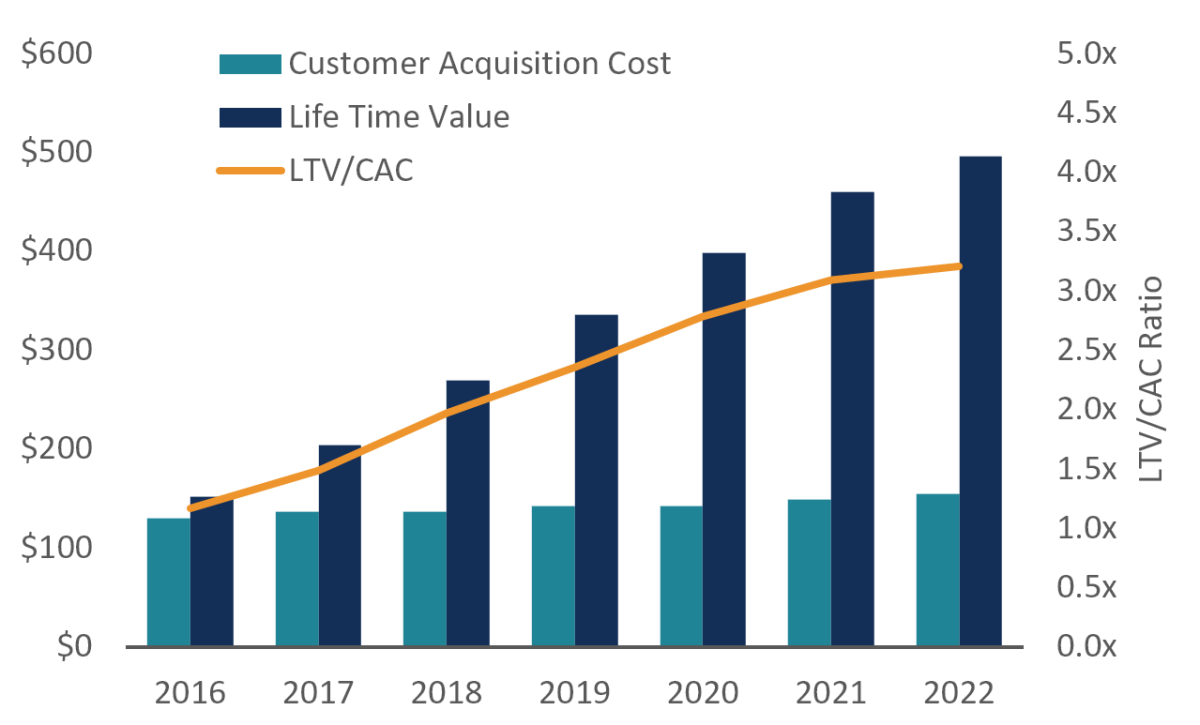
Most Shopify store owners have a rough sense of their ad spend. Far fewer know their actual CAC or LTV. But tracking the actual numbers here is the foundational step, as everything else builds on it.
2. Identify Your Lowest-ROI Channels
We’ve all been told that diversifying and scaling are two major things for any business to grow and succeed. And while it is true, not everything you try or scale will bring you the same returns, especially in your Shopify marketing strategy.
When dealing with e-commerce ads, more often than not, you’ll see that one or two platforms underperform. So, if you decide to boost sales by scaling, those channels will simply eat up more of your budget without delivering any actual results.
To avoid this, run a simple audit. You can go to Shopify Analytics to see your acquisition sources and their performance. From there, look at the following aspects:
- Return on Ad Spend (ROAS) by channel. Take all the revenue each channel has generated for you and divide it by what you’ve spent on each. This way, you’ll see what channels aren’t really effective.
- Click-Through Rate (CTR) vs. conversions. If some of your channels have high CTR but low conversions, it often means the traffic you get isn’t qualified or relevant. It could also be a sign that your ad isn’t aligned with your offer.
- LTV:CAC ratio by channel. You already know why this metric is important. Now, you have to understand how each channel is performing. Because even if you run very similar campaigns throughout your platforms, the results in terms of lead quality and cost can be very different.
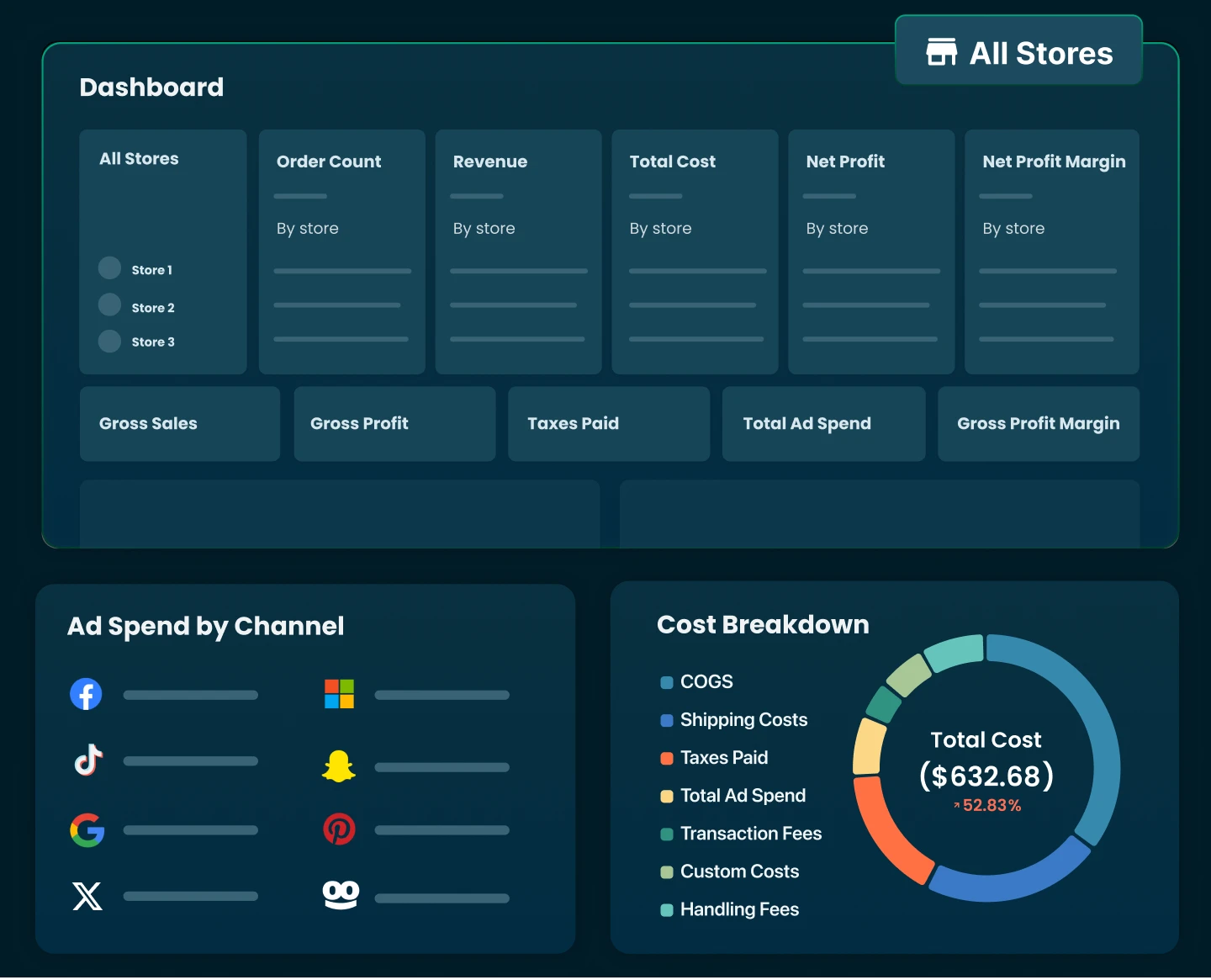
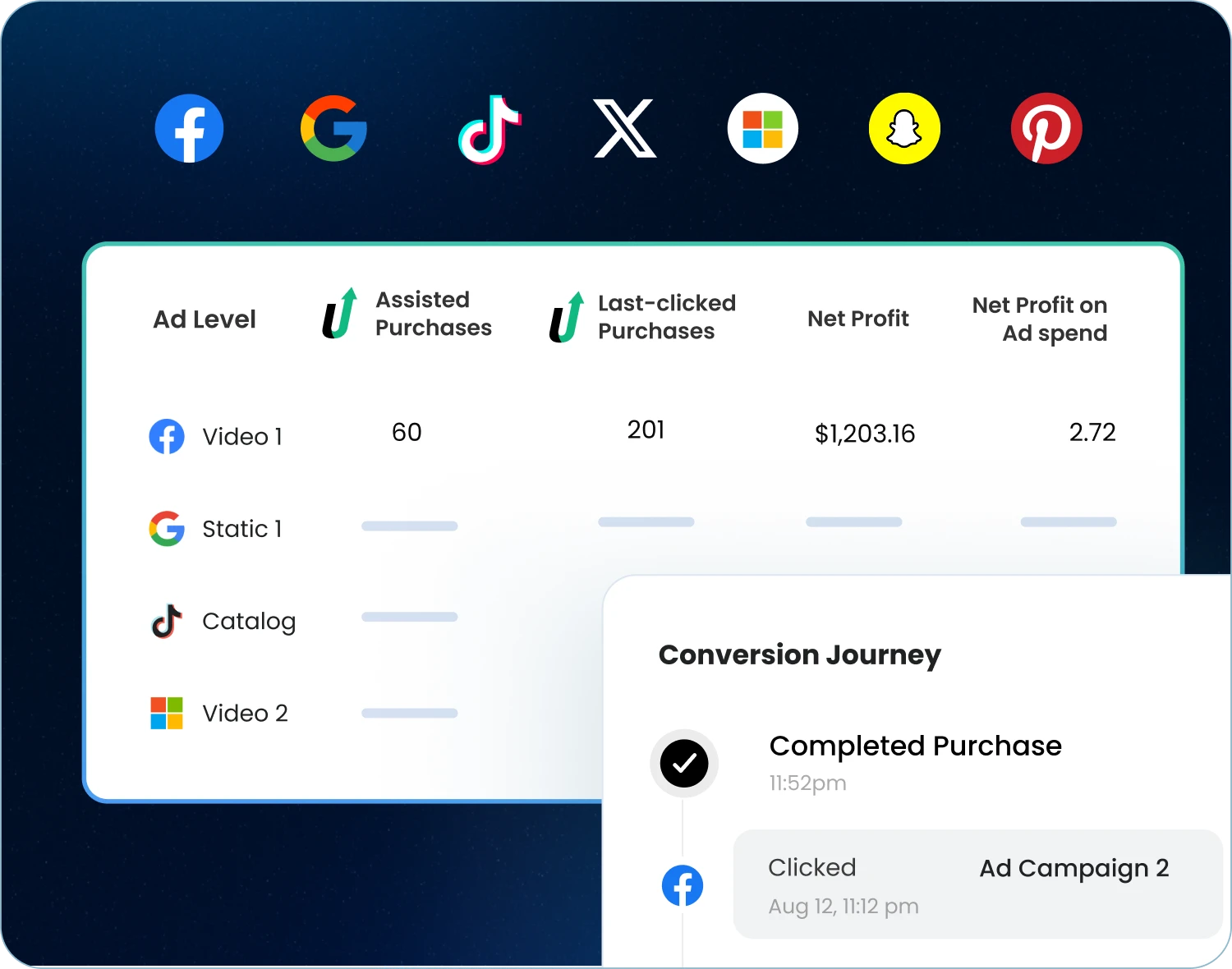
You can also use tools like TrueProfit to get more details about your advertising costs and the effectiveness of each channel.

3. Convert the Traffic You Already Pay for Better
According to Littledata's study, the average Shopify store converts around 1.4% of visitors. Top 10% hit 4.7%+ in conversions. Here is a thing, though: if you focus on conversion rate optimization (CRO), you can make more sales without increasing your budget.
The math here is really compelling. Doubling your conversion rate doubles your revenue from existing traffic with no extra ad spend. So, it’s really worth looking into.
If you see that your conversions are lower than the industry average, look into these potential fixes:
- Check your page speed: Making your website even one second faster increases conversions by roughly 7%. You can check how your store is doing for free with PageSpeed Insights.
- Improve your mobile experience: Most of the traffic comes from phones these days. So, if your store isn’t optimized for mobile devices, you'll likely lose a big share of buyers.
- Simplify your checkout: The average cart abandonment rate is around 70%. So, take all the best practices for a better and faster checkout and implement them.
- Add trust signals: Having social proof is one of the most effective things you can do for your conversions. This includes everything from reviews and how many people have bought your product to a clear return policy and more information about your store.
Also, review your product pages and check what you can improve. Your descriptions have to be detailed enough, and your product images should give enough context. You can also consider adding a 360 view or any virtual features if needed.
On top of this, A/B test smaller things like:
- Button placements and colors,
- Your copy, especially for CTAs,
- Social proof placements, etc.
Even small improvements here compound. But you can’t do this in a day. After all, a high-converting store is always the result of consistent, actionable testing and iteration.
4. Drive more sales from organic channels
This is one of the Shopify marketing tips that might seem quite unrelated to ad spend optimization. But adding organic channels to your PPC strategy is a great way to effectively diversify. No matter how successful your paid tactics are, organic growth is a great thing to work on in the background.
While these strategies take more time to show results, you don’t want to ignore them. Because getting traffic from owned and organic channels is a great way to lower your overall CAC over time.
As for the exact tactics you can use, SEO, email marketing, and word of mouth are some of the most popular and effective options.
SEO and AI visibility
Shopify SEO was always powerful, but now, it’s even more interesting, since it can also help you show up in AI search results. When you focus on search engine optimization, apart from improving your visibility, you also boost your trust and build credibility.
For this to work, you have to be very selective when it comes to keyword research. Make sure you target both informational and commercial search intent and pick search queries with lower keyword difficulty.
In terms of content, some of the most effective formats for e-commerce are things like “X best,” “X vs. Y,” “How to do XYZ,” etc.

But if you want to show up in both traditional and AI search results, you need more external mentions. It could be anything from forum mentions and citations to PR publications and guest posting. If you don’t want to get too involved in link building, you can find a backlink partner and build a buying process with them.
Email marketing
Email marketing is often referred to as one of the most cost-effective channels in any industry, not just e-commerce. It is a huge topic in itself, so we can’t possibly cover it all in this guide. Still, if you want to focus on something tangible right away, build several flows:
- Welcome flow when the person registers,
- Cart abandonment sequence that acts like a reminder with or without discounts,
- Post-purchase flows that make sense for your product category,
- Newsletter with relevant and actually useful insights,
- Funnels that include lead magnets (if you want to go further), etc.
Word of mouth
It seems like this word of mouth is the only strategy that will never get old because humans prefer a recommendation from a person, not a business page. There are several things you can try, depending on your case:
- Referrals and affiliates,
- Loyalty programs,
- UGC.
5. Maximize Revenue per Customer
Getting new customers is expensive. So, working with the customer base you already have is one of the most cost-effective solutions to grow your sales, no matter what your Shopify business model is.
This is where you can use all the famous sales tactics like upselling and cross-selling. This includes everything from the "others also bought" section to product bundles. Simply adding these sections to your product pages and at checkout is definitely worth testing.
It’s also where your email marketing can be helpful. You can schedule emails for people who haven’t purchased for a long time, send personalized product selections, and so on. This is where you can really get creative.
6. Learn to Spend More Efficiently
Once you've worked on your conversion rate and built your organic channels, you can also consider making your paid channels more effective. There are several strategies that can help:
- Retargeting: It refers to focusing on people who’ve already engaged with your content or store somehow. This is how you can access warmer audiences instead of cold prospects who know nothing about you.
- Targeting audiences similar to your high-LTV buyers: If you choose customers who spend more than the average and target similar people, they’re more likely to convert and stick with you.
- Timing-based changes: This refers to anything that changes. For example, if you notice lower competition on a particular platform, maybe it’s a chance for you to double down. Similarly, you can increase your ad spend when it makes sense seasonally or around some relevant holidays.
7. Track and Learn
None of the things we’ve mentioned work without tracking and analyzing your results. So, it’s important to regularly assess your current situation and adjust your tactics based on this.
Some of the metrics that you can focus on for your Shopify marketing strategy are Customer Acquisition Cost, Return on Ad Spend (by channel), Conversion Rate, Average Order Value, and Lifetime Value. If you wish, you can also add any other KPI you find valuable.
Besides, make sure you’re using proper tools. The basics to start with are GA4 and behavior analytics tools like Microsoft Clarity (free) or Hotjar. It’s also really helpful to add more specific solutions that track your spending and actual profitability, like TrueProfit.
You don’t have to turn it into a never-ending analysis. Simply choose one day per month when you do the full audit and understand how each of your channels is performing. The real secret is consistency.
Wrapping Up
Increasing Shopify sales often has little to do with spending more, even though it sounds counterintuitive. But your main focus should be on getting the most out of every dollar. This is the essence of the best Shopify sales growth strategies.
So, review what you have right now and start with the most obvious fixes. Often, tweaking the fundamentals properly can bring you more value than doubling your budget.
Lila Le is the Marketing Manager at TrueProfit, with a deep understanding of the Shopify ecosystem and a proven track record in dropshipping. She combines hands-on selling experience with marketing expertise to help Shopify merchants scale smarter, through clear positioning, profit-first strategies, and high-converting campaigns.