
Branded Dropshipping in 2026: From Product to Brand


Table of Contents
The dropshipping space is crowded. If you're running a generic store competing on price, you already know how brutal that race feels. Branded dropshipping offers a better path: building a real identity around your store so customers remember you, trust you, and come back.
This guide covers everything you need to know, including what branded dropshipping is, why it works, and how to build a store that grows into something genuinely valuable.
In this blog:
What Is Branded Dropshipping?
Traditional dropshipping is simple: list products from a supplier's catalog, take orders, and let the supplier ship directly to your customer. If you are completely new to the model, our dropshipping for dummies guide covers the fundamentals. Branded dropshipping builds on that same fulfillment model, but instead of running a generic storefront, you build a recognizable brand around a curated set of products.
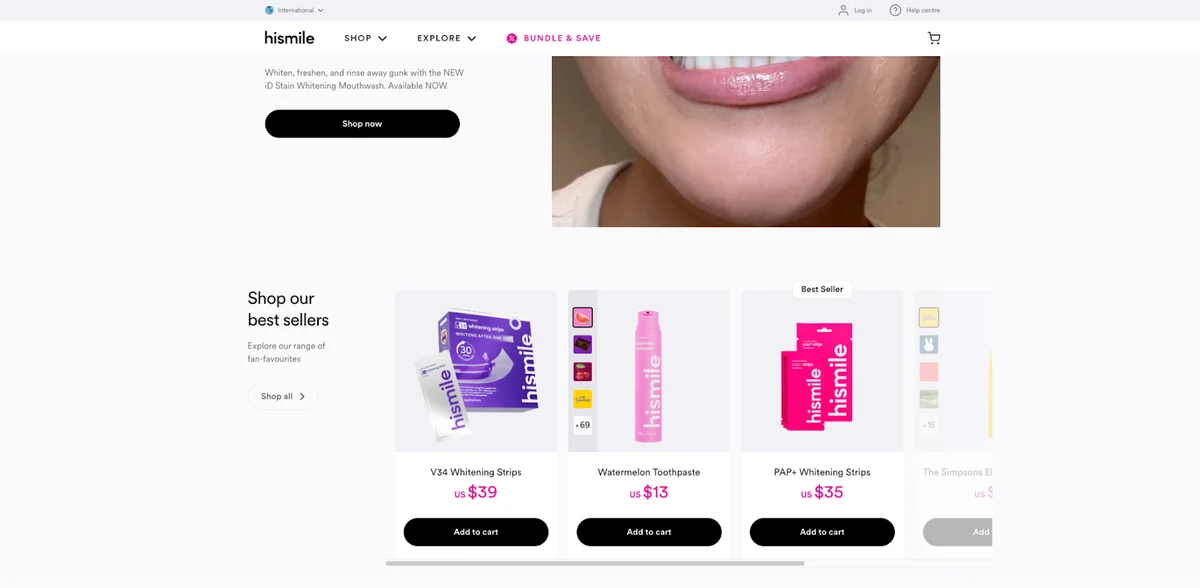
That means developing your own business name, logo, visual style, and brand voice. Everything a customer sees, from your website to the packaging they receive, reflects a single coherent identity that they can recognize and trust.
The goal is to move from being a faceless intermediary to being a brand that people actively choose.

Traditional vs. Branded Dropshipping
Traditional Dropshipping | Branded Dropshipping | |
|---|---|---|
Competing on | Price | Value and experience |
Customer loyalty | Low (product-driven purchases) | High (brand-driven loyalty) |
Repeat purchases | Uncommon | Built into the model |
Customer relationships | Transactional | Long-term and relationship-driven |
Pricing power | Limited by competitors | Stronger due to perceived value |
Traditional stores frequently end up in a race to the bottom, constantly undercutting each other on price until margins disappear. Branded stores compete on a different playing field entirely.
The Three Pillars of a Branded Dropshipping Business
1. Unique Value Proposition (UVP):
Your UVP defines why customers should choose you over anyone else. It might be product quality, an eco-friendly sourcing commitment, a distinctive aesthetic, or a level of customer service competitors don't match. Your UVP is the core promise behind everything your brand communicates.
2. Consistent Brand Identity:
This covers your name, logo, color palette, typography, and the tone you use when you write or speak. Every touchpoint, including your website, social media profiles, packaging, and support emails, should feel like it comes from the same place. Consistency is what turns a visual style into something recognizable.
3. Exceptional Customer Experience:
The product is just one part of what customers remember. How easy is your site to navigate? How quickly do you respond when something goes wrong? What does it feel like to unbox your package? Each of these moments either builds your brand or chips away at it.

Why Go Branded? The Real Advantages
1. Higher Prices and Better Margins
When customers trust a brand, they are willing to pay more for it. A branded product is no longer a commodity. It carries the assurance of quality and a curated experience that justifies a premium. This pricing flexibility is one of the most direct financial benefits of building a brand.
2. More Repeat Purchases and Higher Lifetime Value
Loyal customers are the most profitable customers you can have. They spend more per order, return more often, and cost far less to retain than acquiring new customers through paid advertising. A strong brand is what converts one-time buyers into repeat customers.
3. More Effective Marketing
A clear brand story makes every piece of content and every ad more effective. You are not just promoting a product. You are communicating something people can connect with. This improves ad performance, increases organic reach, and lowers your customer acquisition cost over time.
4. Less Direct Price Competition
Most dropshippers compete on the exact same products at similar price points. A recognizable brand shifts your competitive set from "every store selling this item" to a much smaller group of direct brand competitors. That is a fight you can actually win.
5. Your Business Builds Real Asset Value
Brand equity is the commercial value that comes from how consumers perceive your brand, separate from the products themselves. A well-established brand is worth significantly more than a generic store if you ever decide to sell the business.
6. More Leverage with Suppliers
As your order volumes grow and your brand gains recognition, suppliers have more incentive to work with you. That translates into better pricing, priority service, and sometimes exclusive arrangements that generic stores cannot access.
When Should You Start A Branded Business?
1. For New Dropshippers: Should You Brand from Day One?
Starting with a brand from the beginning has real advantages. It forces you to think clearly about your niche, your target customer, and what you want your business to stand for. Those decisions tend to lead to better product selection and more focused marketing from the start.
The tradeoff is cost and flexibility. Branding requires upfront investment in design and positioning, and it limits how freely you can test unrelated products. Some beginners prefer to validate product-market fit first, then build a brand once they know something is selling.
If you are just getting started, our guide on how to start a dropshipping business walks through that foundation step by step.
2. For Established Dropshippers: Transitioning from Generic to Branded is A Must Have
If you already have a winning product or a profitable niche with consistent sales, this is the right time to build a brand around it. You have proof of demand. Now you add the identity layer.
The transition involves defining or refining your brand identity, finding suppliers who can support custom packaging or private labeling, redesigning your website, and relaunching with marketing that reflects who you are.
Plan it carefully so existing sales momentum is not disrupted. If you want to sharpen your skills during this phase, exploring dropshipping courses can accelerate the process.
If You Decide To Commit, Here Are Three Questions You Need To Ask Yourself
- Is there real, validated demand? Research your niche thoroughly before designing a brand around it. Understanding your target audience's needs and buying behavior is essential before investing in a brand identity.
- Do you have the budget? Logo design, website development, custom packaging, and brand marketing all have costs. Our guide on how much it costs to start dropshipping can help you plan realistically. If budget is a genuine constraint right now, it is also worth reading about starting a dropshipping business with no money to understand where early spending can be reduced.
- What is your long-term goal? Branding is a long-term investment. It makes the most sense if you are building something lasting and valuable. If your current aim is a short-term test, a generic store might be the right starting point.
How to Build a Branded Dropshipping Business: Step by Step
Step 1: Choose Your Niche and Source Your Products
The foundation of every successful branded store is a well-defined niche. Specific enough to target effectively, but broad enough to grow within. For example, "eco-friendly activewear for women in their 30s" is a stronger starting point than "clothing." It tells you exactly who you are talking to and what they care about.
When evaluating products, look for items that are consistently high quality, solve a real problem or serve a distinct lifestyle, and have private-label or white-label potential.
If you are drawn to premium, high-quality goods, it is also worth exploring reverse dropshipping, a model built around sourcing superior products rather than competing on price. Then analyze your competitors. Identify what they do well and, more importantly, where they fall short. Those gaps are where your brand can win.
Step 2: Define Your Brand Identity
Before you open a design app, get clarity on the following:
- Mission and purpose: Why does this brand exist, and what does it stand for?
- Target customer: Build a detailed persona covering demographics, lifestyle, interests, pain points, and shopping habits. The more specific you are, the better every future decision becomes.
- Brand voice: How does your brand communicate? Is it warm and conversational, expert and authoritative, playful, or minimal and refined? Define this before you write a single word of copy.
- Visual identity: Your logo, color palette, and typography are the first things customers judge. Invest in professional design here. Visual consistency is one of the most powerful signals of brand quality.
Step 3: Build Your Online Store
Shopify is the most widely used platform for branded dropshipping. It is easy to set up, scales well, and has a strong ecosystem of apps for every part of the business. Wix and WooCommerce are solid alternatives, particularly if you want more design control or are already on WordPress. For a detailed comparison of options, see our guide to ecommerce platforms for dropshipping.
Whichever platform you choose, your site should feel like an extension of your brand on every page, from the homepage through to the checkout confirmation. Prioritize fast load times, clean navigation, and a mobile experience that does not feel like an afterthought. Add apps for email marketing, customer support, profit tracking, and order management.
Step 4: Find Suppliers Who Support Your Brand
Finding a supplier who can deliver consistent quality and support your branding requirements is arguably the most critical step. Not every supplier offers private labeling or custom packaging options, so you need to find and vet the ones that do.
Where to look:
- Alibaba and AliExpress: A large number of suppliers on these platforms will accommodate custom packaging and private labeling. Ask directly and request samples before committing. For a deeper look at this route, see our guide to private label dropshipping.
- Printful and Printify: Purpose-built for branded dropshipping across apparel, accessories, and home goods. No minimum order quantities, and fulfillment is handled end to end.
- CJ Dropshipping: A broad catalog with branding options and reasonable shipping times to many markets.
Always order product samples before you commit to a supplier. Test the product quality, the packaging, and the actual shipping experience. A supplier who ships inconsistently will damage your brand's reputation faster than almost anything else.
Step 5: Design Your Customer Experience
Your brand does not stop when the customer checks out. The post-purchase experience is one of the most underused opportunities in branded dropshipping.
Unboxing: Custom packaging, a branded insert card, or a small unexpected addition like a discount for the next purchase can turn a routine delivery into something customers photograph and share. This kind of word-of-mouth has real, compounding value.
Customer service: Every support interaction is a chance to reinforce your brand. Respond quickly, write in your brand's voice, and genuinely try to resolve the issue. A customer whose problem was handled well is often more loyal than one who never had a problem at all.
Returns and refunds: Make your policy clear, fair, and easy to act on. Transparency here builds trust. Customers who have a smooth returns experience frequently come back to shop again.
Step 6: Market Your Brand
Branded marketing is storytelling first, product promotion second. Here is how to approach each channel:
Content marketing: Create blog posts, videos, and guides that address your target audience's real interests and questions. Useful content builds authority and generates organic traffic that pays dividends long after the content is published.
Social media: Maintain a consistent presence on the platforms where your audience spends time. Post the lifestyle and values behind your brand, not just product images. Engagement matters more than follower count.
Influencer marketing: Micro-influencers with audiences between 10,000 and 100,000 followers typically deliver stronger engagement and more authentic advocacy than large accounts. Match them to your niche precisely, not just by size.
Paid advertising: Facebook Ads, Google Ads, and TikTok Ads can all work well. TikTok in particular has become a powerful channel for branded discovery; our guide to TikTok marketing for dropshipping covers how to make the most of it. For branded dropshipping, your creative should lead with your brand's story and unique value, not just the product. Ads that feel brand-driven tend to perform better and build lasting recognition alongside immediate conversions.
Organic marketing: Paid ads are not the only path to growth. Organic dropshipping strategies, including SEO, content marketing, and social media, build sustainable traffic that does not disappear when you stop spending.
Email marketing: Start building your email list from day one. Segment it by behavior and preference. Use email to launch new products, re-engage past customers, and share content that reinforces your brand's position.

What Makes a Strong Branded Store
A strong branded dropshipping store is not just about what you sell, but how consistently you deliver quality, trust, and a clear brand experience.
- Consistent product quality. Your brand's reputation rests on this above everything else. A single bad product experience can undo months of brand-building. Vet suppliers carefully and monitor quality continuously.
- A genuine brand story. Why does this brand exist? What customer problem does it solve, or what lifestyle does it support? A compelling, honest narrative is a differentiator that competitors cannot easily copy.
- Professional website design and UX. Your store is your primary brand environment. It needs to be fast, clean, and visually aligned with your brand identity at every step of the customer journey.
- Suppliers with real branding capability. Private label, white label, and custom packaging are the mechanisms that let your physical product match your brand. Confirm these capabilities with samples before building your store around a supplier.
- Proactive customer support. Engage customers before and after purchase. Solve problems quickly and communicate in a way that reflects your brand values.
- Legal foundations. Register your business as a legal entity. Trademark your brand name and logo as early as reasonably possible. Understand the consumer protection laws that apply in the markets you sell to. Operating legitimately protects your brand and signals trustworthiness to customers. If you have come across doubts about whether dropshipping is legitimate, our piece on whether dropshipping is a scam addresses those concerns directly.
Maximizing Profitability in Branded Dropshipping
Revenue growth is easy to celebrate. Net profit is what actually tells you whether the business is healthy. If you are still evaluating whether dropshipping can be profitable at all, our deep dive into whether dropshipping is profitable gives you the full picture. For branded stores specifically, the following levers are where the real gains come from.
1. Understand Every Cost You Carry
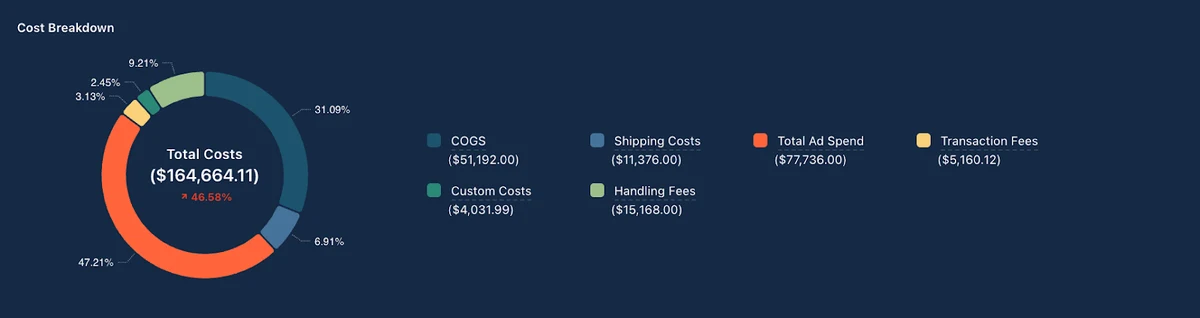
Your true cost structure includes more than product and shipping. It also includes custom packaging, logo and design investment, website platform fees, app subscriptions, transaction fees, ad spend, and any branding materials. Map all of these out and track them consistently. Every one of them affects your net margin.
2. Price Based on Value, Not Just Cost
Because branding increases perceived value, you can move beyond simply adding a margin on top of your supplier cost. Value-based pricing means setting prices based on what the product is worth to your customer, including the brand experience around it. This is how branded stores earn margins that generic stores cannot access.
Tiered pricing, offering product bundles or premium versions at higher price points, increases average order value without requiring new customer acquisition.
3. Increase Customer Lifetime Value Deliberately
Customer lifetime value (LTV) is the total revenue a customer generates over their relationship with your brand. The higher your LTV relative to your customer acquisition cost (CAC), the more profitable and sustainable your business is.
Subscription models work well for consumable products. Loyalty programs reward repeat purchases. Re-engagement email sequences bring back customers who have gone quiet. Each of these increases LTV without proportionally increasing your acquisition costs.
4. Track True Net Profit, Not Just Revenue
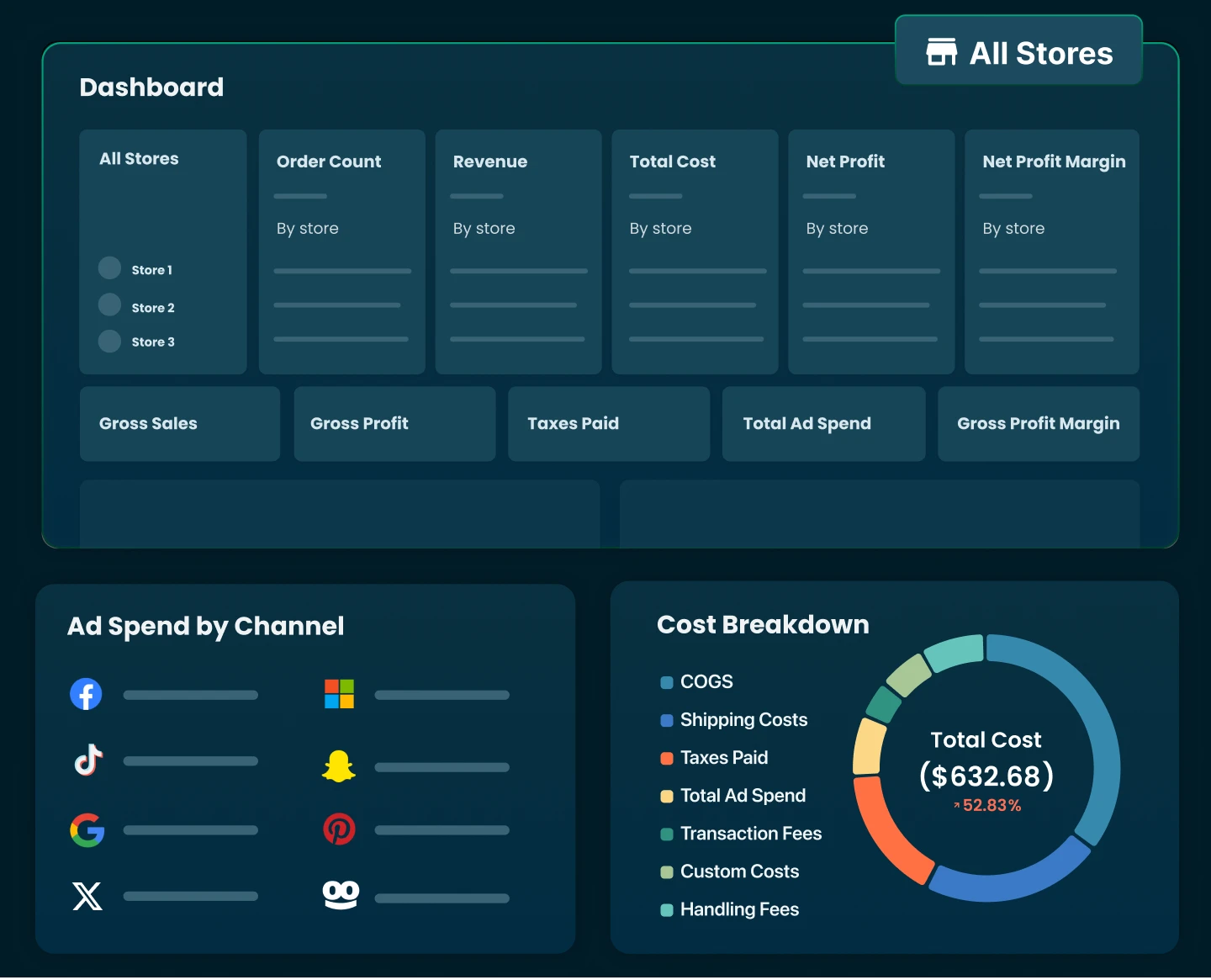
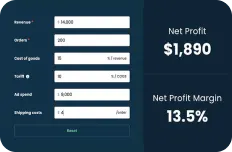
Tools like TrueProfit are built specifically for Shopify sellers who want an honest view of their financial performance. Rather than showing revenue or gross profit alone, they consolidate all cost inputs, including ad spend, COGS, shipping, and fees, to surface your actual net profit.
Key metrics to monitor:
- Gross profit vs. net profit: Gross profit is revenue minus the cost of goods sold. Net profit subtracts all operating expenses. Only net profit tells you what you are actually earning.
- Customer Acquisition Cost (CAC) vs. Lifetime Value (LTV): A healthy branded business has an LTV that is meaningfully higher than CAC. If these numbers are close, your growth is fragile.
- Return on Ad Spend (ROAS) vs. net profit: ROAS measures revenue generated per dollar spent on ads, but it does not account for your other costs. Profitable ROAS is only confirmed when all costs are factored in.
[trueprofit dashboard]
4. Upsell and Cross-sell to Raise Average Order Value
Once a customer has decided to buy, offering a complementary product or a premium version costs nothing in additional acquisition spend. Strategic upselling and cross-selling are among the highest-leverage ways to increase revenue per transaction.
Common Branded Dropshipping Challenges (and How to Solve Them)
1. Finding Reliable Branded Suppliers
Not every supplier offers private labeling or custom packaging, so vetting matters. Request samples, review shipping performance history, and state your branding requirements upfront before committing. For apparel and accessories, Printful and Printify remove most of this friction since branding is built directly into their fulfillment service.
2. Setting Realistic Shipping Expectations
Without holding inventory, your delivery times depend entirely on your supplier. List realistic shipping windows clearly on product pages and in your FAQ. Customers who know what to expect rarely complain. Those who are surprised by delays often do not come back. Prioritize suppliers with a proven, consistent shipping record.
3. Building Brand Awareness from Scratch
Awareness takes time, but it compounds. Start with one or two channels and show up consistently rather than spreading thin across all of them. Partner with niche micro-influencers for credible reach, and actively encourage customers to share their unboxing experiences. User-generated content builds trust at no extra ad cost.
4. Handling Returns and Customer Complaints
Make your return policy clear, fair, and easy to act on. Train anyone in a support role to respond in your brand's voice, not just resolve the ticket. A complaint handled well often builds more loyalty than a sale that went smoothly, because it shows customers who you are when things go wrong.
5. Keeping Product Quality Consistent
Supplier quality is not guaranteed to stay constant. Order your own products periodically to check firsthand. Watch customer reviews for recurring patterns. If quality slips, address it with your supplier immediately. Gradual quality decline is one of the quietest ways a brand loses the trust it took months to build.
6. Managing Cash Flow in the Early Stages
Branding costs money before it earns money. Budget for design, packaging, and marketing from the start, and keep your business finances separate from personal accounts. Use a profit-tracking tool like TrueProfit to maintain a clear, real-time view of where your cash stands so you are never caught off guard.
Is Branded Dropshipping Right for You?
Branded dropshipping demands more upfront effort, planning, and investment than running a generic store. The returns are proportionally greater: better margins, loyal customers, reduced dependence on paid ads, and a business that accumulates real value over time.
If your goal is to build something lasting, something customers actually care about and return to, branded dropshipping is the right model. The path involves real work, but it leads somewhere a generic store never will. And if you are wondering whether this approach fits alongside other commitments, our guide to dropshipping as a side hustle explores how people make it work without going full time.
The financial discipline to track your true net profit, not just your revenue, is what separates stores that grow sustainably from those that look busy but stay unprofitable. Tools like TrueProfit exist to give Shopify sellers that honest view of their business at every stage.
Harry Chu is the Founder of TrueProfit, a net profit tracking solution designed to help Shopify merchants gain real-time insights into their actual profits. With 11+ years of experience in eCommerce and technology, his expertise in profit analytics, cost tracking, and data-driven decision-making has made him a trusted voice for thousands of Shopify merchants.