



8 Successful Shopify Jewelry Stores to Inspire Your Store in 2026


Table of Contents
There are thousands of jewelry stores on Shopify. So what makes some of them stand out while others struggle to get shoppers past the product page?
It’s rarely just about having better-looking jewelry.
In this guide, you’ll see some of the best Shopify jewelry stores to get inspired by in 2026, along with the specific strategies behind their products, branding, marketing, and customer experience that you can adapt to your own store.
In this blog:
8 Shopify Jewelry Brands Every Merchants Can Watch and Learn From
1. Mejuri: Build a strong everyday jewelry brand
Mejuri is a fine jewelry brand founded in 2013, known for making fine jewelry feel more accessible and relevant to everyday wear.
Mejuri’s biggest strength is its clear positioning around everyday fine jewelry. Rather than competing primarily on traditional luxury cues, the brand makes jewelry feel like an accessible form of self-expression and encourages customers to buy for themselves, not only for special occasions.

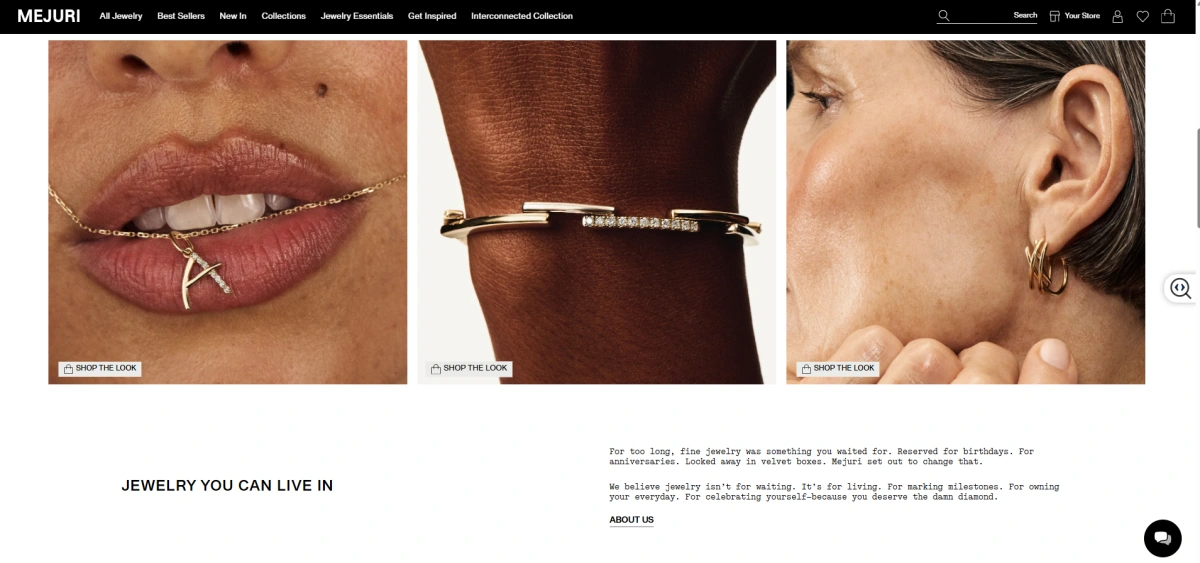
This gives the brand a broader range of purchase occasions and makes products easier to integrate into everyday wardrobes.
That positioning is reflected across its product assortment, content, and retail experience.
Instead of treating each piece as an isolated purchase, Mejuri encourages customers to explore styling, stacking, and complementary pieces. This creates more opportunities to turn a single jewelry purchase into a broader collection.
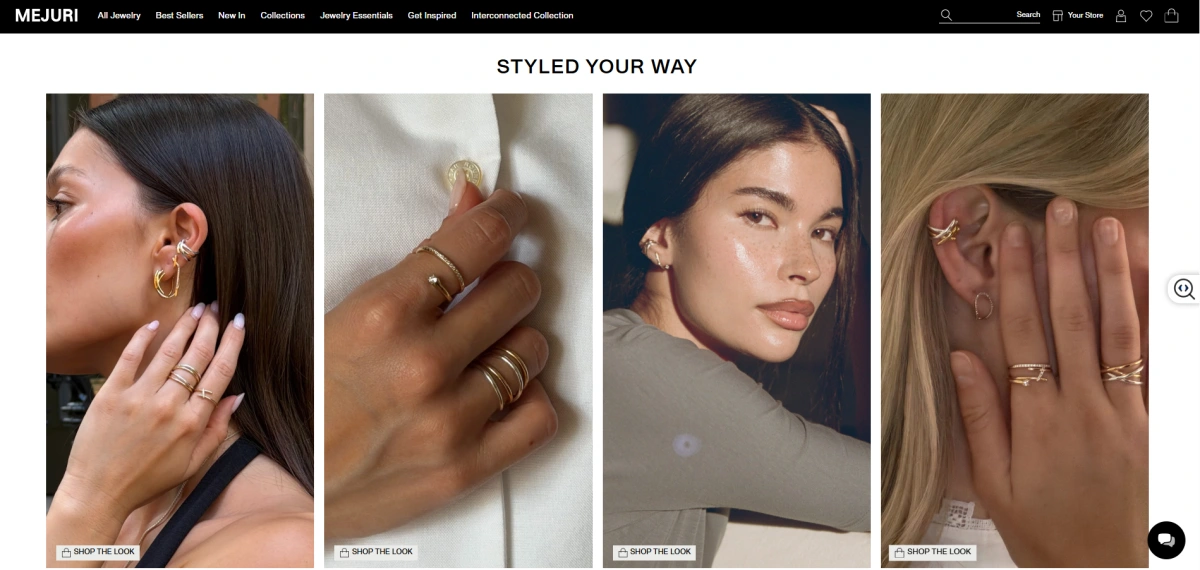
What merchants can learn from Mejuri:
- Build a distinct positioning around a specific customer mindset or occasion, not just product attributes.
- Design your assortment and content to support that positioning consistently.
- Show customers how products work together to encourage multi-item purchases.
- Give customers a reason to return beyond occasional gift purchases.
2. Abbott Lyon: Turn personalization into a selling point
Abbott Lyon is a UK jewelry and accessories brand known for personalized pieces.
The thing I’d pay attention to here is how Abbott Lyon makes personalization part of the reason to buy. It’s not just a little customization option added to the product page. Names, initials, dates, and messages give shoppers a reason to see the piece as their product, or as something specifically chosen for someone else.
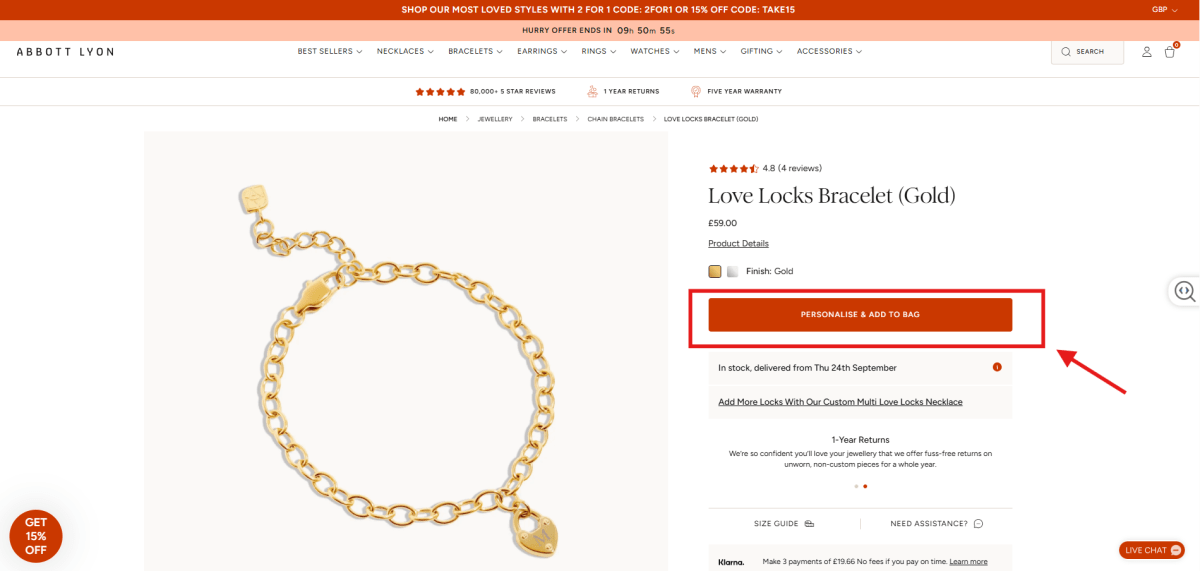
That’s a smart move for jewelry because you’re not competing only on how a necklace or bracelet looks. You’re adding emotional value, which is especially useful for gifting and can make a fairly simple product feel much more meaningful.
What merchants can learn from Abbott Lyon:
- Find a way to make your products feel more personal or meaningful.
- Build your product strategy around purchase occasions, such as birthdays, anniversaries, or gifting.
- Use customization to increase perceived value without simply adding more products to your catalog.
- Think about how personalization can give customers a stronger reason to choose your brand over similar jewelry stores.
3. Keyzar Jewelry: Make a complex purchase easier
Keyzar Jewelry is a fine jewelry brand specializing in engagement rings, wedding bands, and diamond jewelry.
What I find interesting about Keyzar is how it approaches one of the biggest challenges in selling fine jewelry online: there are simply too many decisions to make.
Instead of leaving shoppers to figure everything out themselves, the store gives them different ways to start their search, from choosing a ring setting or diamond type to browsing by shape and style. It even has a quick engagement ring quiz to help shoppers narrow down their options.
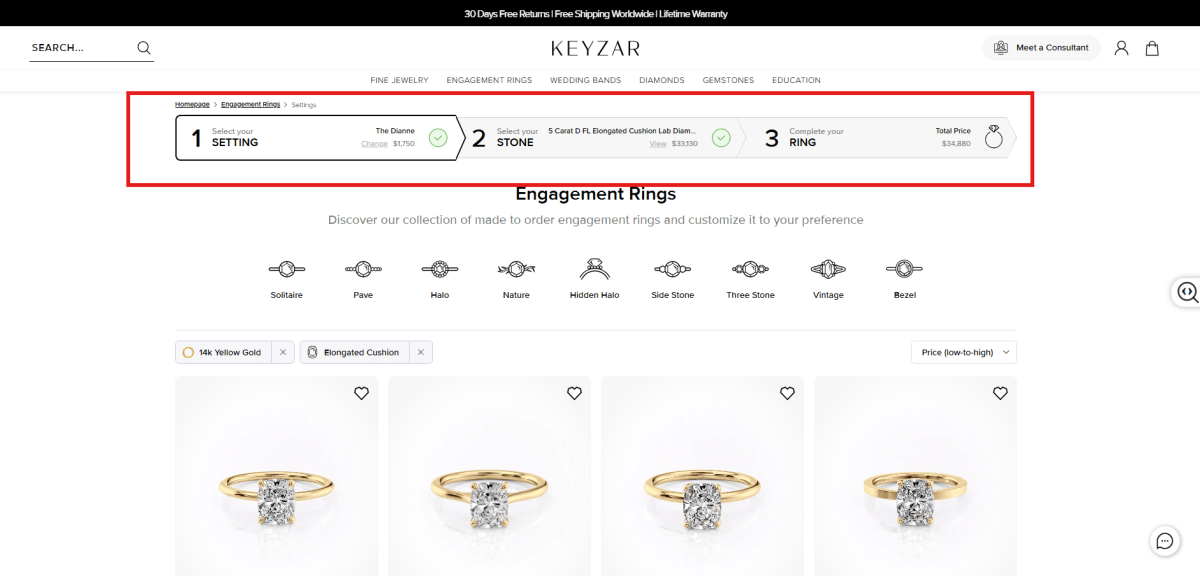
There’s also a clear business case behind the experience. After moving from Etsy to Shopify, Keyzar reported a 40% improvement in site speed, 15% lift in conversion rate, 12% increase in AOV, and 18% improvement in checkout completion (According to Shopify).
What merchants can learn from Keyzar:
- Break complex products into clear starting points so shoppers know where to begin.
- Use quizzes, filters, and guided navigation when customers have many choices to make.
- Give shoppers enough product and policy information to feel confident buying online.
- Track conversion, AOV, and checkout completion to see whether the shopping experience is actually working.
4. Syster P: Let product photography sell the details
Syster P is a Swedish jewelry brand focused on handmade pieces, with its current collection built around sterling silver, including 100% recycled silver.
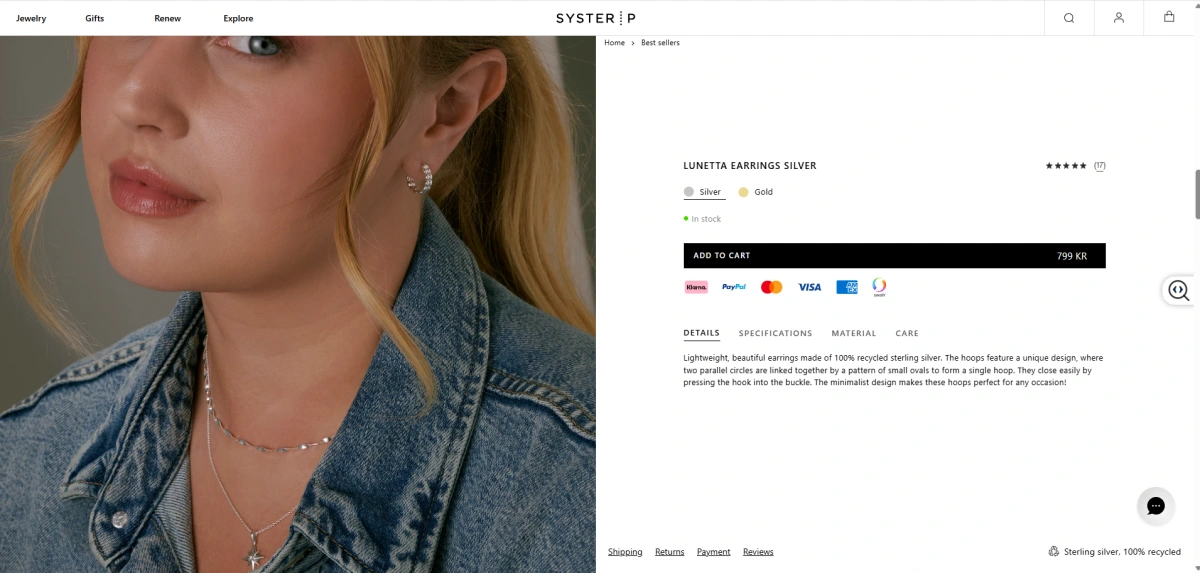
The standout for me is how much information its product imagery communicates. Jewelry is difficult to sell online because customers cannot touch it, check the finish, or see how it sits on the body.
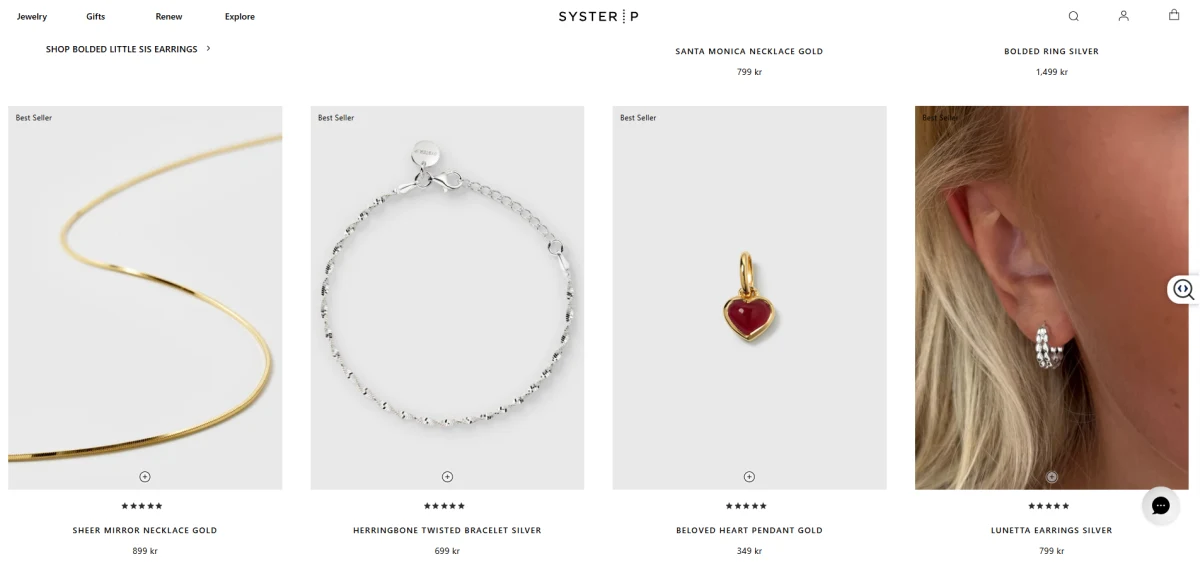
Syster P tackles that with a mix of clean product shots, close-ups, model images, and styled shots. You can see the same approach across individual product pages, where the jewelry is shown both on its own and being worn.
What merchants can learn from Syster P:
- Show the details and finish of jewelry clearly, not just the overall design.
- Combine product-only shots with on-model and styled images.
- Use imagery to answer questions shoppers would normally answer by handling the product in-store.
- Treat product photography as part of your conversion strategy, not just a branding asset.
5. Missoma: Turn customers into part of your marketing
Missoma is a London-based jewelry brand founded in 2007, known for its demi-fine and solid gold pieces designed in-house.
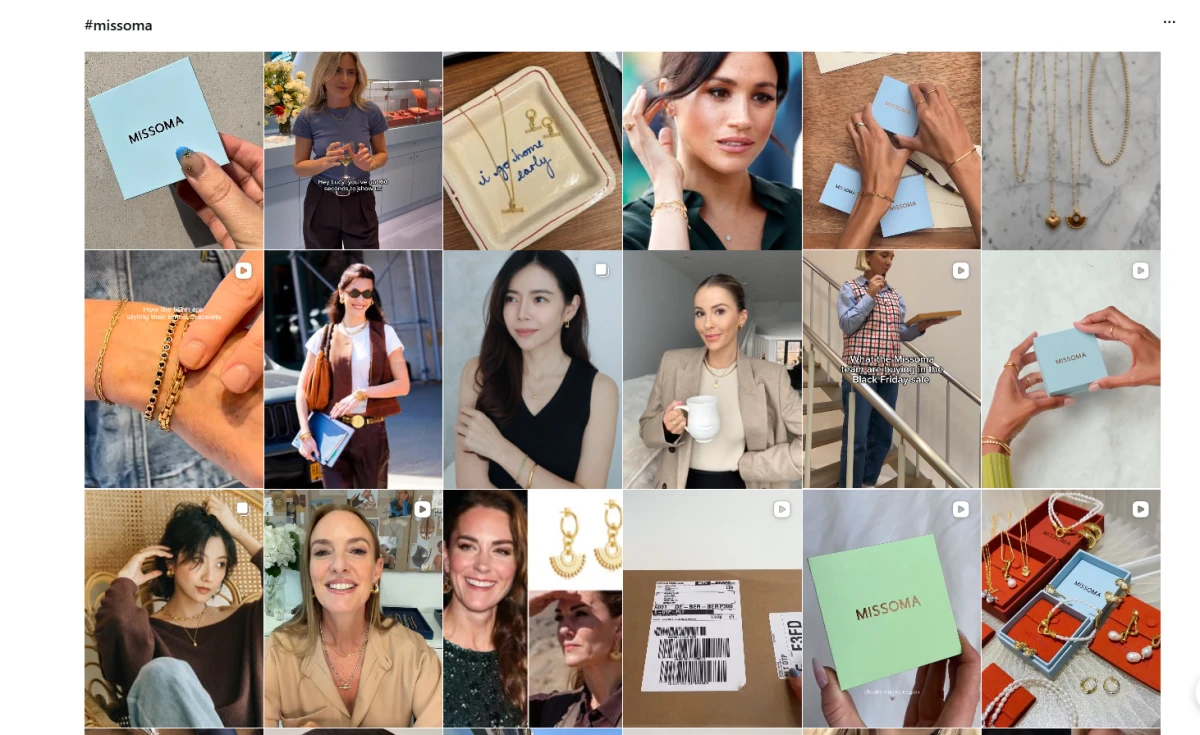
One thing worth paying attention to is how Missoma builds its marketing around people actually wearing the jewelry. The brand actively collects customer content through its #missoma and #yesmissoma hashtags and gets permission to reuse that content across its marketing channels, including advertising.
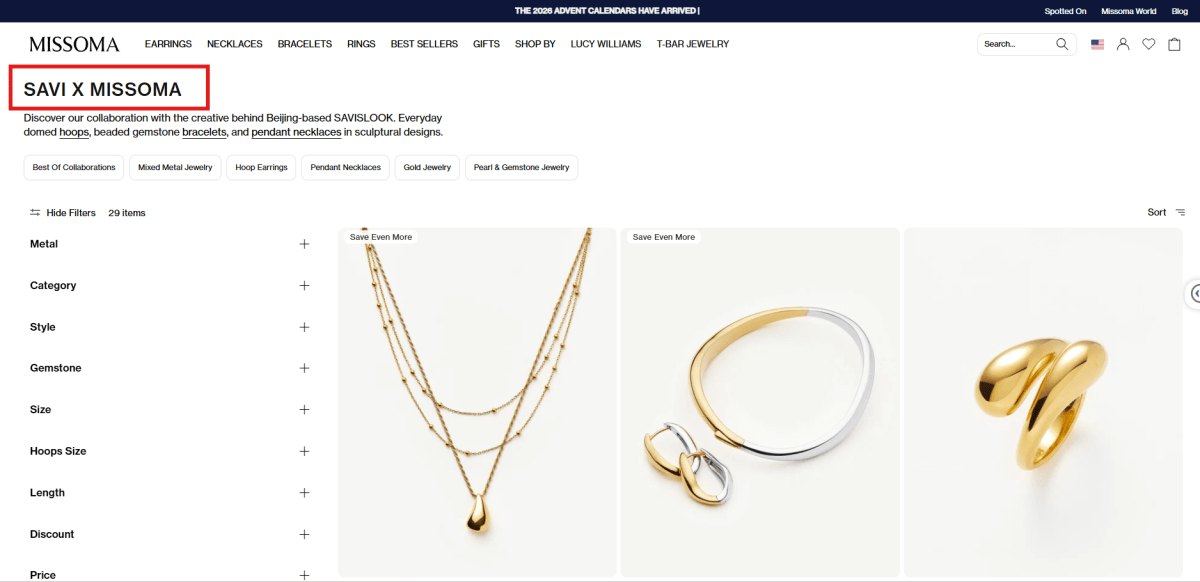
Missoma also takes this a step further through creator collaborations. Its collaboration with creator Savi, for example, grew from an existing relationship with the creator and her audience into a 31-piece collection.
What merchants can learn from Missoma:
- Encourage customers to create and share content around your products.
- Build a simple system for collecting permission and reusing strong UGC.
- Use real people to show how jewelry looks in everyday outfits, not just in studio photography.
- Build longer-term creator relationships instead of treating every collaboration as a one-off campaign.
6. Made by Mary: Make the experience work after the sale
Made by Mary is a US-based jewelry brand known for personalized pieces such as name necklaces and engraved jewelry.
I think this is where Made by Mary gets something right that’s easy to overlook. International growth isn’t just about bringing in more traffic. The experience after someone clicks “buy” matters just as much...
Shopify reported that Made by Mary increased international orders by 90%, while its international conversion rate rose by up to 180%. Shipping time also dropped from around 30 days to just 3 days, and international customer service tickets fell by 50%.
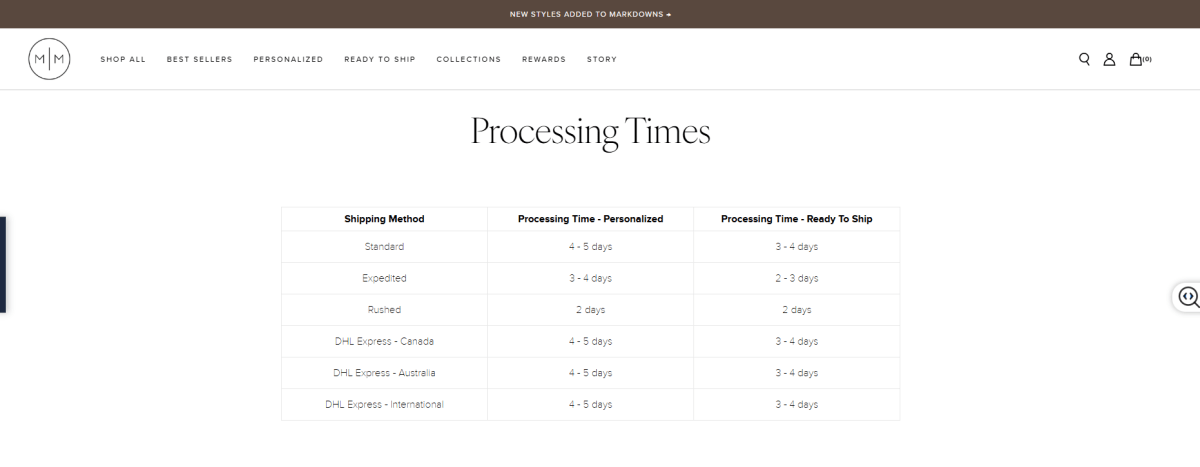
The interesting part isn’t simply the numbers. It shows how much of the customer experience happens outside the product page. Faster delivery, clearer logistics, and fewer support issues can make an international shopper feel much more comfortable buying from a brand they may not know yet.
What merchants can learn from Made by Mary:
- Treat shipping and delivery as part of the customer experience, not just fulfillment.
- Look at customer support tickets as signals of friction in the buying journey.
- When expanding internationally, localize the experience instead of simply sending the same setup to every market.
- Track operational improvements alongside sales metrics.
7. VRAI: Build a focused product range
VRAI is a fine jewelry brand known for its lab-grown diamond pieces. The brand takes a digital-first approach to fine jewelry.
VRAI doesn’t try to win by giving shoppers endless options. Instead, the brand has taken a more focused approach to its assortment, with products that fit a clear design direction and brand identity.
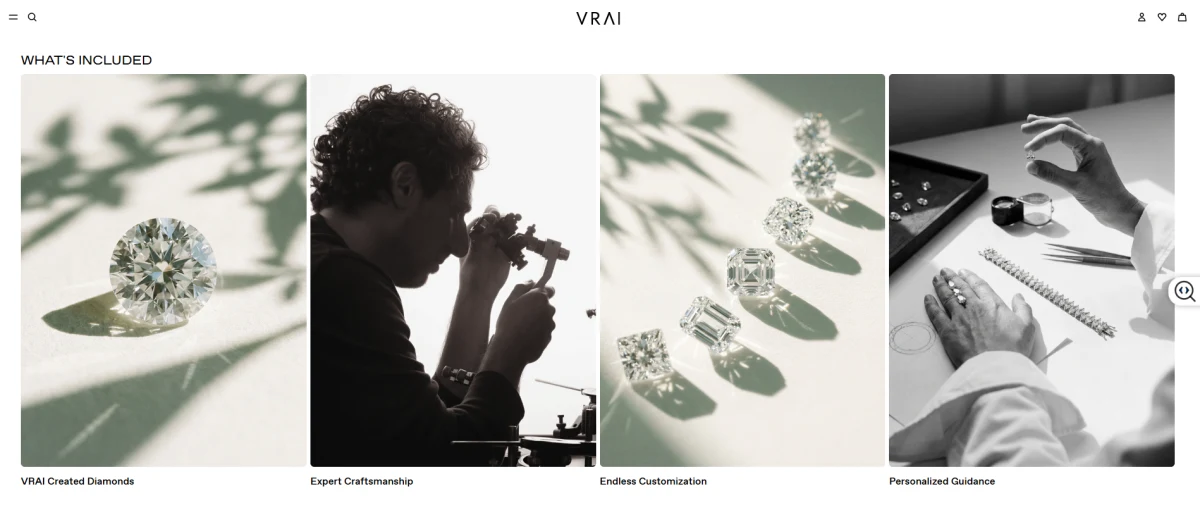
That matters more than it might seem in jewelry. When shoppers are already comparing diamond shapes, settings, metals, sizes, and prices, adding dozens of similar products can make the decision harder rather than easier. A tighter assortment gives each design more room to stand out and makes the collection feel more intentional.
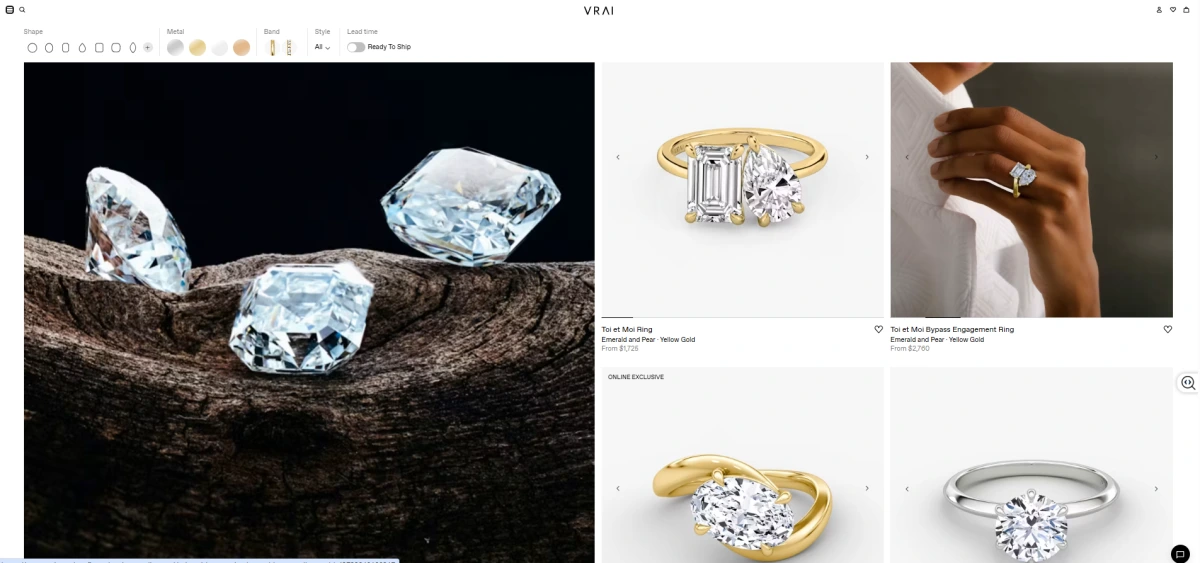
The product itself also carries much of VRAI’s brand story. Its focus on lab-grown diamonds, modern design, and a relatively clean aesthetic gives shoppers a clear idea of what the brand represents before they even start browsing deeply.
What can merchants learn from VRAI?
- Don’t add products just to make the catalog look bigger.
- Give your strongest designs enough visibility to become recognizable.
- Keep your assortment consistent with the identity you want customers to remember.
- When a category involves lots of decisions, a more focused range can make shopping easier.
8. Aurate: Give customers more reasons to trust the product
Aurate is a New York-based fine jewelry brand founded in 2015. The brand focuses on everyday fine jewelry and puts a strong emphasis on quality, transparent pricing, and more responsible sourcing.
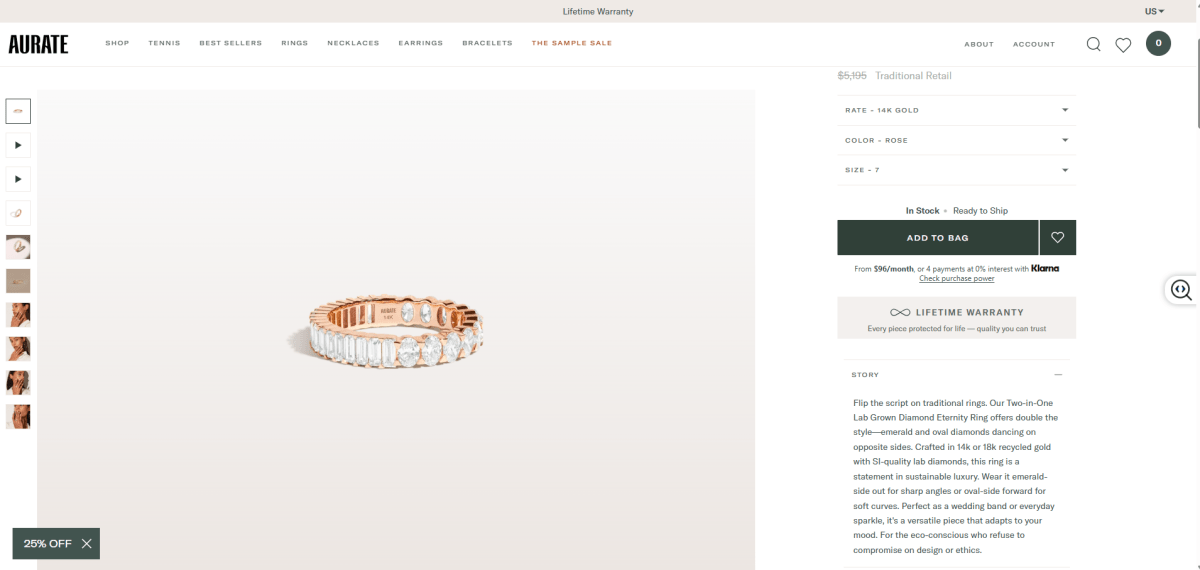
Jewelry is a category where customers can’t fully judge quality from a screen. Aurate seems to understand that, so it gives the product story much more attention than simply showing how a piece looks.
The brand explains what its jewelry is made from, where materials come from, and how pieces are tested. Aurate says its jewelry is made using materials including 14K and 18K gold, platinum, vermeil, and sterling silver, while its team tests designs for everyday conditions such as showering, sweating, working, and playing.
What can merchants learn from Aurate?
- Don’t rely on product photos alone when quality is an important part of the purchase.
- Explain materials, craftsmanship, and durability in language customers can actually understand.
- Use product education to answer doubts before they turn into hesitation or support questions.
- Give customers concrete reasons to believe your product is worth its price.

How to Build a Shopify Jewelry Store That Converts
Looking at successful jewelry stores is useful, but copying their design won’t automatically give you the same results. What matters more is understanding what makes someone feel confident enough to buy jewelry online.
If you’re building a jewelry store today, these are the things to get right first.
Start With a Clear Reason to Choose Your Brand
Before worrying about colors, fonts, or homepage sections, get clear on what your jewelry brand actually stands for.
Maybe you’re focused on affordable fine jewelry, personalized gifts, everyday pieces, sustainable materials, or a specific aesthetic. Whatever it is, that idea should come through consistently in your products, photography, messaging, and content.
A clear positioning also makes it easier for shoppers to remember your store instead of seeing it as just another jewelry site.
Make Product Pages Do the Heavy Lifting
Your product page needs to replace some of the confidence customers would normally get from seeing jewelry in person.
Show the piece from multiple angles, include on-model photos, and make details such as dimensions, materials, stone information, and sizing easy to find. Short videos can also help shoppers understand how a piece moves or looks when worn.
I’d also avoid hiding important information behind several clicks. The more questions a customer has to answer themselves, the more chances you give them to leave the page.
Make Jewelry Easier to Shop
A large catalog can quickly become overwhelming, especially when customers are comparing similar rings, necklaces, or earrings.
Use clear categories, useful filters, collections, and search to help shoppers narrow things down. For more complex products, you can go a step further with quizzes or guided shopping experiences.
The goal isn’t to show customers everything you sell at once. It’s to help them find the right piece with as little friction as possible.
Build Trust Before Asking for the Sale
Jewelry often comes with a higher level of hesitation than everyday ecommerce products. Customers want to know whether the materials are genuine, how the piece will hold up, when it will arrive, and what happens if it doesn’t work for them.
That means trust signals should be part of the shopping experience, not something you add at the bottom of the homepage.
Make your material information, shipping details, return policy, reviews, guarantees, and customer support easy to find. If you have certifications, sourcing information, or other proof points that matter to your audience, show those too.
Use Real People to Show How the Jewelry Looks
Studio photography is important, but it can only tell shoppers so much.
Add customer photos, creator content, reviews with images, and lifestyle photography where possible. Seeing the same necklace on different people can give shoppers a much better idea of its scale, styling, and everyday look.
It also makes the store feel less like a catalog and more like a brand people can actually picture themselves buying from.
Keep the Buying Experience Simple on Mobile
A lot of jewelry discovery happens on social media, which means shoppers may land on your store from a phone rather than a desktop.
Make sure your product images load quickly, important information is easy to scan, variant selection is straightforward, and the path from product page to checkout doesn’t feel unnecessarily complicated.
I’d test the entire journey as a customer, not just the homepage. Start from a social post, open a product, choose a variant, add it to cart, and go through checkout. Those small moments of friction are much easier to spot when you experience the store yourself.
Keep Improving Based on What Customers Actually Do
A store can look great and still struggle to convert.
Watch metrics such as conversion rate, add-to-cart rate, average order value, and checkout completion to understand where shoppers are dropping off. Then connect those numbers with customer feedback, support questions, reviews, and session behavior.
For jewelry merchants, I’d pay particular attention to the questions customers keep asking. If shoppers repeatedly ask about sizing, materials, delivery times, or how a piece looks when worn, that’s useful information for improving the store.
The best Shopify jewelry stores aren’t necessarily the ones with the most impressive homepage. They’re the ones that make the path from “I like this” to “I’m confident enough to buy this” feel easy.
How to Know If Your Shopify Jewelry Store Is Actually Profitable?
If you want to know whether your Shopify jewelry store is truly profitable, I’d focus on two things.
Track Every Cost, Not Just the Obvious Ones
Start by tracking every cost that affects your profit, not just COGS and ad spend.
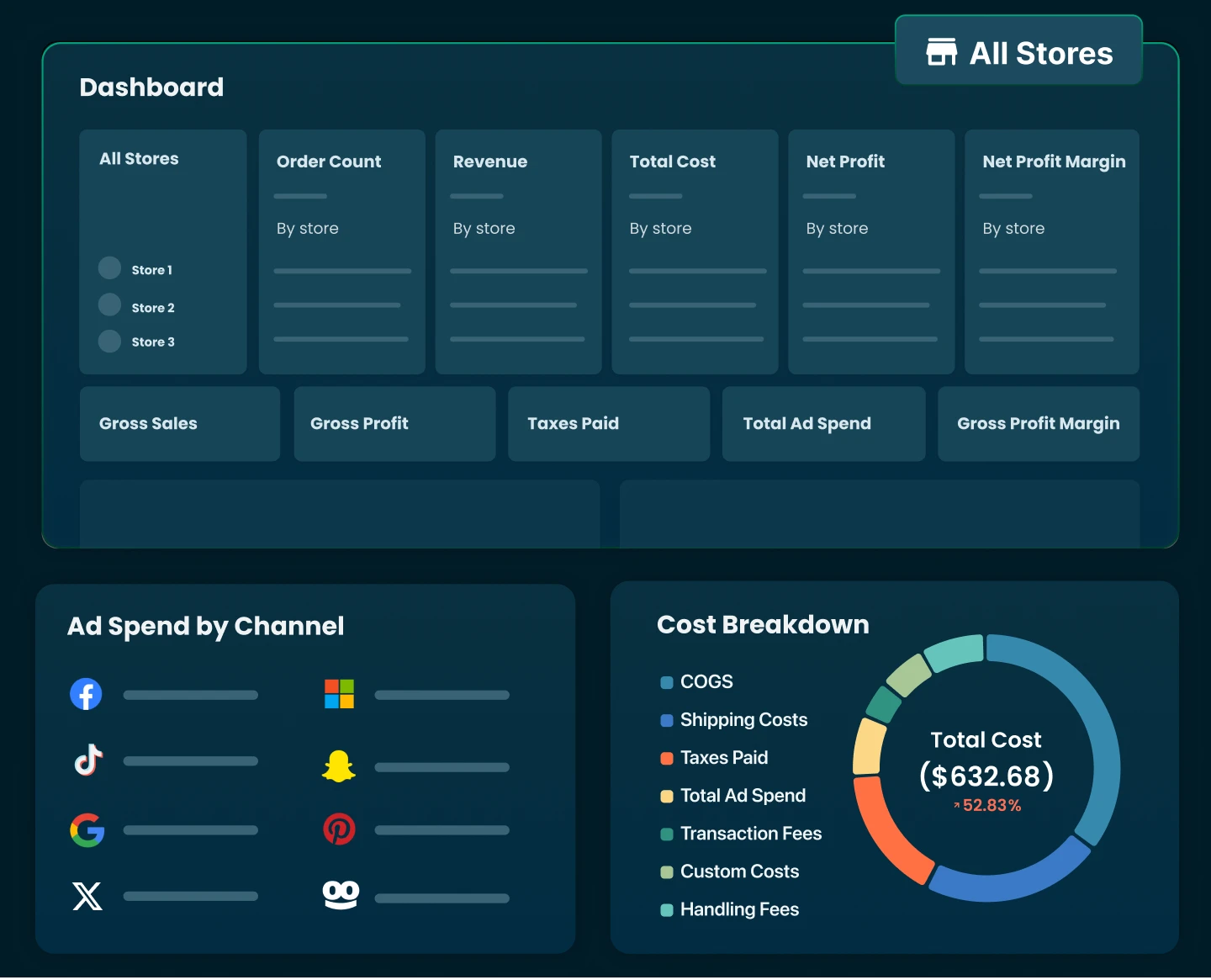
Shipping, insurance, payment processing, discounts, refunds, chargebacks, packaging, app fees, and other operating expenses can all chip away at your margin. When even a few of these costs are missing from your numbers, your profit can look much healthier than it really is.
By bringing all of your costs together, you get a clearer picture of both gross profit and net profit while also seeing exactly where your margin is getting squeezed.
See Your Real Net Profit With TrueProfit
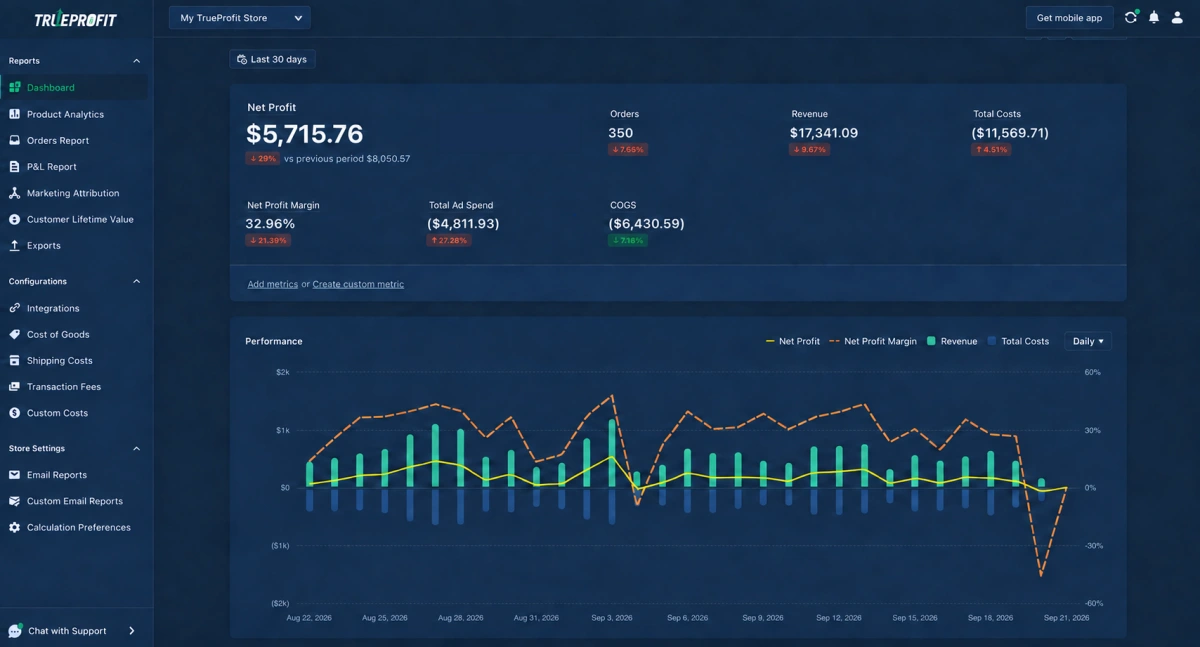
This is where I’d bring in TrueProfit. It’s the #1 net profit tracking platform for Shopify merchants, built to give you a clearer view of what your store actually keeps after all those costs.
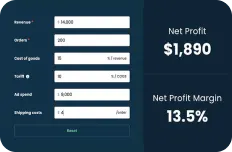
TrueProfit pulls your Shopify sales, COGS, ad spend, shipping, transaction fees, refunds, chargebacks, and other expenses into one dashboard. [a][b]Instead of jumping between Shopify, ad platforms, payment processors, or spreadsheets, you can see your real net profit in real time.
Besides that, TrueProfit also helps you:
- Analyze product profitability to see which jewelry products and SKUs generate the most profit.
- Measure marketing profitability and identify which channels are actually contributing to your bottom line.
- Track customer lifetime value to understand the long-term value of your customers.
That’s a much better number to work with when deciding what to scale, what to cut, and where your next dollar should go.
Final Thoughts
There’s a lot to learn from the Shopify jewelry stores we’ve looked at, but the goal isn’t to build another Mejuri, Missoma, or Keyzar.
The more useful question is: what can you borrow, adapt, and make your own?
Maybe it’s a stronger brand story. Maybe it’s better product photography, personalization, UGC, or a simpler way to help customers choose the right piece. Small changes in how you present and sell your products can make a big difference in how confidently people buy.
But don’t let a growing order count fool you into thinking everything is working.
More sales only matter when they leave more money in the business.
Track the full cost behind those orders, automate the numbers where you can, and keep an eye on your real-time net profit as you scale. Because the goal isn’t just to build a jewelry store that looks successful.
It’s to build one that actually makes money.

Irene Le is the Content Manager at TrueProfit, specializing in crafting insightful, data-driven content to help eCommerce merchants scale profitably. With over 5 years of experience in content creation and growth strategy for the eCommerce industry, she is dedicated to producing high-value, actionable content that empowers merchants to make informed financial decisions.