

Dropship Stickers Guide 2026: Best Niches, Suppliers & Profit Strategies


Table of Contents
Want to break into ecommerce without a warehouse or a big budget? Dropshipping stickers is one of the lowest-risk doors in. Custom stickers cost almost nothing to produce, ship for pennies, and carry margins most product categories can only dream of.
So in this guide I'll walk you through exactly how that works. I'll cover the unit economics, the niches that convert, the products worth selling, the suppliers I'd trust, and how to build a store that can actually survive its own shipping costs.
In this blog:
What Is Dropshipping Stickers?
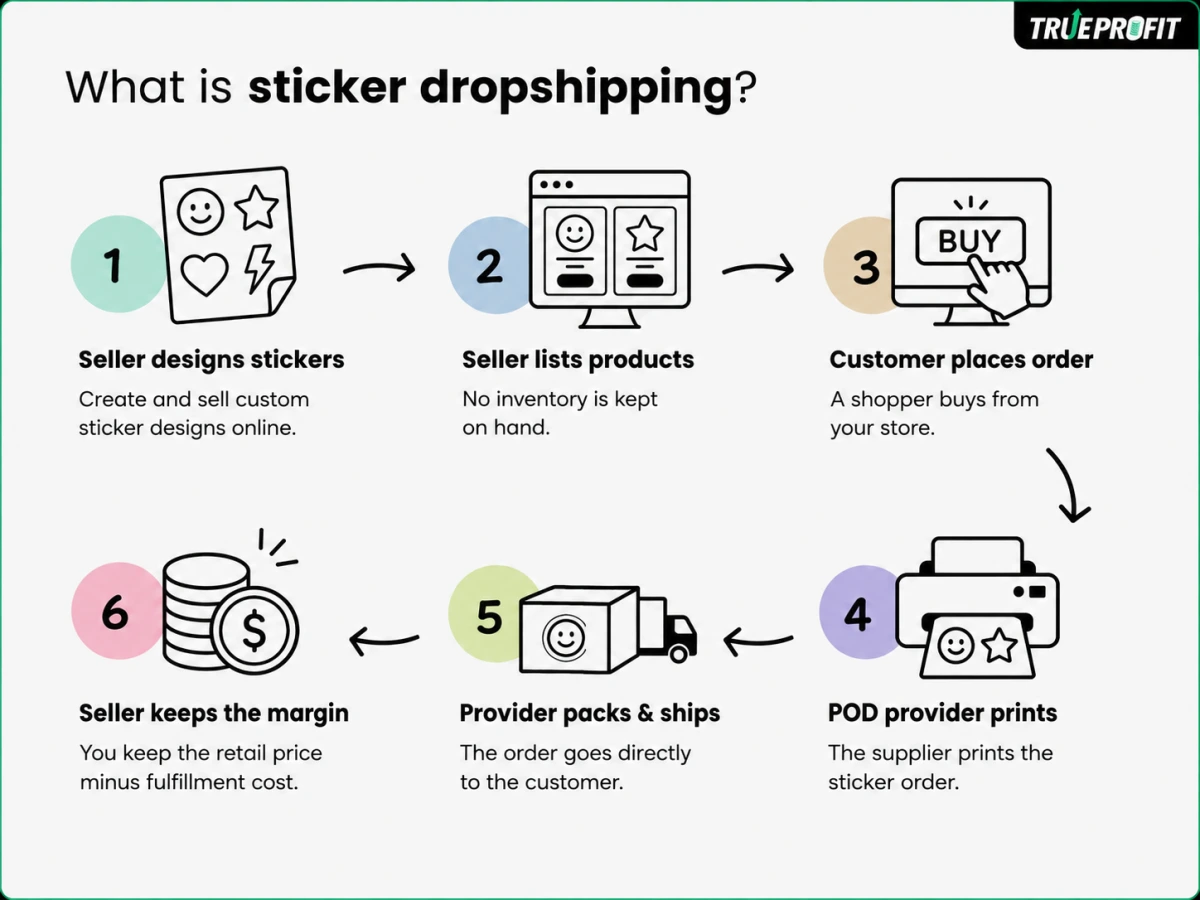
Dropship stickers is an ecommerce model where you design and sell custom stickers online without holding inventory or handling fulfillment yourself. A supplier prints and ships each order after the customer buys.
The whole thing runs on Print-on-Demand (POD). When someone orders a sticker from your store, that order routes automatically to a third-party print provider. They print it, package it, and ship it straight to your customer. You pocket the gap between your retail price and their fulfillment cost.
There are two ways to get started, and I want to be clear up front that they are not equal.


Is Dropship Stickers Profitable in 2026?
Yes, dropship stickers are still profitable in 2026, but the winning strategy has changed completely. Selling single $3 stickers through paid ads is a losing game, because customer acquisition cost (CAC) wipes out the margin. Profit now comes from selling bundles, targeting hyper-specific niches, and leaning on AI to keep design costs near zero.
The demand is certainly there. The global personalized sticker market is projected to reach roughly $5.1 billion in 2026, driven by self-expression culture across laptops, water bottles, and everyday gear. The real question is whether your unit economics can capture any of it. So let's look at the math.
The single-sticker model and the bundle model lead to opposite outcomes. Here's the two of them side by side.
Metric | Single Sticker (Dead Model) | Sticker Pack / Bundle (Profitable Model) |
|---|---|---|
Retail Price | $4.00 | $18.00 (pack of 5–10) |
Base POD Cost | $1.50 | $4.50 |
Shipping & Platform Fees | $1.50 | $2.50 |
Ad / Acquisition Cost (CAC) | $3.00 | $4.00 |
Net Profit / Loss | -$2.00 (Loss) | +$7.00 (Profit) |
The takeaway is simple. Bundles push up your Average Order Value (AOV), and a healthy AOV is the only thing that makes paid ads and platform fees mathematically survivable.
Why the Niche Still Works
Stickers aren't just decoration. They signal identity, humor, and belonging to a subculture, which is exactly why people buy them on impulse and in multiples.
Beyond the emotional pull, four structural advantages make this a strong niche whether you're just starting out or scaling up:
- Minimal startup capital. No bulk inventory, no warehouse, no dead stock hanging over you.
- AI-accelerated design. Generative tools like Midjourney and DALL-E 3, paired with upscalers like Upscayl, can crank out dozens of print-ready 300 DPI designs in hours instead of weeks.
- Genuinely low shipping. Lightweight and flat stickers qualify for the cheapest envelope and parcel rates, at home or abroad.
- Natural bundling. Customers rarely stop at one sticker. Themed packs of 5 to 10 lift AOV without any extra selling effort on your part.
High-Converting Sticker Niches Worth Selling in 2026
The best sticker niches are tight communities with a strong identity and a habit of decorating their gear. Broad audiences don't convert; passionate subcultures do.
Here are six that reliably sell, and I'll flag the design angles that work for each.
1. Blue-Collar Trades & Skilled Professionals
Target Audience: Electricians, welders, linemen, plumbers, HVAC technicians, mechanics, and construction crews.
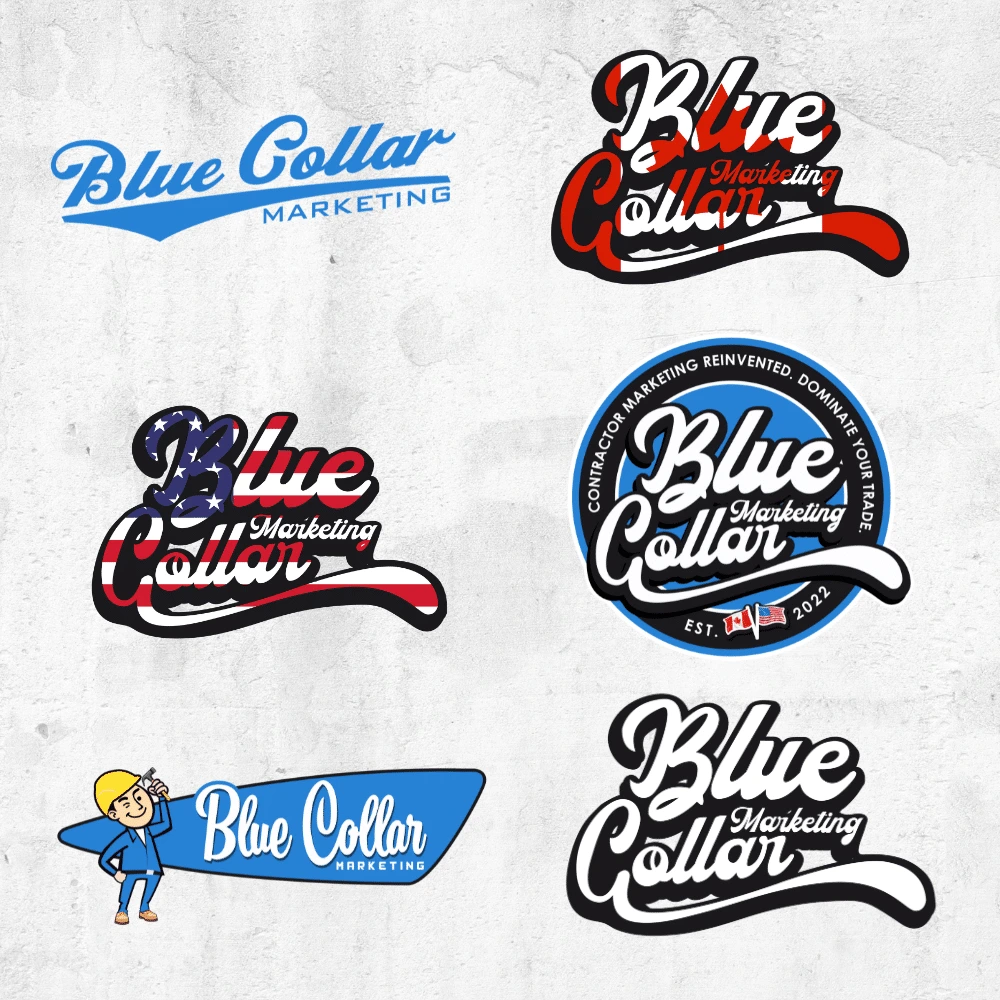
Trade workers have a strong sense of professional identity, and stickers have become part of that culture. Hard hats, toolboxes, Pelican cases, work trucks, and even welding helmets are often covered with decals that show trade pride, humor, or years of experience.
Because they own multiple pieces of gear, buying sticker packs instead of a single design feels like a natural purchase.
2. Healthcare Professionals
Target Audience: ICU nurses, ER staff, phlebotomists, veterinary technicians, and dental hygienists.

Healthcare professionals work long, stressful shifts where humor helps build camaraderie. Stickers have become a simple way to personalize water bottles, badge reels, clipboards, and lockers while showing pride in their specialty.
Many buyers also identify more with their department than the healthcare industry as a whole, making niche-specific designs much more appealing than generic nurse stickers.
3. Tech & Developer Community
Target Audience: Software engineers, cybersecurity specialists, DevOps engineers, data scientists, and Web3 developers.
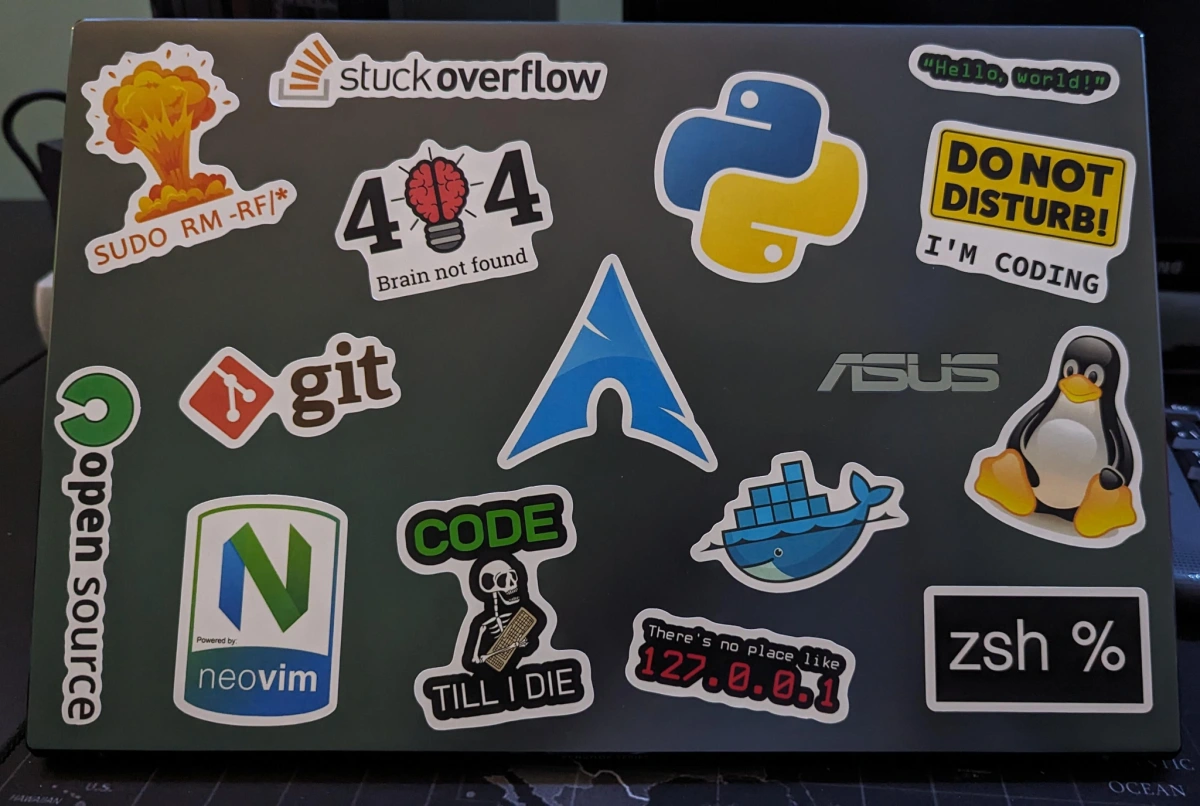
For developers, laptop stickers are almost a personal portfolio. They showcase favorite programming languages, open-source projects, operating systems, and inside jokes that only other developers understand.
Since tech professionals frequently attend conferences, hackathons, and company events where stickers are exchanged, collecting new designs is already part of the culture.
4. Specialized Outdoor & Adventure Sports
Target Audience: Overlanders, rock climbers, disc golfers, trail runners, and backcountry campers.
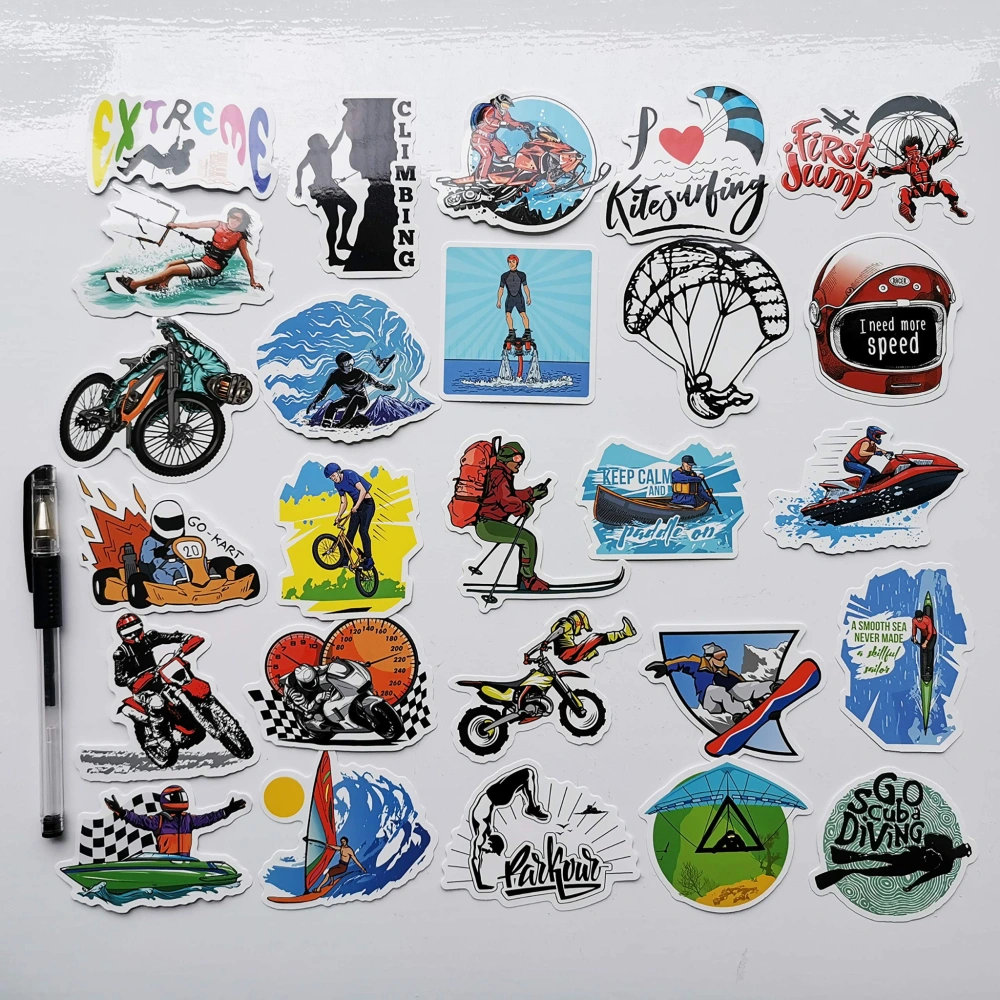
Outdoor enthusiasts often treat stickers as badges of experiences rather than simple decorations. A national park visited, a climbing route completed, or an overlanding trip finished becomes something they proudly display on coolers, roof boxes, water bottles, or vehicles.
This makes premium outdoor vinyl stickers feel more like collectibles than impulse purchases.
5. Bookworms & Dark Academia
Target Audience: Romantasy readers, literary fiction lovers, librarians, and bullet journal enthusiasts.
Reading has evolved into a lifestyle fueled by BookTok and Bookstagram. Readers don't just collect books, they build an aesthetic around them, decorating Kindle cases, journals, laptops, bookshelves, and reading carts.
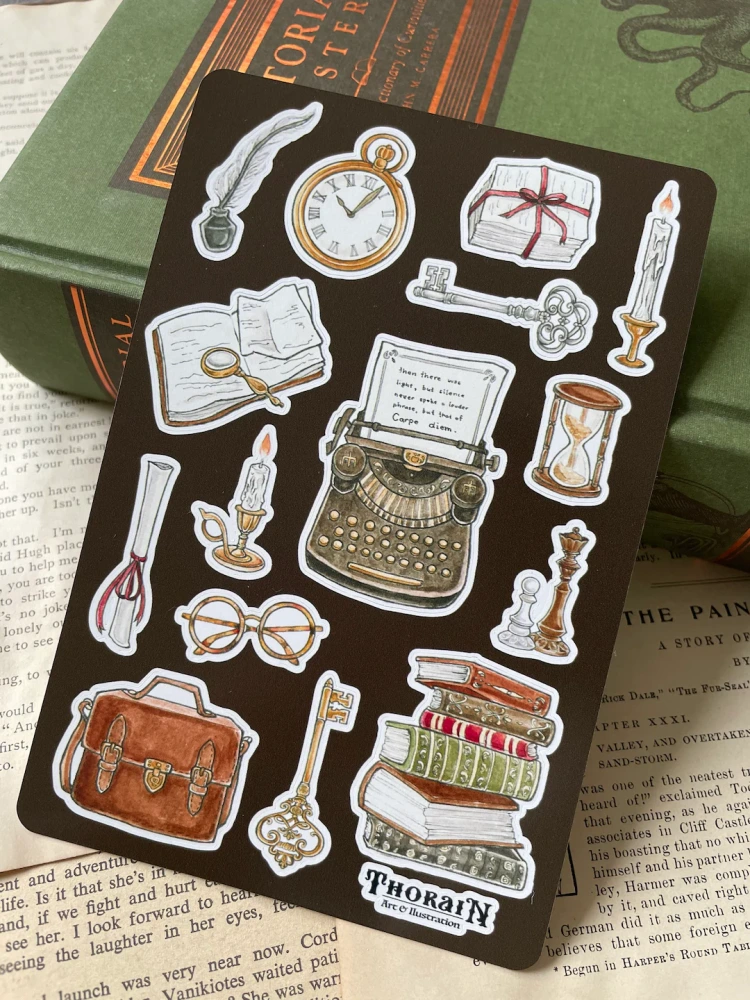
Because many identify strongly with specific genres or tropes, niche collections often outperform generic book-themed stickers.
6. Niche Pet Owners & Dog Breeds
Target Audience: Dog owners by breed (Corgis, Dachshunds, Australian Shepherds, rescues), cat lovers, and exotic pet owners.
Pet owners don't simply buy products, they buy anything that celebrates their pets. Breed-specific communities are especially passionate, with owners actively sharing photos, joining Facebook groups, and attending meetups.
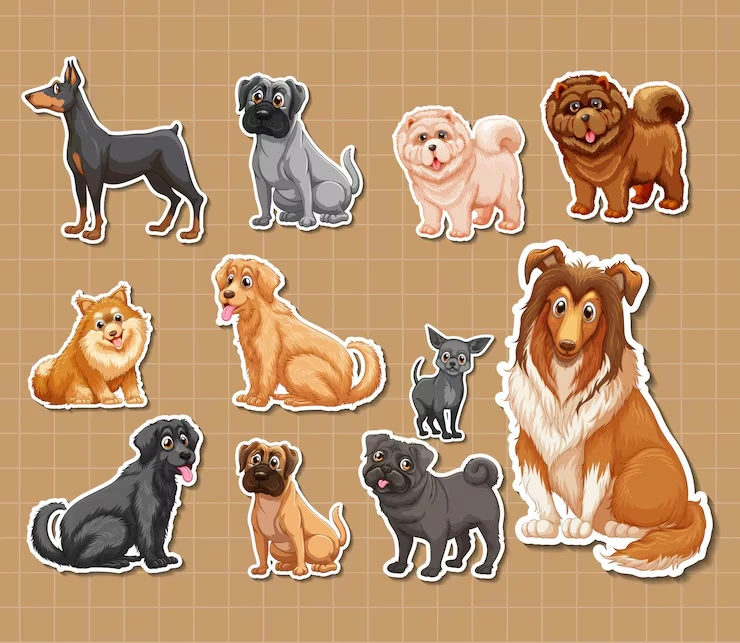
Designs featuring a specific breed or personalized pet portraits create an immediate emotional connection that's much harder to achieve with generic "Dog Mom" stickers.
Once you've picked your people, the next call is what to actually sell them.
Best Sticker Products to Dropship (With Margin Breakdown)
Here's the full picture, then I'll break each one down.
Product Type | Base POD Cost | Retail Price | Net Profit / Unit | Gross Margin |
|---|---|---|---|---|
Kiss-Cut Sticker Sheets | $1.40 – $2.50 | $9.00 – $14.00 | $7.00 – $11.00 | 70% – 80% |
Holographic & Metallic | $1.80 – $2.80 | $6.00 – $9.00 | $4.00 – $6.00 | 65% – 70% |
Theme Bundles (5–10 packs) | $5.00 – $7.50 | $18.00 – $25.00 | $12.00 – $17.00 | 65% – 75% |
Clear / Transparent Vinyl | $1.30 – $2.20 | $5.50 – $8.00 | $4.00 – $5.80 | 68% – 73% |
Bumper / Large Decals | $2.50 – $4.00 | $10.00 – $16.00 | $7.00 – $12.00 | 65% – 75% |
Wall Decals / Murals | $8.00 – $18.00 | $28.00 – $50.00+ | $18.00 – $30.00+ | 60% – 70% |
1. Kiss-Cut Sticker Sheets
Sticker sheets pack multiple mini-designs onto one backing, giving buyers variety while keeping your base cost rock-bottom.
Here's why they work. Production runs only a touch above a single sticker, but the customer walks away with 6 to 10 designs, so perceived value shoots up. Buyers treat sheets as functional tools, not throwaway novelties.
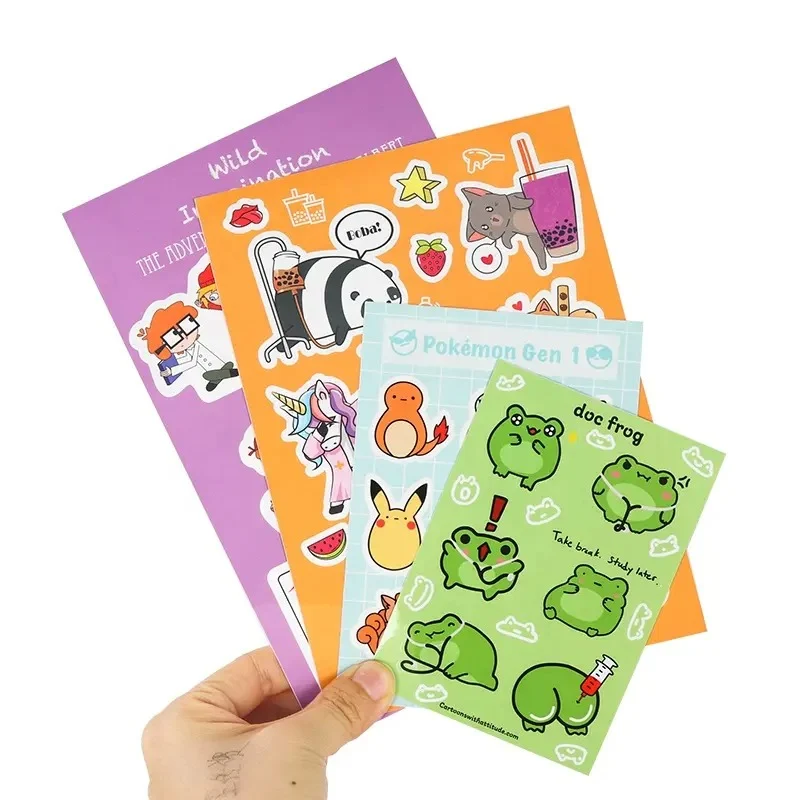
Winning strategy: go after bullet journalers, students, and productivity fans with seasonal planner packs like "Daily Habit Trackers" or "Study Motivation."
2. Holographic & Metallic Stickers
Rainbow shimmer and chrome effects make these pop in a crowded feed, and the premium finish justifies a higher price for barely more cost.
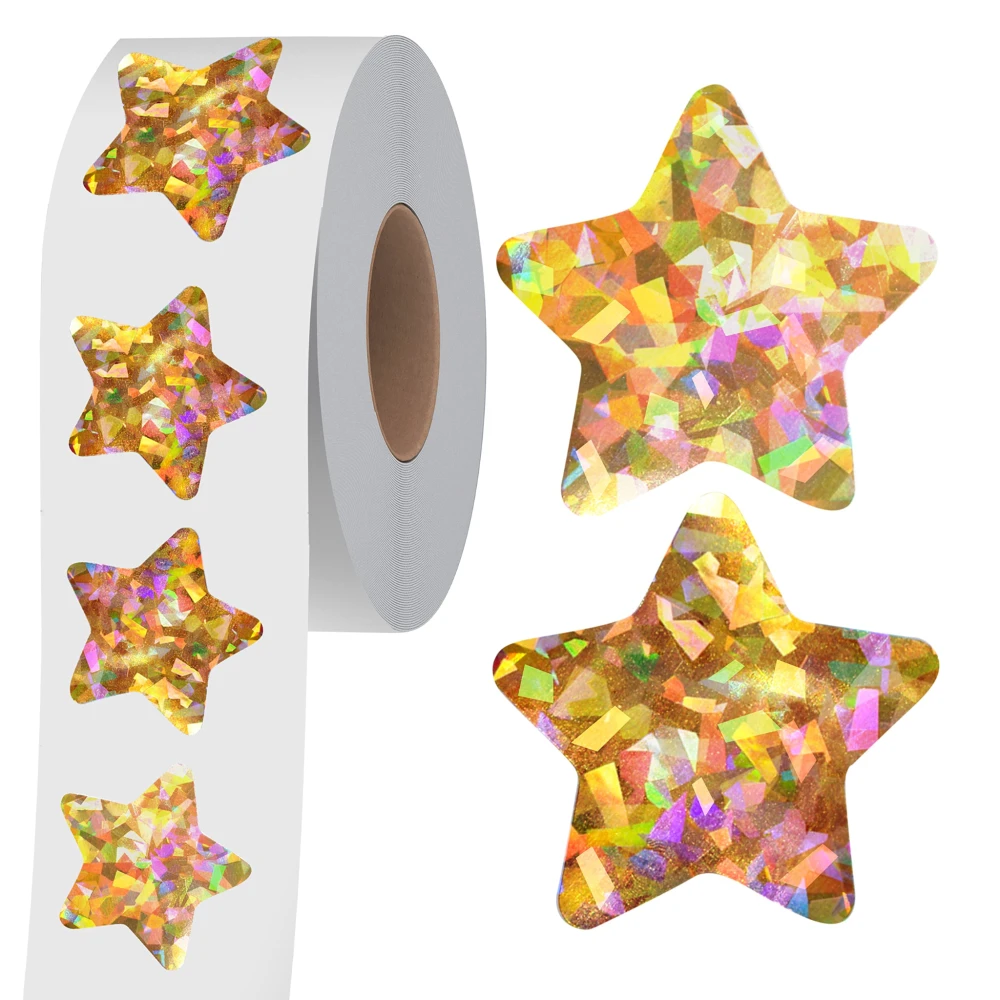
They perform especially well on TikTok, Reels, and Pinterest, where the shine sells itself. You can comfortably charge $2 to $3 more than plain matte vinyl.
Winning strategy: lean into Y2K, retro, space and galaxy themes, and bold typographic slogans.
3. Themed Sticker Bundles (5–10 Packs)
If I had to pick one product to build a store around, this is it. Bundling complementary designs into a curated pack is the single best lever for pushing up AOV, and it's what makes paid ads viable in the first place.
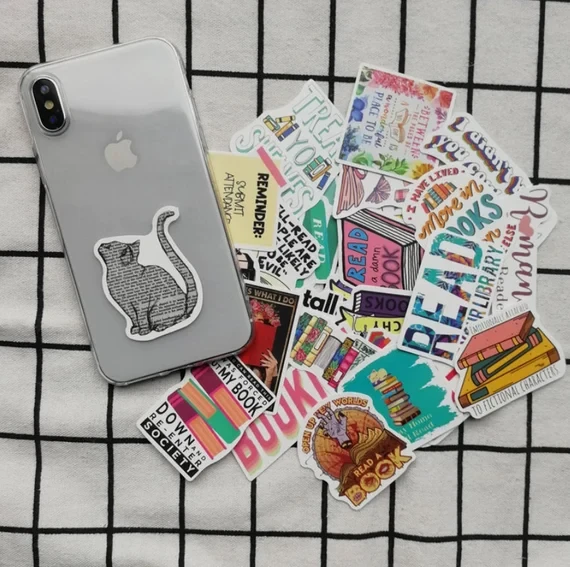
A lone $5 sticker leaves nothing for acquisition costs. A $20–$25 pack of 5 to 10 designs clears clean profit even after marketing.
Winning strategy: build around identity niches, like a "Software Engineer Survival Kit" or "ICU Nurse Essentials."
4. Clear / Transparent Vinyl Stickers
Transparent stickers drop the white border so designs sit flush on glass, metal, and colored surfaces for a sleek printed-on look.
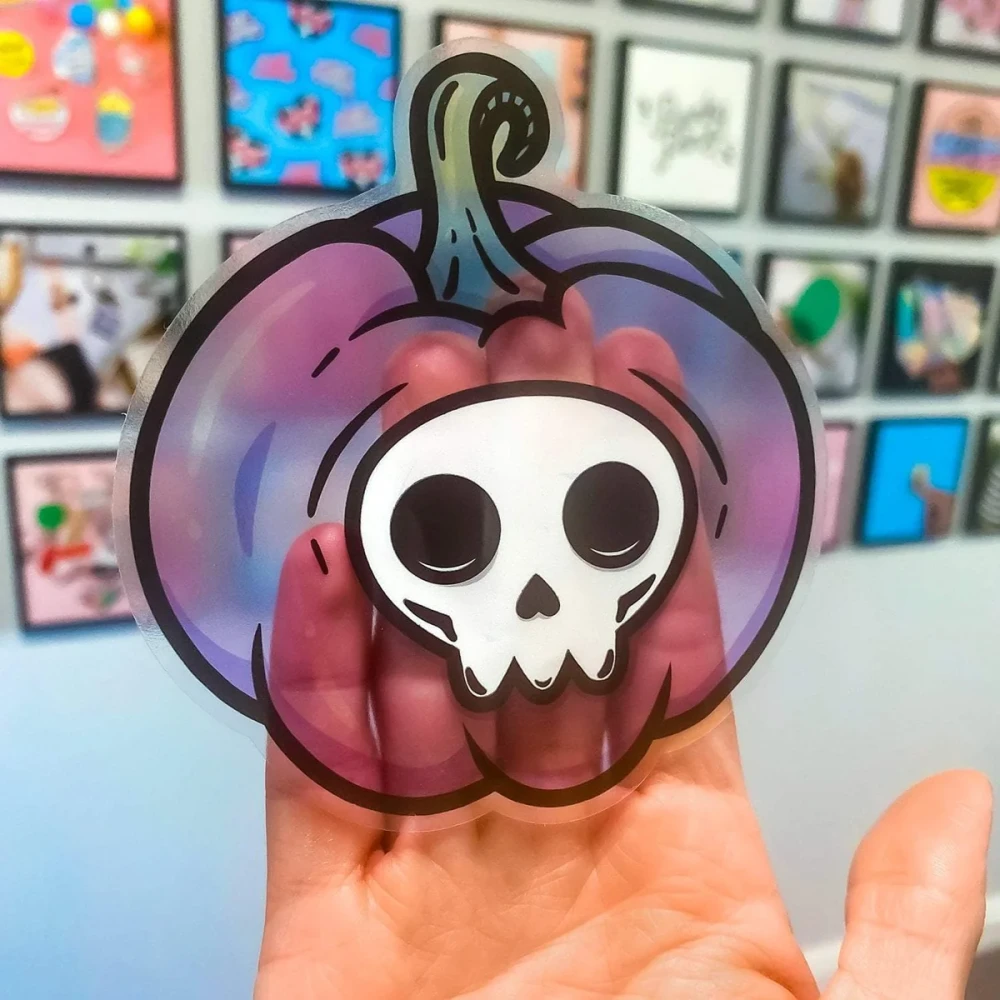
They blend seamlessly onto water bottles, dark laptop lids, and phone cases, which is exactly the premium finish buyers are after.
Winning strategy: show them off on video, applying to dark surfaces and glass so the borderless effect really lands.
5. Large Bumper & Heavy-Duty Decals
Made from weather-resistant vinyl built to survive rain, sun, and rough outdoor use, these are decals buyers happily pay a premium for.

Because customers expect long life on vehicles and gear, a single large decal comfortably sells for $10 to $16.
Winning strategy: target car enthusiasts, tradespeople, overlanders, and skaters who personalize everything they own.
6. Decorative Wall Decals & Murals
Wall decals push your store out of stationery territory and into the far more lucrative home decor market.

These read as interior design accents rather than novelties, so pricing between $30 and $50+ is normal and the dollar profit per sale is chunky.
Winning strategy: focus on nursery art, removable floral designs for renters, and motivational quotes for home gyms.
7. Die-Cut Magnet Stickers
Magnet backings give customers a reusable, damage-free way to decorate metal surfaces, bridging the gap between stationery and functional home goods.
Unlike permanent adhesive, magnets reposition freely, so buyers slap them on fridges, lockers, and whiteboards. That reusability makes them an easy impulse buy.
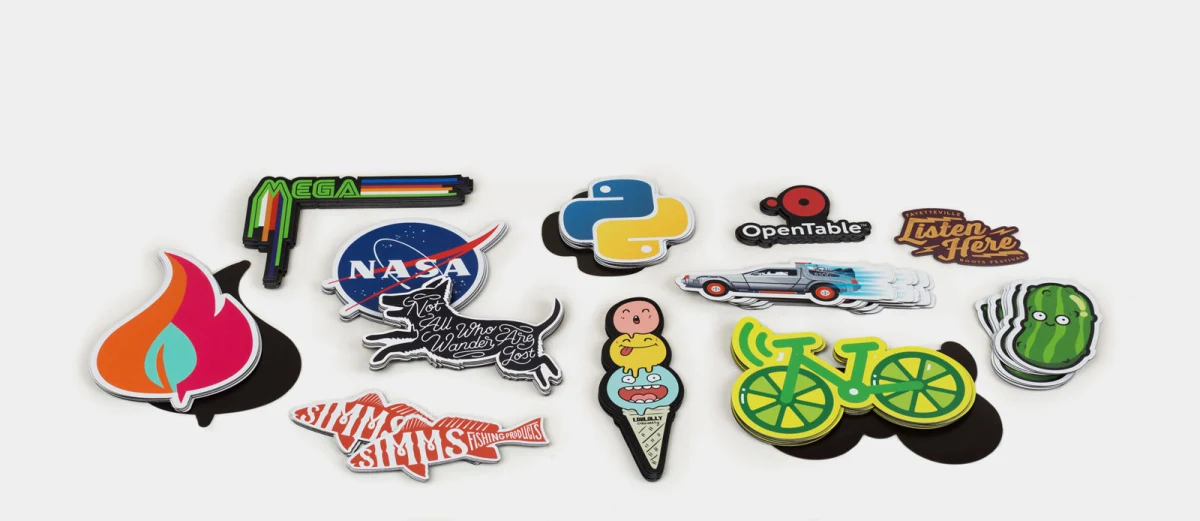
Winning strategy: target home cooks, teachers, and office workers with fridge humor and meal-planning illustrations.
8. Hard-Hat & Toolbox Heavy-Duty Decals
Extra-thick vinyl with aggressive adhesive that grips curved, textured plastic and metal, made for trade workers who wear their identity with pride.
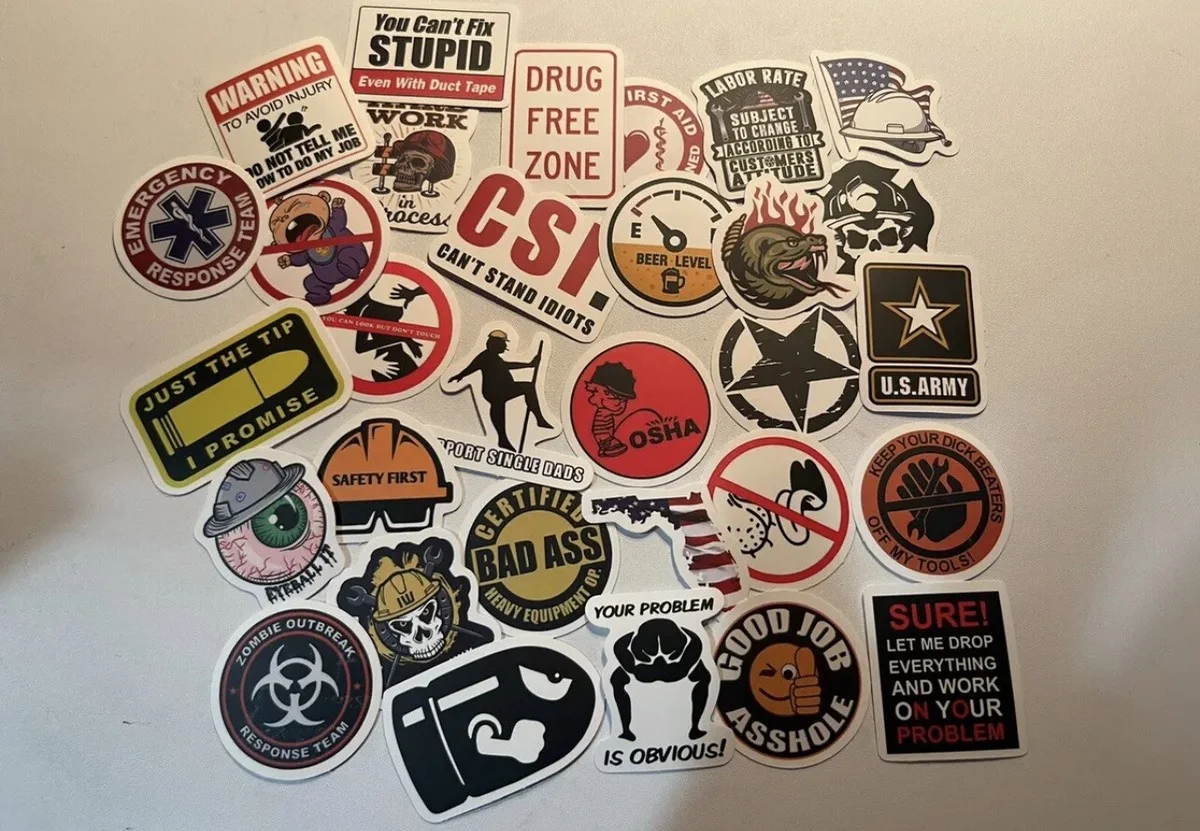
Marketed as heavy-duty and scratch-resistant, a single trade badge sells for $8 to $14 and holds a strong margin.
Winning strategy: design for specific trades, using trade humor, union pride, and safety slogans.
With products sorted, everything now hinges on who prints and ships them. Pick the wrong supplier and your margins vanish before you make a sale.

Best Suppliers to Source Winning Stickers for Your Store
The best sticker suppliers pair a low base cost with fast local shipping. Because stickers are light and cheap, even small differences in base price or shipping network decide whether you profit. Below are the five I'd put on your shortlist, ranked by their core strength.
Supplier | Starting Unit Cost | Best For | Standout Advantage |
|---|---|---|---|
Printify | $1.02 – $1.40 | Budget scaling & highest net margins | Lowest base prices on the market |
Gelato | $1.50 – $2.20 | International sales (US, EU, UK, AU) | Local production in 32+ countries |
Fourthwall | $1.21 – $2.29 | Creators with an existing audience | Free built-in store + platform integrations |
Printful | $2.25 – $2.75 | Premium brands prioritizing quality | In-house manufacturing & custom pack-ins |
Prodigi | $1.20 – $1.80 | UK/EU markets & API builders | White-label API & strong EU shipping |
1. Printify: Best for Low Base Costs
Printify is a supplier marketplace that connects you to independent print providers worldwide, such as Monster Digital and District Photo.
Base sticker price starts around $1.02–$1.40 per unit with Printify Premium, and it plugs into Shopify, Etsy, WooCommerce, TikTok Shop, eBay, and Squarespace. US fulfillment runs 2–5 business days.
The upside is the lowest per-unit cost in the industry, ideal for squeezing every cent out of bundle margins. The tradeoff is that quality and packaging vary depending on which print partner fulfills the order.
2. Gelato: Best for International Shipping
Gelato routes every order to the nearest facility across its 32+ country production network, which cuts down delivery times and customs friction.
Base price starts around $1.50–$2.20 per unit, with integrations for Shopify, Etsy, TikTok Shop, WooCommerce, and Amazon. Local fulfillment (US, UK, EU, AU) runs 2–4 business days.
It really shines for global stores by wiping out import fees and slow cross-border shipping. Base prices sit slightly above Printify's bulk options.
3. Fourthwall: Best for Creators
Fourthwall is built for creators and artists who want to sell stickers alongside merchandise, memberships, and digital products.
Base price starts around $1.21 for vinyl decals and $2.29 for kiss-cut stickers, with integrations spanning YouTube Product Shelf, TikTok Shop, Instagram Shopping, Twitch, and Shopify. Fulfillment runs 3–5 business days.
It throws in a free built-in storefront and handles customer support, so you can skip a paid Shopify plan. You do give up some control over independent order routing compared to Printify.
4. Printful: Best for Premium Branding
Printful owns its production facilities rather than outsourcing, which guarantees consistent color, durable vinyl, and custom packaging.
Base price starts around $2.25–$2.75 per unit, with integrations for Shopify, Etsy, Amazon, TikTok Shop, Wix, and Squarespace. Fulfillment runs 2–5 business days.
The strength is top-tier print quality and custom pack-ins for brand building. The catch is the highest base cost of the major suppliers, which eats into margins on cheap sticker lines.
5. Prodigi: Best for UK/EU & API Builders
Prodigi is a UK-based print API and fulfillment network with strong coverage across Europe, North America, and Australia.
Base price starts around $1.20–$1.80 per unit, with integrations for Shopify, Etsy, WooCommerce, and a REST API. UK and EU fulfillment runs 2–4 business days.
It's rock-solid for European orders and offers a clean API for custom software. US shipping lags behind US-native providers.
Now that you know what to sell and who to sell it with, let's pull it all together into a store that actually makes money.
How to Build a Profitable Sticker Brand
Building a profitable sticker brand comes down to one thing: fixing your unit economics. Because stickers are low-ticket items, single-item dropshipping loses money on shipping and ads. The fix is high-margin bundles, sharp niche positioning, and organic marketing. Here's how I'd put it into practice, step by step.
1. Pricing & Unit Economics
Structure your store around high AOV, not single sales. POD suppliers charge roughly $1.50–$2.50 per sticker plus $3–$4 shipping, while customers expect to pay just $4–$5 for a single sticker, which leaves you with nothing.
These four AOV strategies flip the math in your favor:
Strategy | Description | Cost (COGS + Ship) | Retail | Net Profit |
|---|---|---|---|---|
3–5 Sticker Bundles | Curated theme packs | $6.00 | $16.99 | ~$11.00 |
Mystery Packs | Random 5–10 designs | $8.50 | $22.99 | ~$14.49 |
Volume Discounts | Buy 3 Get 1 / Buy 5 Get 2 | $5.50 (4 stickers) | $15.00 | ~$9.50 |
Upsells / Add-ons | Magnets, holographic, sheets | +$0.50 | +$2.50 | +$2.00 |
Aim for an AOV of $18–$25 with a net margin of 40–50% after fulfillment. Keep a close eye on that net margin, because low-ticket stores are exactly where a small fee change can quietly turn a winning product into a losing one.
2. Niche Selection & Design Strategy
Generic stickers fail in a saturated market. Profit comes from targeting passionate subcultures with a distinct visual identity, using the six niches I covered earlier as your starting map.
Source your designs one of three ways:
- Original artwork. Commission artists or set up revenue-share deals through Behance or Instagram.
- Stock vectors plus edits. Buy commercial-license packs on Creative Market or Envato, then rework the typography and layout.
- AI-assisted concepts. Spin up ideas with tools like Midjourney, then upscale and refine to print quality.
Whichever route you take, always export in CMYK at 300 DPI minimum, with transparent backgrounds (PNG or vector PDF) and a 0.125-inch bleed layer for custom cutlines.
3. Sourcing & Fulfillment
Choose suppliers that support white-label fulfillment, meaning no supplier branding on the package, and that offer waterproof, UV-resistant, die-cut vinyl. Match the supplier to your market: Printify for margin, Gelato for international speed, Printful for a premium feel.
4. E-Commerce Platform & Tech Stack
I'd run Shopify as your primary store and Etsy as a secondary discovery channel.
Shopify hands you control over bundles, post-purchase upsells, and email. Etsy brings built-in sticker search intent, which is excellent for early validation and cash flow. Seed your first sales on Etsy, then pull repeat buyers over to Shopify with package inserts or branded discount cards.
Three app categories will lift your conversion:
- Bundle apps (Fast Bundle, Bundler): build mix-and-match packs right on the product page.
- Upsell apps (ReConvert): offer discounted add-on stickers on the thank-you page.
- Klaviyo: automate abandoned cart, browse abandonment, and post-purchase review flows.
5. Marketing & Customer Acquisition
Here's where a lot of sellers trip up. Hold off on broad paid ads until your bundle catalog is deep enough to support the AOV they demand. For low-ticket sticker stores, organic and low-cost channels scale far better.
- Short-form video. TikTok and Reels showing the peel, the finish, and the application turn browsers into buyers.
- Micro-influencer gifting. Send free packs to niche creators (a nurse account, a dev account) in exchange for content.
- Package inserts. Turn every order into a repeat sale with a discount card that steers buyers back to your store.
6. Track the Metrics That Actually Drive Profit
This one gets even more important once you start testing dozens of niche collections. A "BookTok Bundle" might rack up more sales than your "Blue-Collar Trades Pack," but if its customer acquisition cost runs twice as high, it could quietly be the worst product to scale.
So rather than watching revenue alone, keep an eye on the metrics that actually reveal what's working:
- Net profit by ad campaign
- Customer acquisition cost (CAC)
- Average order value (AOV)
- Repeat purchase rate
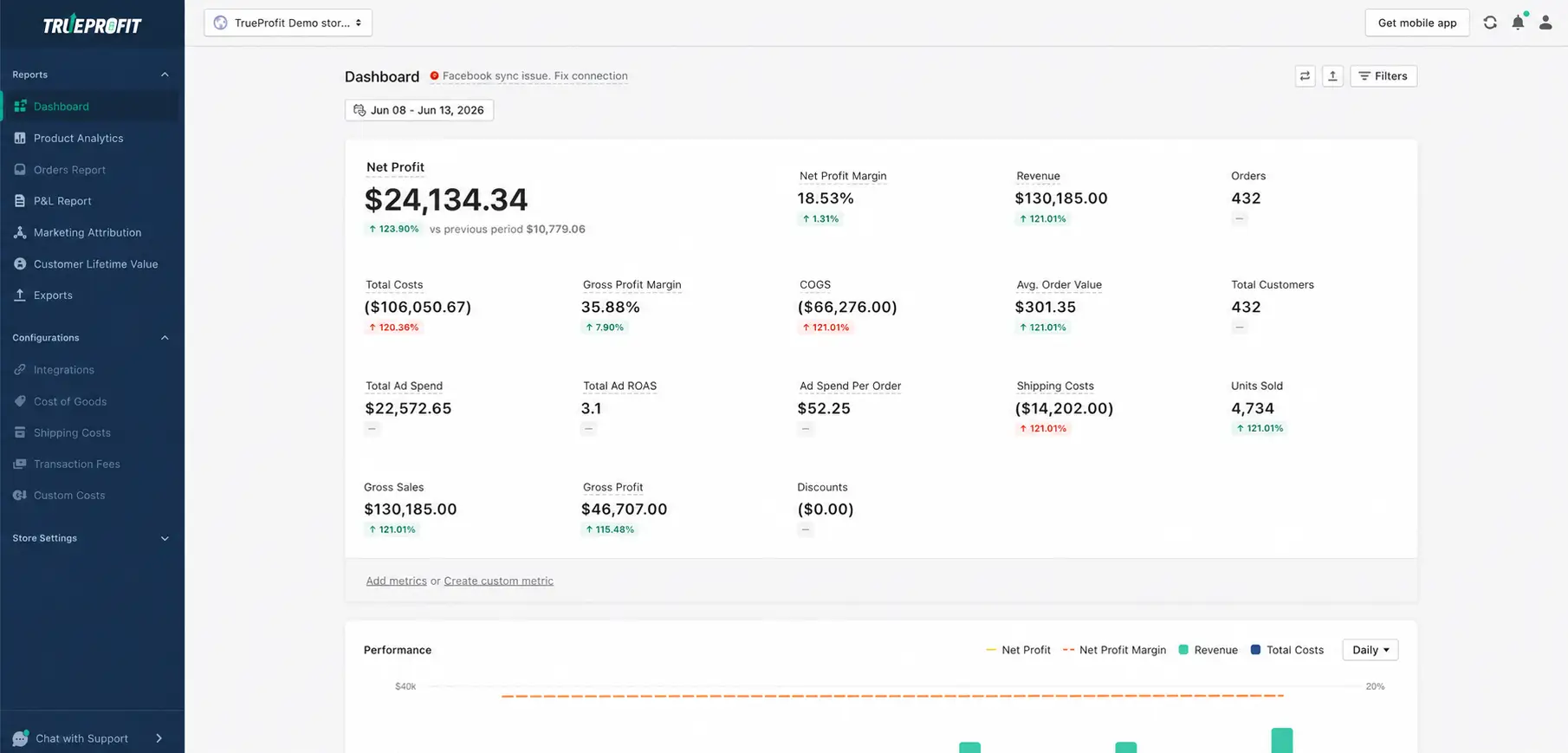
Tracking all of that by hand gets overwhelming fast, especially when your orders, ad platforms, and fulfillment providers all live in separate systems.
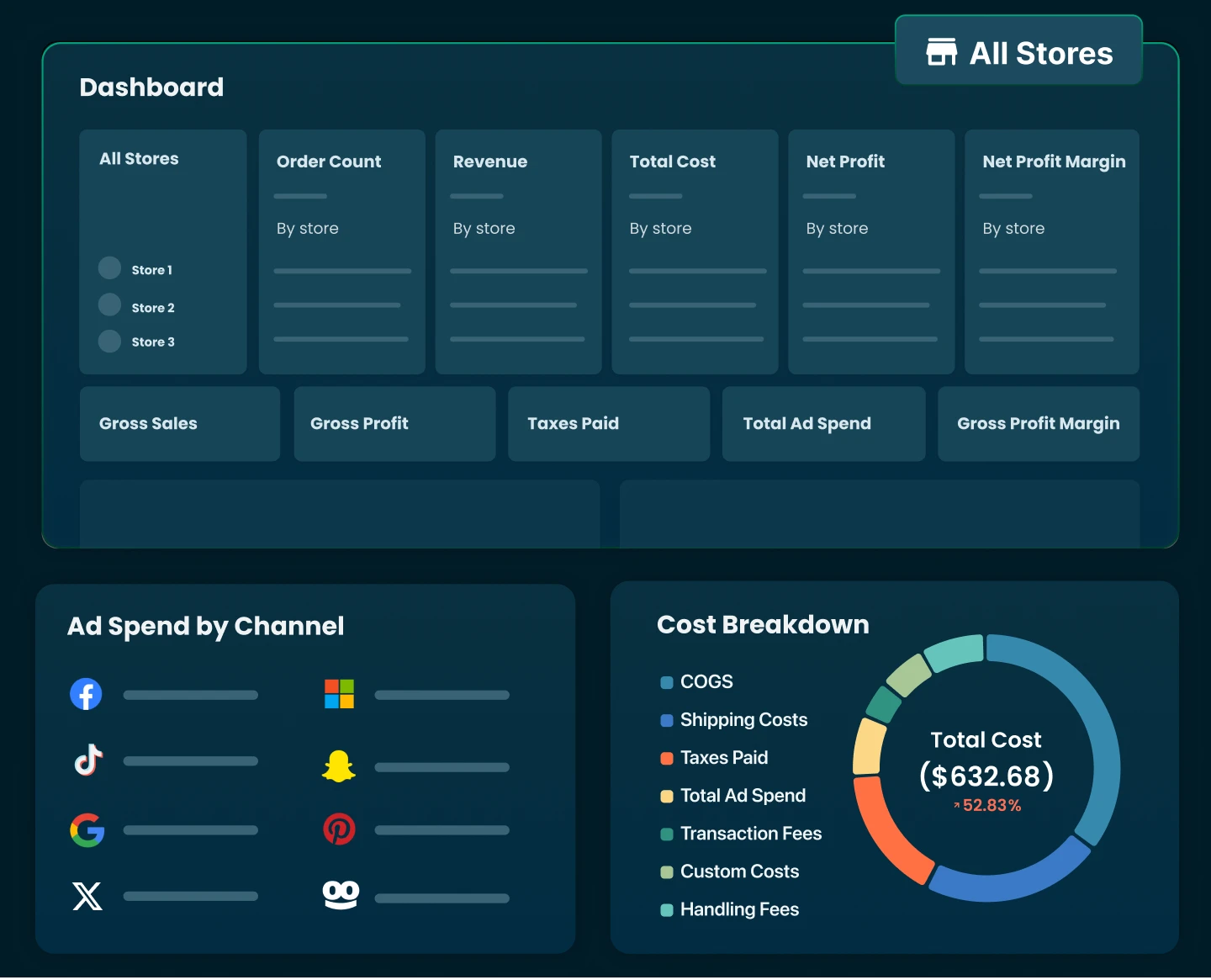
That's exactly why many Shopify merchants lean on TrueProfit. It pulls your Shopify orders, product costs, ad spend, shipping, transaction fees, refunds, and other operating expenses into one real-time profit dashboard, so you always know which products are genuinely making money.
Final Thoughts
If there's one lesson to take away from this guide, it's this:
Don't compete by selling cheaper stickers. Compete by building better collections.
People don't buy stickers because they need vinyl. They buy them because they identify with a hobby, profession, pet, or community. When your designs reflect that identity, and your store is built around profitable bundles instead of individual products, you've already separated yourself from thousands of generic POD stores.
Get those fundamentals right, keep tracking your real profit, and you'll have a business that's built to scale instead of one that's constantly chasing the next sale.
Lila Le is the Marketing Manager at TrueProfit, with a deep understanding of the Shopify ecosystem and a proven track record in dropshipping. She combines hands-on selling experience with marketing expertise to help Shopify merchants scale smarter, through clear positioning, profit-first strategies, and high-converting campaigns.