




What Is Marginal Cost in Ecommerce? Formula, Examples & Best Practices


Table of Contents
Meta: Learn what marginal cost means in ecommerce, how to calculate it, and how it impacts pricing, scaling, and profitability decisions. Discover more!
More orders don't automatically mean more profit. As your store grows, every additional sale brings new costs, from inventory and shipping to payment fees and customer acquisition. Marginal cost helps you measure those incremental expenses so you can see whether scaling is actually making your business more profitable.
In this guide, you'll learn what marginal cost is, how to calculate it, and how to use it to make better ecommerce decisions.
In this blog:
What Is Marginal Cost?
Marginal cost is the extra cost your business takes on when you produce or sell one more unit of a product. If you're running a Shopify store and you fulfill 500 orders this month, the marginal cost answers one simple question: how much does order number 501 cost you?
The word "marginal" just means "additional." It's not the average of all your costs, and it's not your total spending. It's the cost tied to that next unit alone.
In economics, marginal cost helps explain how businesses choose output levels and set prices. In your day-to-day operations, it helps you decide things like whether to accept a bulk order, run a discount, or ramp up production. Both uses come back to the same idea: know what one more unit costs you before you commit.

What Are Key Components of Marginal Costs?
Marginal cost is driven entirely by variable costs, the costs that go up or down depending on how many orders you fulfill. For ecommerce stores, this usually includes:
- Product cost (COGS): what you pay your supplier for each unit
- Packaging: boxes, mailers, inserts, tape, etc.
- Shipping: carrier fees or per-order 3PL fulfillment costs
- Payment fees: Stripe, PayPal, Shopify Payments transaction fees
- Pick & pack labor: if you're paying per order for fulfillment work
These are the costs that scale directly with every additional order you ship.
On the flip side, fixed costs don't factor into marginal cost at all.
Things like your Shopify subscription, warehouse rent, software tools, or salaried team members stay the same whether you process 100 orders or 1,000. Since they don't change with volume, they have no place in the marginal cost calculation.
The Marginal Cost Formula & Example
The standard marginal cost formula is straightforward:
Let's say you run an online store selling skincare products.
Step 1: Compare two production levels
- At 100 orders/month, your total cost is $5,000
- At 110 orders/month, your total cost is $5,300
Step 2: Calculate the changes
Change in Total Cost (ΔTC) = $5,300 − $5,000 = $300
Change in Quantity (ΔQ) = 110 − 100 = 10 units
Step 3: Apply the formula
Marginal Cost = $300 ÷ 10 = $30 per unit
=> That means once you're already operating at that level, each additional order is costing you $30 to fulfill and deliver.
That $30 is the number you should compare against your profit per order when you're deciding whether to scale ads, push a discount, or figure out if your current fulfillment setup can handle more volume without eating into your margins.
Marginal Cost vs. Average Cost vs. Total Cost
These three terms sound similar, but they answer completely different questions about your business.
Here's how to think about it in ecommerce terms:
Total cost is your overall spend at a certain scale. Ads, product cost, shipping, ops, everything rolled together. Average total cost is what most people instinctively look at. It smooths everything out and tells you, "On average, how much does each order cost me?"
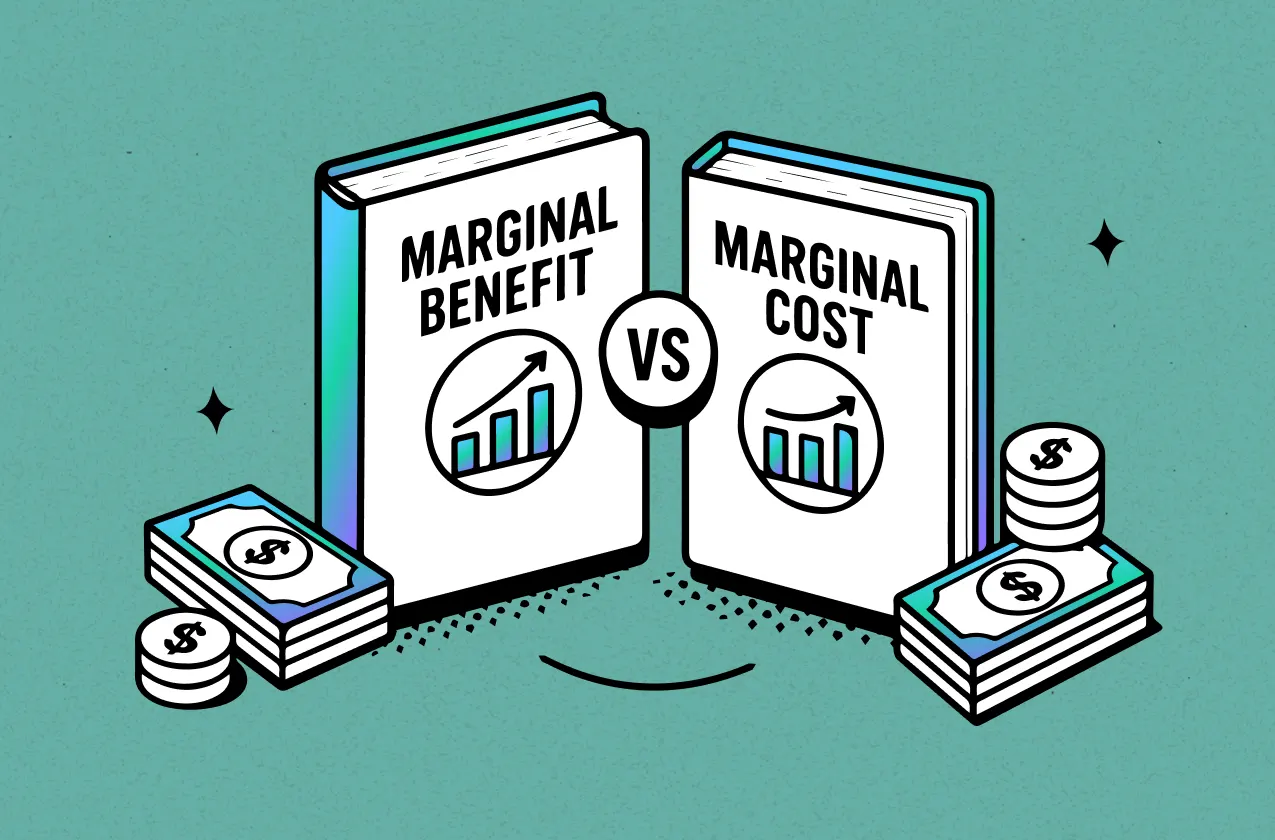
But here's the problem: averages can completely mask what's actually happening when you scale. Marginal cost is the one that matters most for growth decisions. It's forward-looking, not backward-looking. It answers: "If I push for one more sale, how much extra will that cost me?"

How to Use Marginal Cost in Pricing Strategy
Marginal cost isn't just a number you calculate for the sake of accounting. It's one of the most practical tools you have for making real pricing decisions in ecommerce.
It helps you figure out how low you can go, when discounts make sense, and whether scaling is still working in your favor.
1. Setting a Price Floor
Your marginal cost is the absolute lowest price you can realistically charge for each additional unit.
Think about it this way: if you sell a product below its marginal cost, you're losing money on every extra order. The revenue from that sale isn't enough to cover the cost of getting it out the door.
That's why marginal cost naturally becomes your price floor. It's the line you shouldn't cross when you're running promotions, testing new price points, or competing in a crowded market.
2. Volume Discounts and Tiered Pricing
In a lot of ecommerce businesses, costs aren't static. As you scale, your marginal cost can actually go down. That happens when suppliers give you better pricing, shipping gets cheaper per unit, or fulfillment becomes more efficient at higher volume.
For example, your cost per unit might drop from $20 to $17 once you pass 1,000 orders per month. That $3 difference can completely change how aggressive you can be with discounts.
When that happens, you've got room to play with your pricing strategy. You can offer bulk discounts, set up tiered pricing levels, or push for higher conversion rates without putting your margins at risk.
3. Scaling and Operational Decisions
As your business grows, you'll probably need to hire more fulfillment staff, switch to a different 3PL provider, negotiate better supplier contracts, or maybe even expand into a new warehouse.
Each of those changes can shift your cost per additional unit. Marginal cost helps you see whether those changes are actually improving efficiency or quietly making each order more expensive.
For example, if hiring extra warehouse staff bumps your marginal cost from $19 to $21 per order, you need to make sure your revenue per order is still high enough to justify that expansion.
If your marginal cost starts climbing quickly as you scale, that's usually a sign that growth is becoming less efficient. More revenue doesn't automatically mean more profit.
Pros & Cons of Marginal Cost in Ecommerce
Marginal cost is a genuinely useful concept for ecommerce, but like any single metric, it has its limits. It gives you a sharper view of unit-level decisions, but it won't tell you everything about how your business is performing overall.
Pros and Cons Overview
Like any business metric, marginal cost has both strengths and limitations. Understanding both helps you use it more effectively when making ecommerce decisions.
A closer look at how it works in practice
1. Why it is useful
Marginal cost is most valuable when you're making decisions about one additional unit. That includes things like increasing ad spend, accepting a new order, or scaling up inventory.
Instead of relying on averages that can smooth over problems, it forces you to focus on what's actually happening at the margin. And in ecommerce, the margin is often where profit is either created or quietly lost.
2. Where it becomes limited
The biggest limitation is that marginal cost only looks at variable costs. It doesn't account for fixed expenses like rent, software subscriptions, or salaried team members.
So a business can look perfectly healthy from a marginal cost perspective but still be under pressure on overall profitability if fixed costs are high.
The other thing to keep in mind is that marginal cost changes as your business grows. It depends on your suppliers, shipping rates, and operational efficiency. If you're not updating it regularly, you can end up making decisions based on numbers that no longer reflect reality.
Final Thoughts
Marginal cost is a simple but powerful lens for thinking about growth. It shows you what each additional order actually costs, which helps you figure out whether scaling is truly profitable or just looks good on the revenue line.
But the limitation of marginal cost is also exactly where most ecommerce merchants start to run into trouble. It doesn't give you a complete, real-time view of profitability when ad spend shifts, fees fluctuate, and costs change across channels.
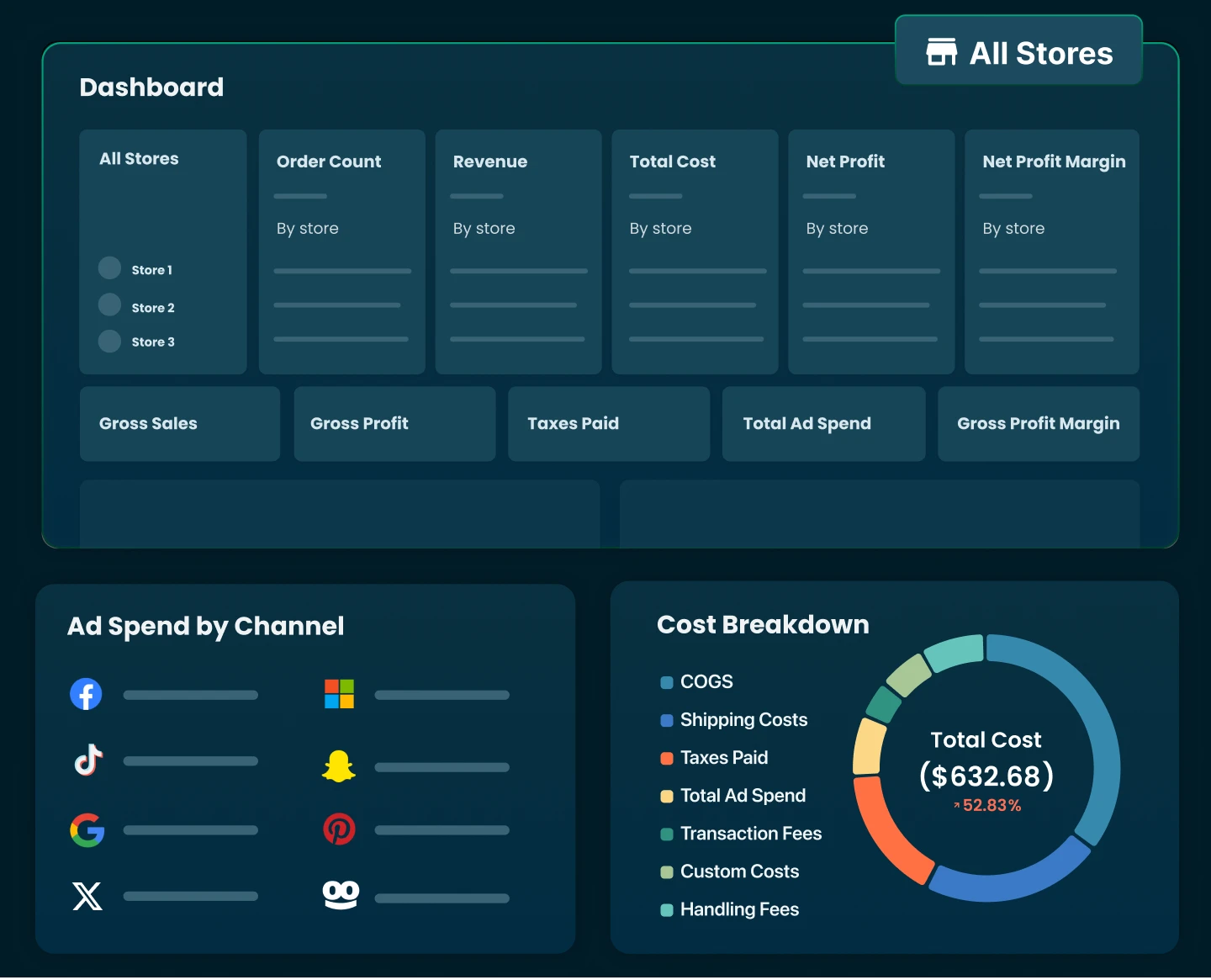
Knowing your marginal cost is only part of the equation. Shopify sellers also need a real-time view of their actual profit, not just costs, including ad spend, fees, and fulfillment expenses. That’s where TrueProfit comes in. It helps you track your net profit per order by consolidating all revenue and cost data in real time, so you always know what’s actually driving profitability as you scale.

Lila Le is the Marketing Manager at TrueProfit, with a deep understanding of the Shopify ecosystem and a proven track record in dropshipping. She combines hands-on selling experience with marketing expertise to help Shopify merchants scale smarter, through clear positioning, profit-first strategies, and high-converting campaigns.