
Shopify Dropshipping Agents: 10 Best Options to Source & Fulfill Orders (2026)


Table of Contents
If you’re running a Shopify dropshipping store, you’ve probably reached a point where doing everything yourself starts to become a bottleneck. Finding products, talking to suppliers, checking quality, and making sure orders actually get delivered... it gets messy pretty quickly.
That’s where a dropshipping agent comes in. But here’s the thing: not every store needs one. Sometimes an agent is exactly what helps you scale, and sometimes a simple dropshipping app is the smarter choice.
In this article, I’ll break down what a Shopify dropshipping agent actually does, when you should hire one, how they compare with apps and platforms, and what to look for before trusting someone with your business.
What Is a Shopify Dropshipping Agent?
A Shopify dropshipping agent is the middle layer between your store and your manufacturers, warehouses, carriers, and packaging providers. In other words, they are far more than a product finder.
An agent finds products that fit your niche and price target, then negotiates with suppliers on cost, availability, and shipping. A typical agent handles:
- Product sourcing and supplier communication
- Price negotiation and quote comparison
- Sample coordination and quality control
- Packaging, inserts, and basic branding
- Order fulfillment, tracking, and stock alerts
What you are really buying here is coordination: time, supplier access, and operational cover, not just a cheaper unit price.
It also helps to keep the terms straight. A supplier provides the product, a fulfillment service stores and ships it, a platform connects you with products and tools, and an agent often rolls all three into one.
In this blog:
Benefits of Using Agents When Running A Dropshipping Business
A good agent knows the suppliers in your space inside out: which ones are reliable, which have the best quality, which offer the best deals, and where to turn for niche goods. That knowledge compounds in a few concrete ways:
- Better sourcing. Agents have the inside track on trending products and can move fast before a product gets saturated.
- Stronger pricing. With several suppliers offering the same product, an agent who knows the space can negotiate better margins than you would land on your own.
- Consistent quality. Sample coordination and quality checks before shipment cut down on refunds and bad reviews.
- Reliable delivery. Customers judge your brand on shipping, not your supplier. A solid agent keeps timelines and tracking accurate.
- Room to brand. Custom packaging, inserts, and thank-you cards are usually on the table once you are past testing volume.
That said, an agent is not free upside down. Most work with several clients, some possibly your direct competitors, sourcing from the same suppliers at similar rates, which can make it harder to stand out. And agents charge for their time, whether that is a membership fee, a per-order fee, or a cut of sales that eats into your margin. Weigh that tradeoff before you sign on.

How to Choose a Reliable Dropshipping Agent For Your Shopify Stores
A reliable agent makes your business easier to run: clear answers, realistic timelines, and proof they can actually fulfill orders. Judge communication before anything else: if an agent is slow or vague before you've even placed an order, that problem only compounds once you depend on them.
Criteria | What to Check | Why It Matters |
|---|---|---|
Communication | Response speed, clarity, language fit | Poor communication creates delays and support tickets |
Pricing | Product, shipping, service, packaging fees | Hidden costs quietly erase profit |
Product quality | Samples, materials, defect risk | Quality problems drive refunds and bad reviews |
Shipping | Timelines, carriers, tracking, coverage | Customers judge your store by the delivery |
Scalability | Volume capacity, backup suppliers | A partner must handle growth without breaking |
Branding | Inserts, thank-you cards, logo packaging | Branding earns repeat buyers |
Issue handling | Stockouts, delays, damage, refunds | Clear rules prevent chaos when problems hit |
I give shipping extra weight, because customers judge your brand, not your supplier. Tracking has to be valid and easy for buyers to follow.
Red flags to avoid
Here is what to watch for:
- No sample order option
- No clear tracking method
- No proof of past fulfillment
- Very vague pricing
- Weak English support if your team needs it
- Refusal to explain refund or replacement rules
- Promises of extremely fast delivery to every country
A good agent, on the other hand, is upfront about limits. They will tell you when a product is fragile, oversized, seasonal, or simply hard to ship.
Best Shopify Dropshipping Agent Options to Consider
Before I hand you a list, I want to be honest about a distinction most articles gloss over. Very few of these tools are true managed agents. Most are apps or platforms that do the agent's job for you through automation and built-in supplier networks.
The table below sorts everything out at a glance and I break each one down right after.
Tool | Type | Pricing (monthly) | Best For |
|---|---|---|---|
HyperSKU | Managed agent | Free to install; pay per order | Scaling brands |
SourcinBox | Sourcing agent | Free to install; pay per order | Hands-on China sourcing |
CJdropshipping | Platform + agent services | Free to join; memberships $15.99–$59.99 | Budget sourcing |
Zendrop | App + agent services | Free tier; Pro $49, Plus $79 | Beginner fulfillment |
DSers | Automation app | Free plan; paid $19.90–$499 | AliExpress testing |
AutoDS | Automation app | From ~$26.99 | Multi-channel scaling |
Spocket | Supplier marketplace | Starter $39.99 to Unicorn $299.99 | US/EU fast shipping |
Trendsi | Niche platform | Free to install; pay per order | Fashion stores |
DropCommerce | Supplier marketplace | Free tier; $29–$149 | North America |
If you want genuine hands-on sourcing help, look at the agent-style group first, especially HyperSKU. If you would rather run things yourself with automation doing the heavy lifting, the apps and platforms are the cheaper, faster route.
Managed agents and agent-like sourcing services
This first group comes closest to what a traditional dropshipping agent actually does: sourcing products for you, checking quality, and offering hands-on support rather than leaving you to self-serve. HyperSKU is the purest agent of the bunch, while CJdropshipping and Zendrop sit on the line, pairing a self-serve app with agent-style services layered on top.
1. HyperSKU
HyperSKU is a managed sourcing service that behaves more like a real agent than an app, sourcing directly from verified factories with quality control baked in.

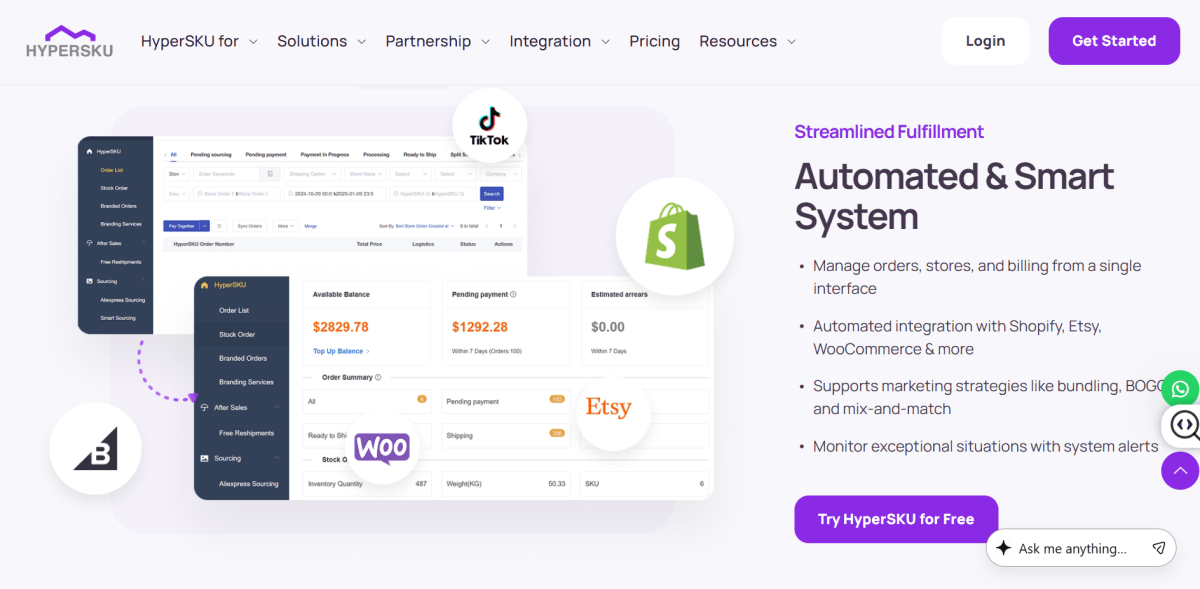
- Pros: Factory-direct sourcing, quality inspections, sample comparisons, private labeling, and dedicated account managers once your volume grows.
- Cons: Fewer native integrations than the mainstream apps, and the agent-style model suits established stores far more than absolute beginners.
- Best for: Scaling brands that want agent-level sourcing and QC without hiring a private person.
- Pricing: Free to install; you pay per order based on product and shipping costs.
2. SourcinBox
SourcinBox is a China-based sourcing agent with a Shopify app on top. It connects you directly with manufacturers, then a dedicated 1-on-1 account manager handles sourcing requests, quotes, quality checks, packing, and shipping.
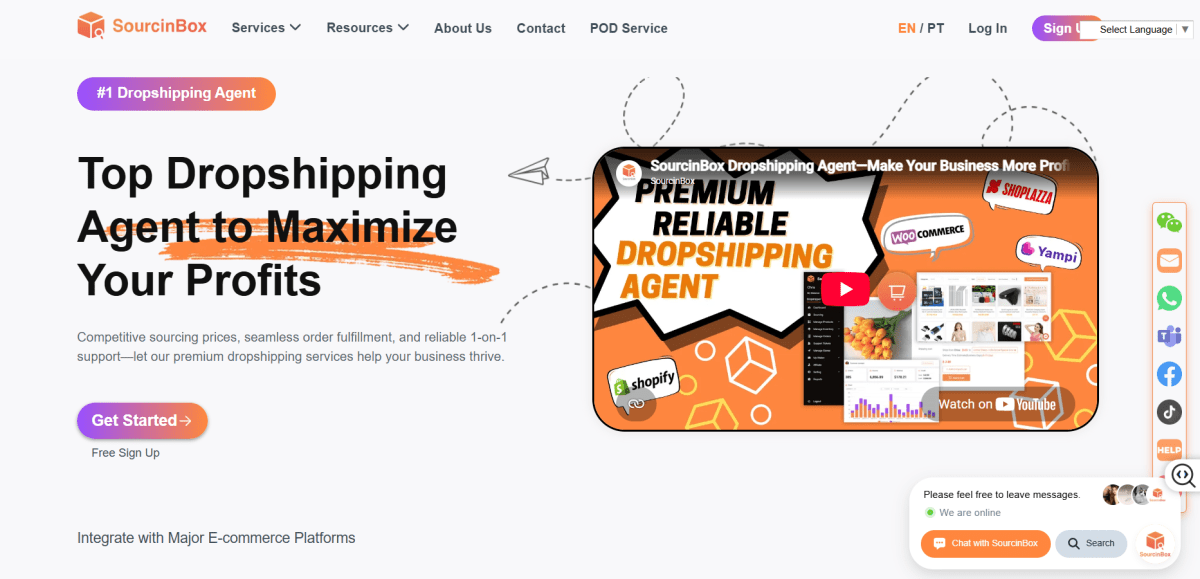
- Pros: No subscription fee, a real human agent who clears the language barrier and follows special requests like invoice removal, quality inspection, private-label packaging, custom thank-you cards, and even a 72-hour localized POD service. Reviews on Shopify are strong, sitting around 4.1 to 4.4 stars.
- Cons: Products ship direct from China, so pricing and speed depend on the item and route, and there is no public rate card. You have to contact them for a quote, and they make their margin on product markup.
- Best for: Sellers with some daily order volume who want hands-on private sourcing and English-speaking support without paying for a dashboard subscription.
- Pricing: Free to install; you pay only product and shipping costs, with SourcinBox taking a markup. Request a quote for specifics.
3. CJdropshipping
CJdropshipping is a free-to-join sourcing and fulfillment platform that sources products, stores them in its own warehouses, and ships them straight to your customers. It blends a self-serve catalog with agent-style sourcing on request.
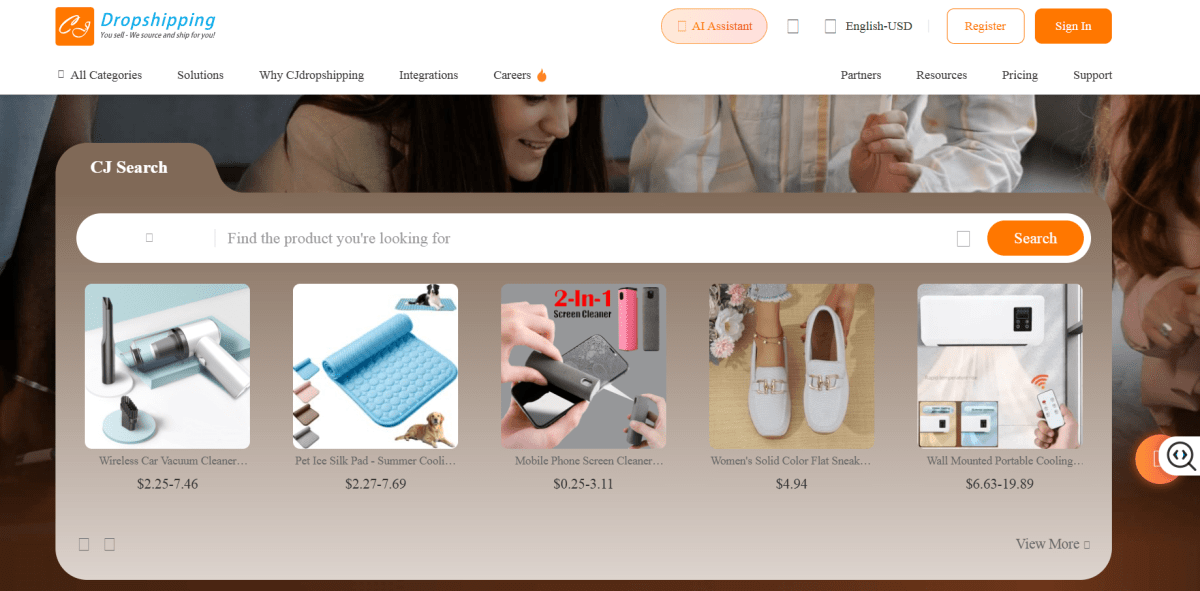
- Pros: No subscription fee, its own US and EU warehouses for faster regional stock, custom packaging, and a genuinely low barrier to entry.
- Cons: China shipping still runs roughly two to three weeks, quality can be hit or miss because the catalog is huge and lightly vetted, and listed prices sometimes carry a quiet markup.
- Best for: Budget-conscious sellers who want free sourcing and do not mind vetting quality with samples first.
- Pricing: Free to join; you pay only for product, shipping, and optional services. Optional paid memberships starts at $15.99
4. Zendrop
Zendrop is a beginner-friendly fulfillment app with a clean Shopify workflow, automated ordering, and access to US products, plus sourcing help that edges it toward agent territory.
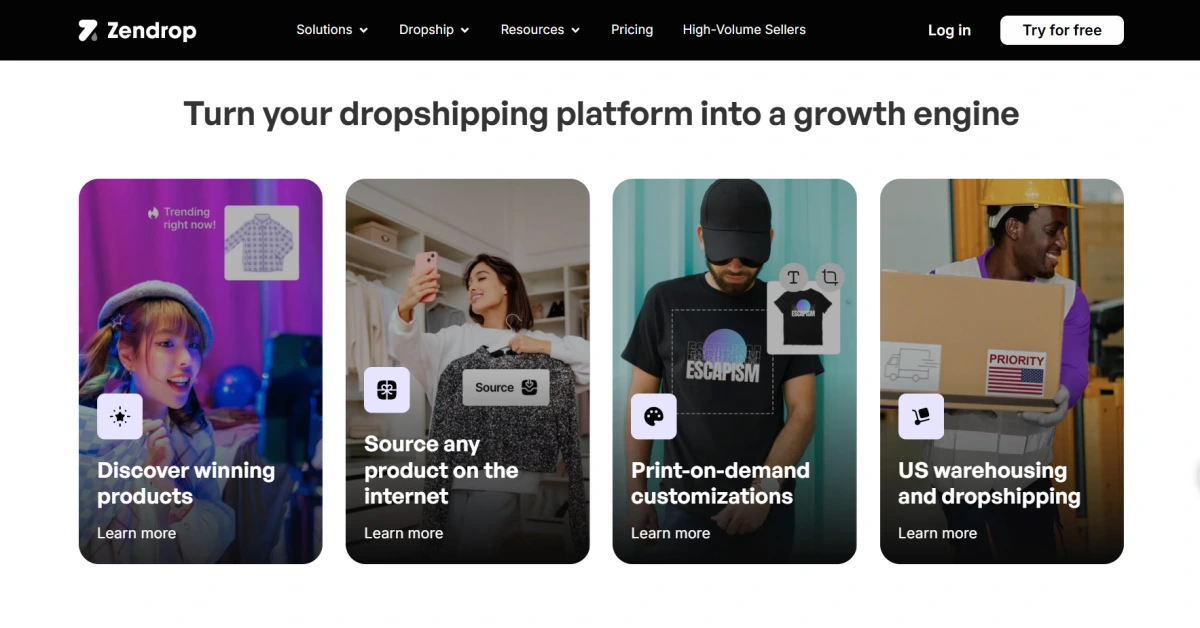
- Pros: Simple interface, automated fulfillment, custom branding, US product access, and handy coaching resources.
- Cons: The free tier is really just a research view, since importing, ordering, and fulfillment all need a paid plan. On top of that, Shopify signups may fall under usage-based billing tied to how many products you link.
- Best for: Beginners who want a guided, low-friction fulfillment setup with some sourcing support.
- Pricing: Free tier for browsing; Pro $49/month and Plus $79/month.
Apps and platforms that do the agent's job
This second group is not made up of agents at all. These are apps and platforms that automate the work an agent would otherwise handle, from importing products and syncing orders to managing suppliers and fulfillment. You trade hands-on human help for speed, lower cost, and full control.
5. DSers
DSers is the official AliExpress order-management app and, for most people, the natural entry point for testing products on Shopify. It imports listings, places bulk orders, and syncs tracking automatically.
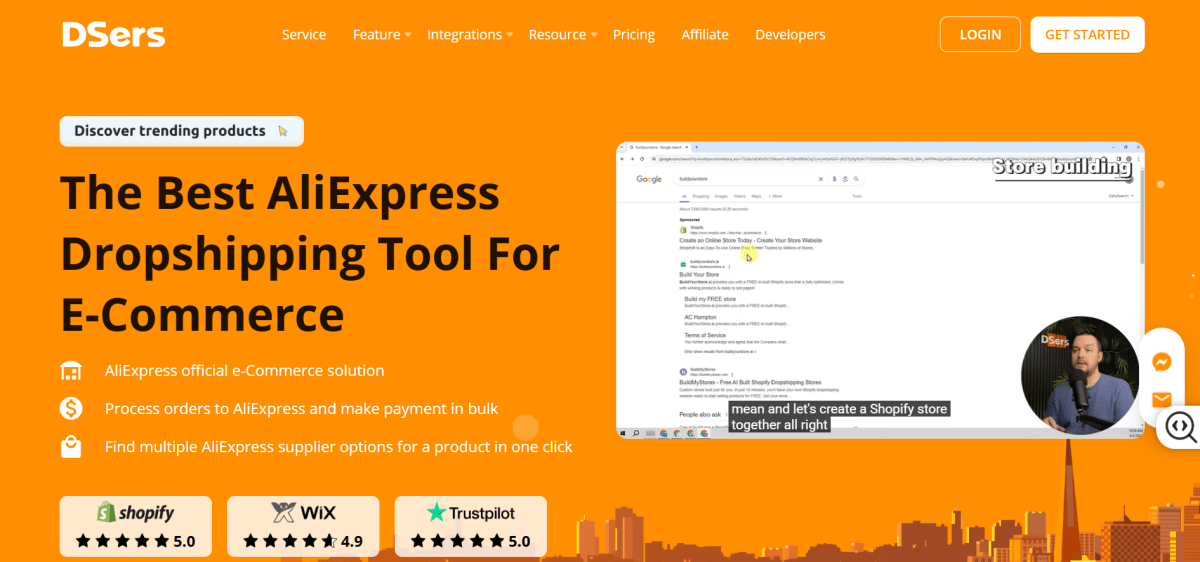
- Pros: The free plan is generous, the one-click supplier optimizer lets you swap to a cheaper AliExpress seller on the spot, bulk ordering is rock solid, and automatic pricing rules keep your margins consistent.
- Cons: It is tied to AliExpress, so quality and shipping ride on individual sellers. It also does not handle multiple sales channels well.
- Best for: Beginners validating products, and any store running AliExpress-based fulfillment.
- Pricing: Free plan available; paid tiers run from $19.90 to $499 per month.
6. AutoDS
AutoDS is an automation platform that imports products, monitors price and stock, and fulfills orders across many suppliers and sales channels from a single dashboard.
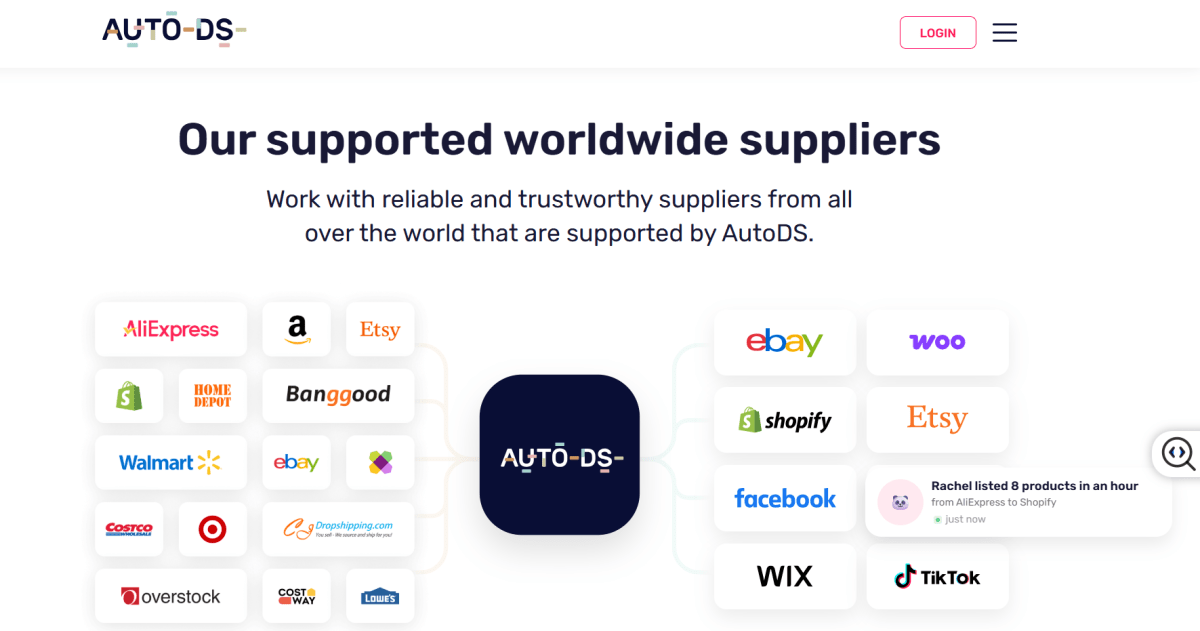
- Pros: Transparent tiered pricing with no order caps, multi-channel support across Shopify, eBay, and Facebook Marketplace, and deep automation for price and stock monitoring.
- Cons: There is no permanent free plan, auto-ordering is a paid add-on, and product research takes a back seat to fulfillment.
- Best for: Scaling and multi-channel stores that want to cut down on manual work.
- Pricing: Plans start around $26.99 per month and scale with your product and order tier.
7. Spocket
Spocket is a supplier marketplace built around US and EU suppliers, aimed at stores that compete on faster regional delivery.
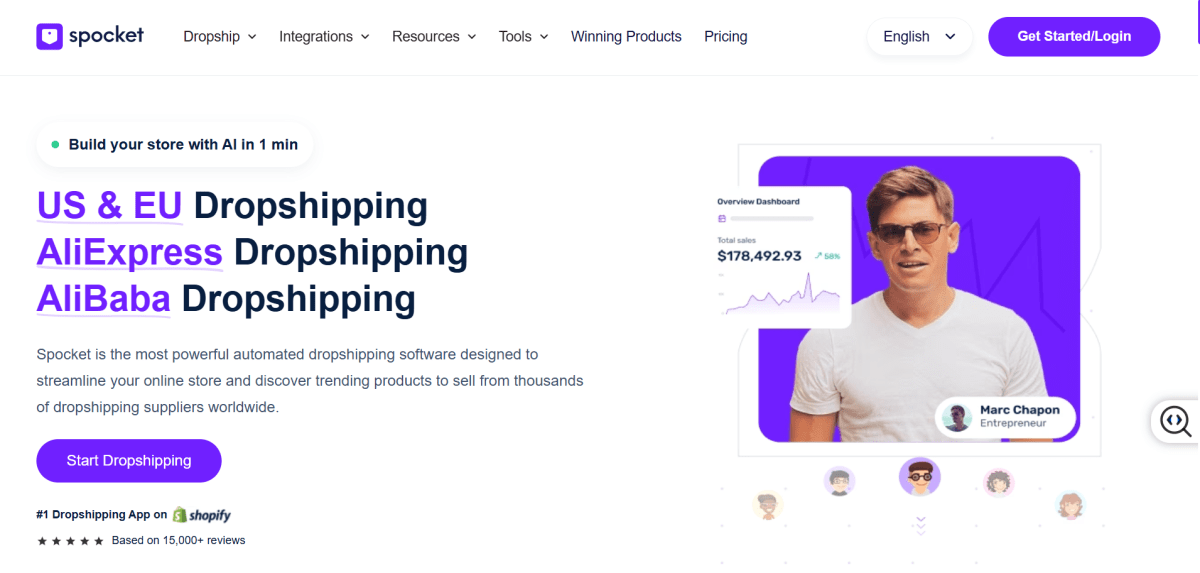
- Pros: Faster US and EU shipping, higher product quality, branded invoicing on paid tiers, and no per-order platform fee stacked on top of the subscription.
- Cons: Supplier prices sit higher than China sourcing, which can squeeze your margins, and the lower tiers cap how many unique products you can import.
- Best for: US and EU stores building a brand where delivery speed and quality drive repeat sales.
- Pricing: Starter $39.99 (25 products).
8. Trendsi
Trendsi is a free, fashion-focused platform offering dropshipping, wholesale, and private-label options, with both US and international warehouses.
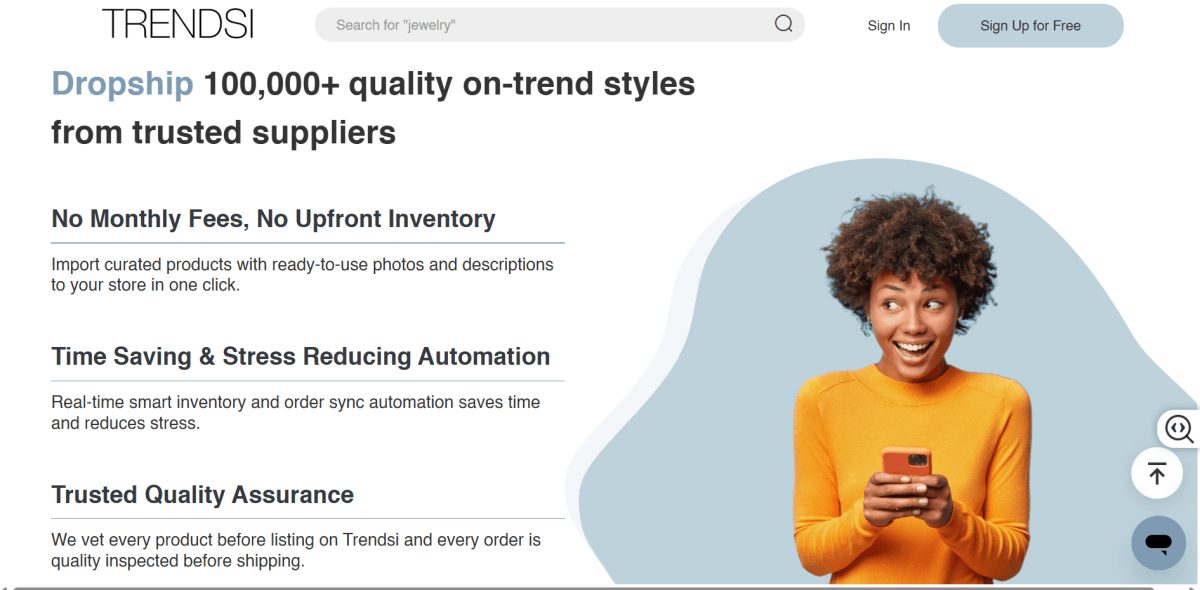
- Pros: No install cost, a curated fashion catalog complete with size charts and quality photos, US-warehouse shipping in two to five business days, branded invoices, and seven-day returns.
- Cons: It is narrow to fashion only, and some users have flagged inventory and stock-notification issues.
- Best for: Apparel and accessories stores that need fashion-specific sourcing.
- Pricing: Free to install; you pay per order for product and shipping.
9. DropCommerce
DropCommerce is a supplier marketplace of curated US and Canadian brands, built around fast North American delivery and higher product quality.
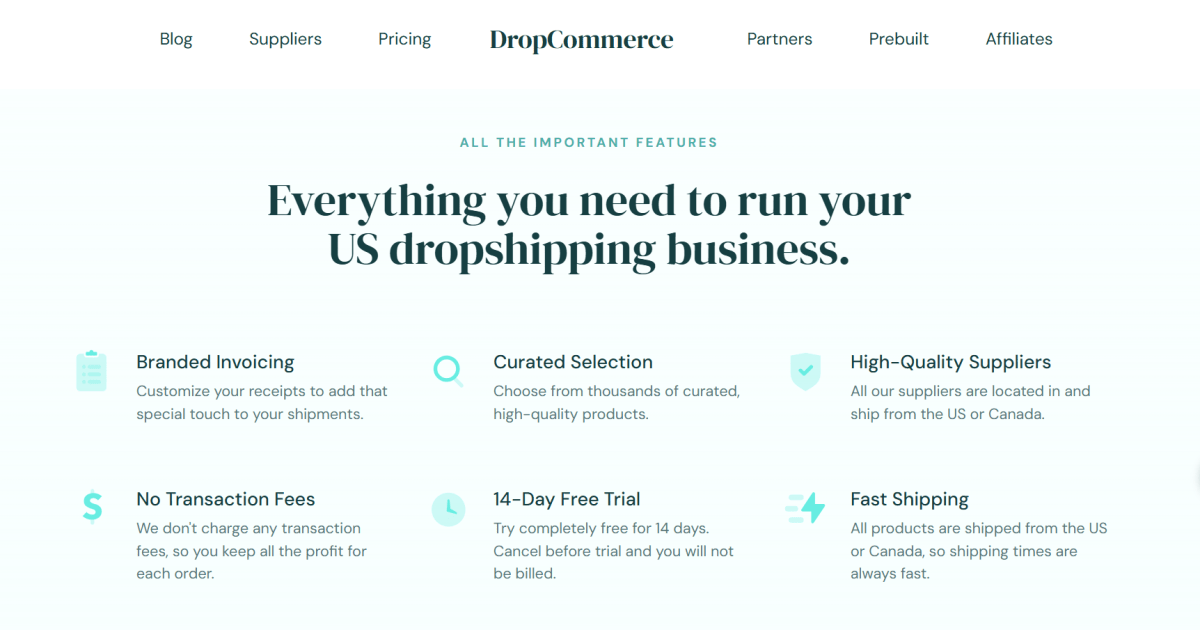
- Pros: Three-to-five-day North American shipping, a minimum 30% retailer margin built into listings, branded invoicing, and a clean, simple interface.
- Cons: Products cost more than China sourcing, and the supplier network is smaller than the mass-market platforms.
- Best for: North America-focused stores that put delivery speed and brand quality first.
- Pricing: Free browse-and-sample tier; Basic $29.
10. Shopify Collective
Shopify Collective is a native Shopify feature that lets eligible merchants sell products from other Shopify brands, with sourcing and payment handled inside the ecosystem.
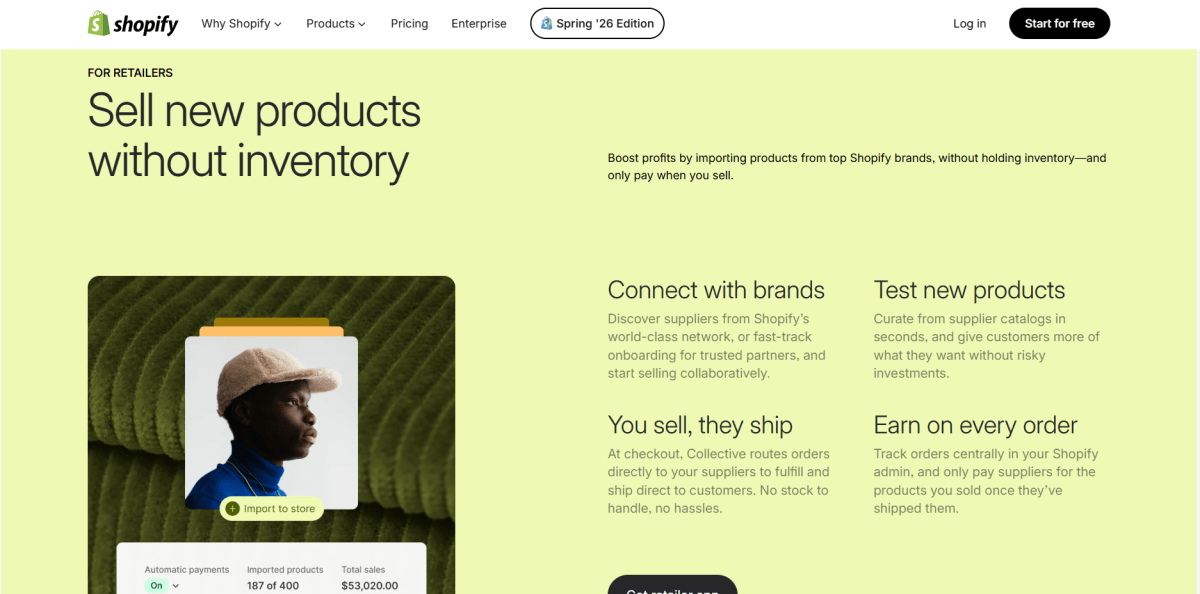
- Pros: Free, fully native to Shopify, stocked with vetted US-based brand products, and set up for automatic order and payment forwarding.
- Cons: It is limited to eligible Shopify merchants, and margins vary by supplier, so some products leave you with thin room to work.
- Best for: Existing Shopify sellers who want low-friction, in-ecosystem brand sourcing.
- Pricing: Free.
How to Find and Vet an Agent?
You can find an agent through Shopify apps, freelancer marketplaces, supplier platforms, or manual research. The right path comes down to whether you want speed, personal support, or deeper sourcing control.
Where to Find a Dropshipping Agent
- Shopify apps with agent-like services:
CJdropshipping, Zendrop, AutoDS, Syncee, Spocket, Dropshipman, and SourcinBox bundle sourcing, fulfillment, supplier vetting, and support through native Shopify integrations, giving you agent-like help without hiring anyone.
- Freelancer marketplaces:
Upwork and Fiverr work well when you want a personal sourcing assistant or a dedicated fulfillment contact. Check work history, ratings, communication style, and niche experience before committing, and kick things off with a small paid test.
- Supplier discovery platforms
SourcinBox, EPROLO, and Doba give you a structured sourcing workflow that is usually easier to start with than hiring privately.
- Manual research
Study competitor stores, reverse-search product images, and check packaging and shipping origin to trace where similar products come from. It takes more legwork, but it can surface suppliers your competitors have not found yet.
How to Vet an Agent Before You Commit
Never pick an agent on price alone. Put the full experience through its paces before you send any customer volume their way. Run through this checklist first:
- Order a sample and inspect it yourself
- Test tracking end-to-end on a real order
- Ask for proof of past fulfillment (reviews, references, order history)
- Get pricing and refund or replacement rules in writing
It also helps to ask a few direct questions upfront, since how clearly an agent explains their process matters as much as the answers themselves.
Cover their niche specialties, whether they support single-item dropshipping, their shipping routes and average times by country, tracking methods, MOQ, branding options, and exactly how they handle refunds, damaged items, and lost packages.

Dropshipping Agent vs. App vs. Platform: What Are The Differences?
According to Shopify, a dropshipping agent is an individual or team, often part of an agency or fulfillment warehouse, who sources products, runs quality checks, and helps with fulfillment. In effect, they are the go-between linking your store to its suppliers. A dropshipping supplier, by contrast, is the party that actually sources and ships the goods you list.
That line has blurred, though. Modern dropshipping apps increasingly fold both roles into one, giving you access to varied product catalogs alongside agent-style perks like custom packaging, branding, and quality control. A platform goes broader still: a supplier directory, product catalog, and order management system rolled into one, but without a dedicated human managing your account.
Here is how the three models stack up:
Option | Best For | Control | Automation | Customization | Setup |
|---|---|---|---|---|---|
Private agent | Scaling stores, custom brands | High | Medium | High | Medium |
Dropshipping app | Beginners, fast testing | Medium | High | Low–medium | Low |
Supplier platform | Product discovery, managed sourcing | Medium | Medium–high | Medium | Low–medium |
To put it plainly: an agent is hands-on, with a person or managed team sourcing products, confirming availability, inspecting items, and arranging fulfillment.
An app is automated, connecting to Shopify to import products, sync orders, and route fulfillment through supported suppliers, with DSers, CJdropshipping, Zendrop, AutoDS, Syncee, and Spocket the names you will run into most.
A platform has the broadest scope: a supplier directory, catalog, and fulfillment system, just without one-on-one account management.
Final Thoughts
If there is one thing I want you to take away, it is this: a Shopify dropshipping agent is a lever, not a launchpad. It works best once you already have a validated product and steady demand, and it pays you back in faster shipping, tighter quality, and cleaner branding. Reach for one too early and you are just adding cost and complexity to a store that has not proven itself yet.
So my advice is to keep it simple. Start with an app to test cheaply and quickly. When the sales hold up and the margins look healthy, graduate to a real agent or a managed sourcing service like HyperSKU or SourcinBox for the hands-on help. And whichever route you take, vet it the same way every time: order a sample, test the communication, check the tracking, and only then scale.
Harry Chu is the Founder of TrueProfit, a net profit tracking solution designed to help Shopify merchants gain real-time insights into their actual profits. With 11+ years of experience in eCommerce and technology, his expertise in profit analytics, cost tracking, and data-driven decision-making has made him a trusted voice for thousands of Shopify merchants.