Top Headless Shopify Examples 2026 Shaping the Future of eCommerce


Table of Contents
- 1. What Is Headless Shopify?
- 2. Why Brands Are Going Headless with Shopify
- 3. 7 Headless Shopify Store Examples Worth Stealing Ideas From
- 4. A Deeper Dive: Shopify Hydrogen and Oxygen
- 5. Is Headless Shopify Right for Your Business?
- 6. How to Tell if a Store Is Running Headless Shopify or Not?
- 7. Final Thoughts
- 8. Headless Shopify Examples FAQs
Headless commerce separates the customer-facing frontend from the backend eCommerce engine. The result: faster stores, fully custom designs, and the freedom to build exactly what your brand needs without being constrained by a theme.
This article breaks down the best headless Shopify examples, the technologies behind them, and how to decide if going headless makes sense for your store.
In this blog:
- 1. What Is Headless Shopify?
- 2. Why Brands Are Going Headless with Shopify
- 3. 7 Headless Shopify Store Examples Worth Stealing Ideas From
- 4. A Deeper Dive: Shopify Hydrogen and Oxygen
- 5. Is Headless Shopify Right for Your Business?
- 6. How to Tell if a Store Is Running Headless Shopify or Not?
- 7. Final Thoughts
- 8. Headless Shopify Examples FAQs
What Is Headless Shopify?
Headless Shopify means using Shopify as the backend engine (for products, orders, inventory, and checkout) while building a completely custom frontend that communicates with it via APIs. The two layers are decoupled, so you're not locked into any Shopify theme or template.
In a traditional setup, Shopify's Liquid templating renders your storefront. In a headless setup, your custom frontend (built with React, Next.js, or any other framework) calls Shopify's Storefront API to fetch product data, manage carts, and trigger checkout. Shopify still handles all the commerce logic; you just control the display layer entirely.
Even in a headless setup, Shopify continues to handle:
- Product information and catalog management
- Inventory tracking
- Order processing and fulfillment
- Customer accounts and data
- Payment gateways and secure checkout
If you're running a high-volume operation, it's worth exploring Shopify Plus vs standard Shopify to see which backend tier fits your scale.

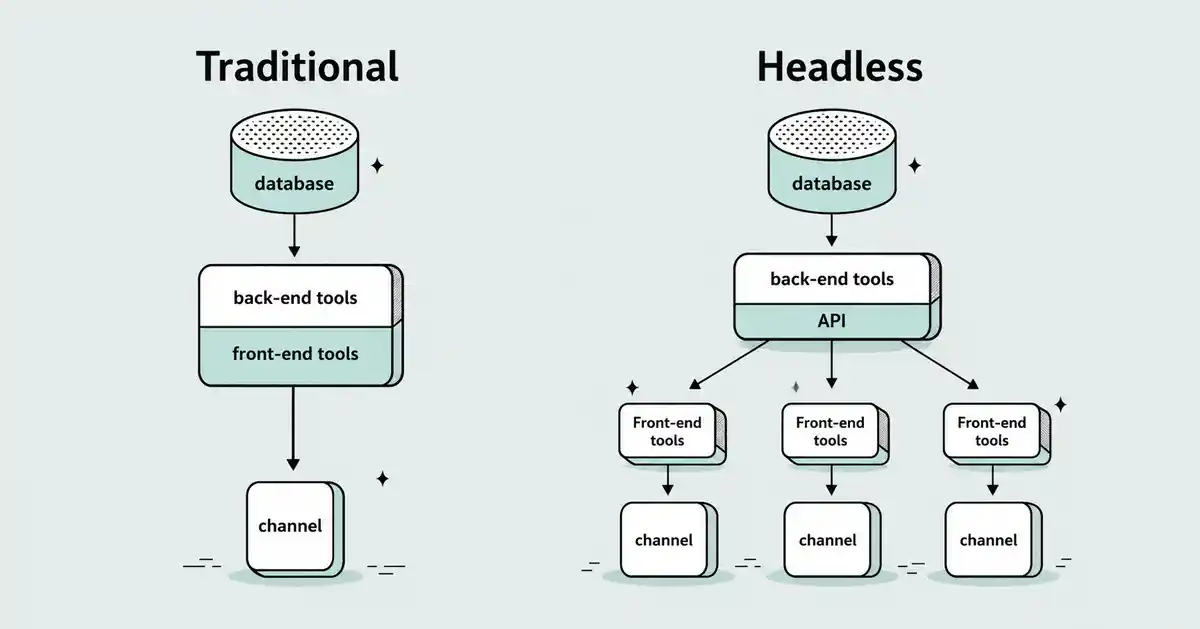
Traditional vs Headliness commerce
Going headless with Shopify delivers advantages that compound over time. Custom frontends regularly hit Lighthouse performance scores of 90 and above, which translates directly to faster load times and better conversion rates.
You also get complete design freedom since there are no theme constraints holding you back, just pixel-perfect control over every element of the user experience.
Moreover, scalability works differently too. Your frontend and backend can scale independently, so a traffic spike doesn't mean your whole system strains under the load. And because a single Shopify backend can power your web store, mobile app, kiosk, and any other channel simultaneously, omnichannel selling becomes far less of an infrastructure headache.
Perhaps most importantly, going headless future-proofs your stack. If you ever need to swap out your frontend technology down the line, you can do it without rebuilding your backend from scratch.

Why Brands Are Going Headless with Shopify
Brands move to headless when traditional Shopify themes can no longer keep up with their performance or customization demands. The core reasons come down to three things: UX control, site speed, and channel flexibility.
1. Full Control Over UX and Design
Standard Shopify themes give you a framework to work within. Headless removes that ceiling. Brands can build interactive product configurators, immersive brand storytelling experiences, multi-step personalization quizzes, and rich editorial pages that blend content with commerce seamlessly.
This matters most for brands where the shopping experience itself is part of the product: luxury fashion, beauty, wellness, and premium DTC brands.
2. Faster Load Times and Better Core Web Vitals
Headless frontends built on frameworks like Next.js or Gatsby are optimized to serve lightweight, pre-rendered pages. That directly improves Core Web Vitals, which affects both user experience and Google search rankings.
A well-built headless Shopify store can achieve sub-second page loads on product pages, which meaningfully lifts conversion rates during high-traffic drops or flash sales. Better Shopify SEO starts with a fast foundation.
3. Scalability Without Tradeoffs
Because the frontend and backend scale independently, traffic spikes on the storefront don't put pressure on Shopify's commerce operations. Developers can also push frontend updates, run A/B tests, and iterate on UI without touching the backend at all. For brands running aggressive Shopify CRO programs, this separation speeds up experimentation significantly.
4. Omnichannel from a Single Backend
One Shopify backend can simultaneously power your website, a mobile app, in-store kiosks, and digital displays, each with their own custom frontend. All product data, inventory, and orders stay centralized in Shopify.
In practice, this means a fashion brand can run a React web storefront, a React Native mobile app, and an in-store screen experience, all pulling from the same Shopify product catalog and inventory in real time. A stock update in Shopify instantly reflects everywhere, with no manual syncing.
7 Headless Shopify Store Examples Worth Stealing Ideas From
These examples represent how brands across different industries have used headless architecture to solve specific problems. Technology stacks reflect common implementations for each profile.
1. High-Performance Fashion Brand
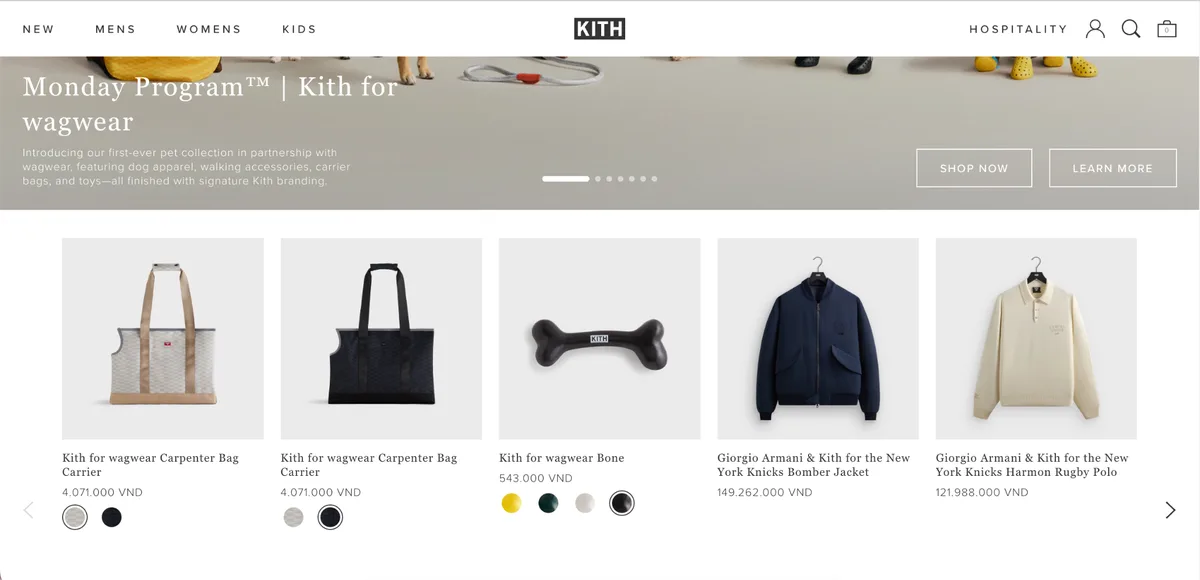
Profile: A high-end apparel brand (think Kith or Rothy's) running limited-edition drops with heavy image content.
Challenge: Standard themes couldn't handle traffic spikes, and image-heavy product pages loaded too slowly.
Stack: Shopify Plus (backend) + Next.js + React + Contentful CMS
Result: Sub-second product page loads during peak drops. Rich editorial lookbooks served alongside product listings. Custom checkout flow maintained brand aesthetic while Shopify handled payment processing.
2. Content-Rich Lifestyle Brand
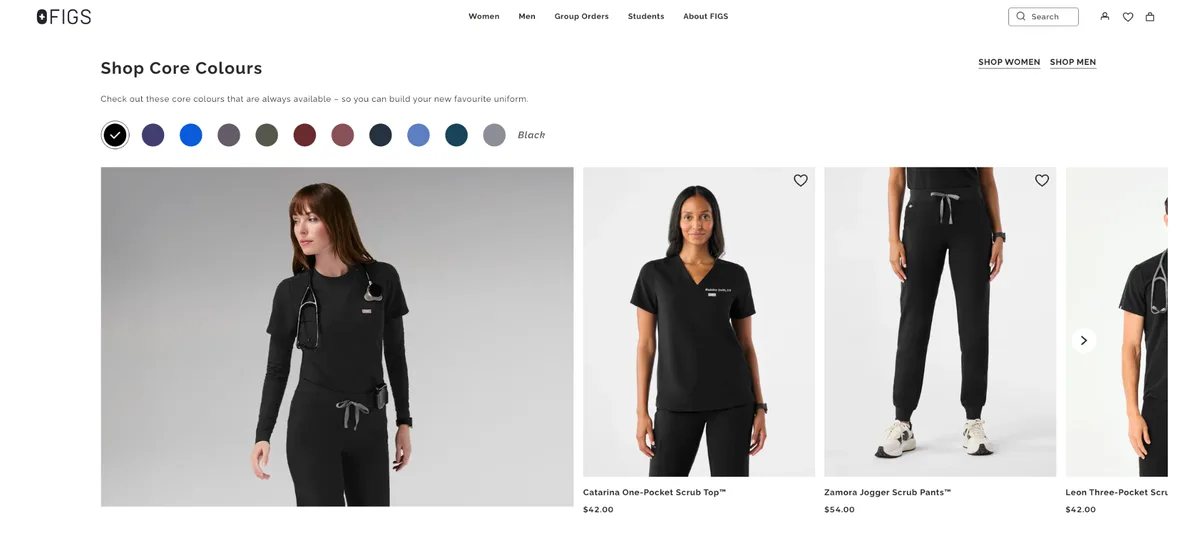
Profile: A health and wellness brand (similar to Allbirds or FIGS) that sells through education, not just product listings.
Challenge: Needed to blend blog content, recipes, and wellness guides with the product catalog, all with strong SEO.
Stack: Shopify Plus + Gatsby (static site generation) + Sanity CMS
Result: Significantly longer on-site session times. Gatsby's static output delivered excellent SEO performance. Content editors could publish articles linked directly to product pages without developer involvement. This is also a strong model for brands focused on driving organic traffic to their Shopify store.
3. Tech and Gadget Retailer
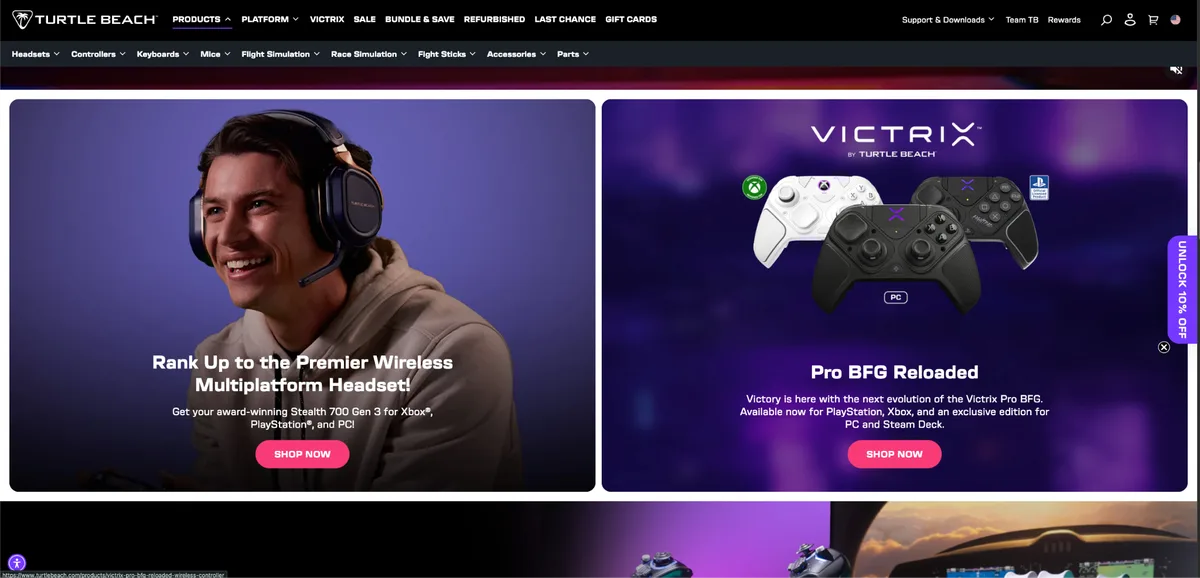
Profile: A consumer electronics brand like Turtle Beach needing interactive product demos and AR previews.
Challenge: Complex product specifications required interactive pages that standard Shopify themes couldn't support.
Stack: Shopify + Next.js + React + Storyblok CMS
Result: Product pages featured 3D model viewers and AR previews. Marketing teams updated product features and launched campaigns via Storyblok without engineering involvement. Conversion rates improved as customers better understood the product before buying.
Example 4: Personalized Beauty Brand
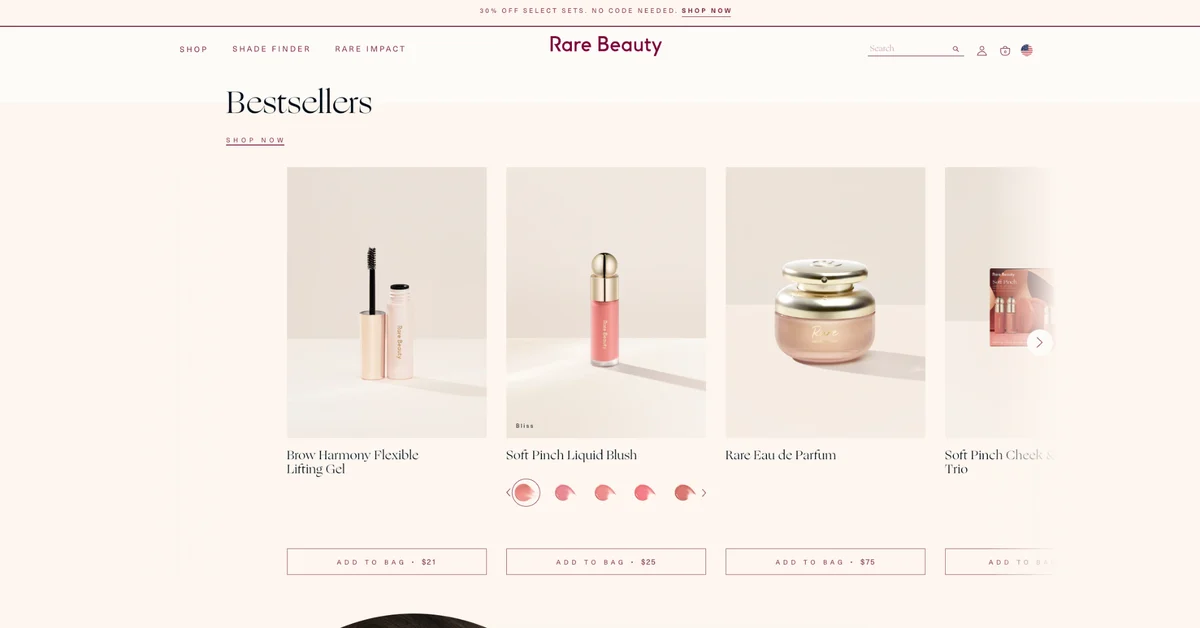
Profile: A skincare brand (similar to Rare Beauty) built on personalized recommendations and subscriptions.
Challenge: Multi-step quizzes, dynamic personalized results, and subscription management were too complex for a standard theme.
Stack: Shopify Plus + React + Prismic CMS
Result: Multi-step compatibility quizzes drove exceptionally high conversion rates from personalized product journeys. Subscription logic ran through Shopify Plus. Beauty guides and ingredient content were managed independently in Prismic and pulled into the frontend dynamically.
Example 5: Food and Beverage eCommerce
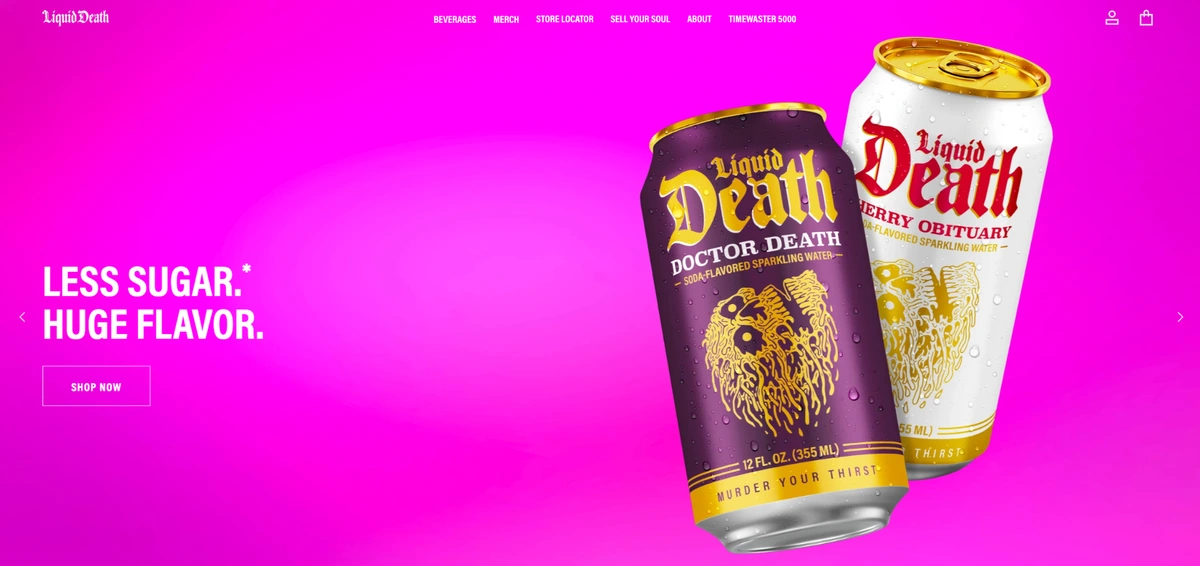
Profile: A specialty beverage company (similar to Liquid Death) running frequent promotions and flash sales.
Challenge: Seasonal product launches and high-volume promotions required rapid content updates and a frontend that wouldn't crash under traffic spikes.
Stack: Shopify + Vue.js + Custom CMS
Result: New product pages and seasonal promotions went live without engineering sprints: marketers published directly through the CMS. The Vue.js frontend absorbed traffic surges during flash sales without any impact on Shopify's order processing backend.
Pro Tips: Knowing your real margins matters here too: brands at this scale use tools like TrueProfit to track net profit across high-volume SKUs.
Example 6: Luxury Apparel and Accessories
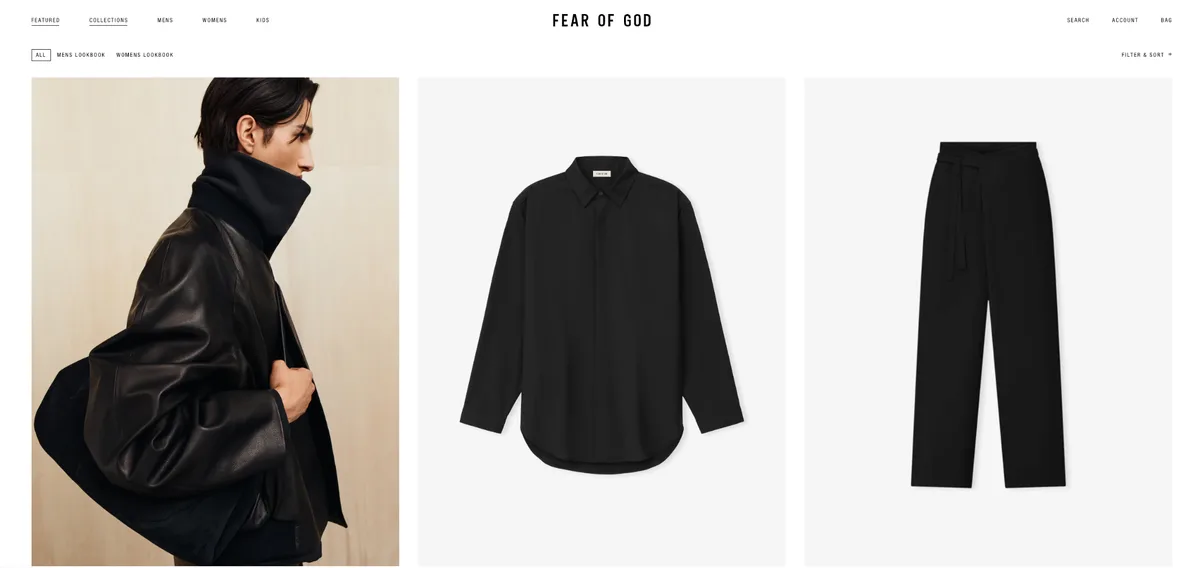
Profile: A high-end fashion brand like Fear of God needing a digital boutique experience on par with in-store.
Challenge: High-resolution video content and detailed product storytelling were degrading performance on a traditional theme.
Stack: Shopify Plus + Next.js + Contentful
Result: Full-screen hero videos and editorial imagery loaded in under 1.5 seconds on mobile, preserving the premium feel that slow-loading luxury sites typically destroy. Contentful managed product narratives, lookbooks, and brand collaborations independently of engineering. The faster, more immersive experience directly supported higher conversion rates on items priced above $500.
Example 7: Home Goods and Furniture
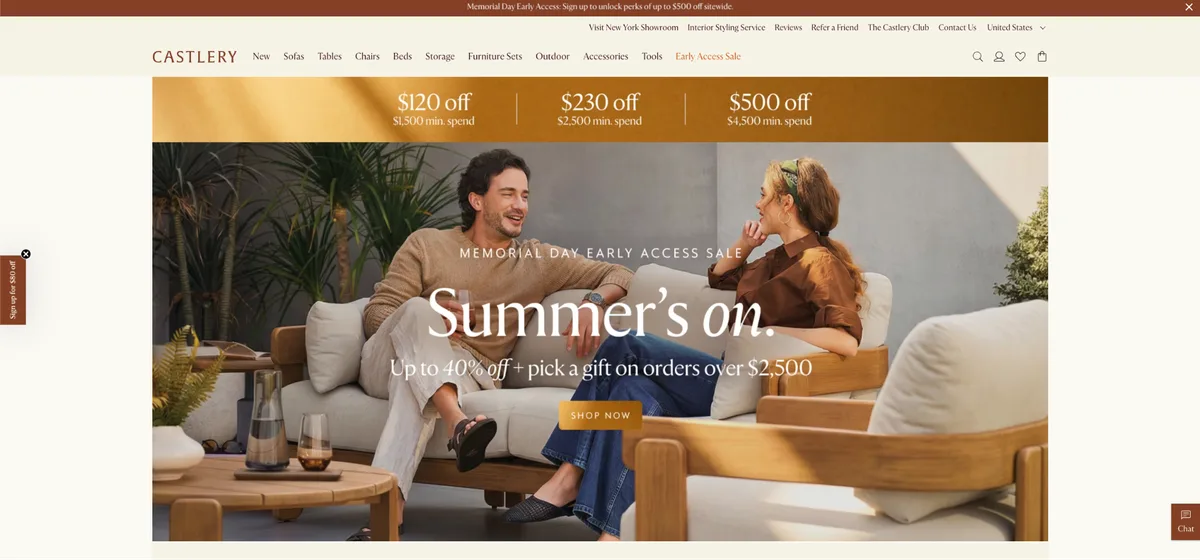
Profile: A customizable furniture brand (similar to Castlely) selling products with dozens of configuration options.
Challenge: Fabric options, finishes, and room planner tools couldn't be built inside a standard Shopify theme.
Stack: Shopify + React + Strapi CMS + external 3D visualization engine
Result: Customers used interactive configuration tools and 3D room planners directly on product pages. Shopify handled checkout and order data. Conversion rates on complex, high-value purchases improved because customers could visualize exactly what they were buying.
Other well-known brands that have adopted headless Shopify architecture include Gymshark, Glossier, Harry's, SKIMS, Stüssy, Nutrabolt, Truff, Caraway Home, Bombas, O'Neill, and Rally House.
A Deeper Dive: Shopify Hydrogen and Oxygen
Shopify's own headless stack gives developers a tightly integrated, officially supported path to going headless.
1. What Is Shopify Hydrogen?
Shopify Hydrogen is a React-based framework built specifically for creating custom Shopify storefronts. It uses React Server Components to render complex UI server-side, which reduces the JavaScript sent to the browser and speeds up initial load times.
It comes with pre-built hooks and components for common Shopify data like products, collections, and carts, cutting down development time significantly.
2. What Is Shopify Oxygen?
Shopify Oxygen is the hosting platform built for Hydrogen storefronts. It's a serverless, globally distributed environment that auto-scales, integrates directly with Hydrogen's deployment workflow, and routes traffic through Shopify's CDN.
Deploying a Hydrogen storefront on Oxygen eliminates the need to manage separate hosting infrastructure.
3. Hydrogen vs. Third-Party Stack
4. Real Brands Using Hydrogen
The Folklore used Hydrogen to build a performant storefront for its global retail platform featuring designer fashion, beauty, and home goods from Africa and the diaspora. The core requirement was handling deep editorial content alongside complex product catalogs, all loading quickly for shoppers across multiple time zones. Hydrogen's server-side rendering lets them serve rich brand storytelling without the JavaScript bloat that would have slowed a client-rendered site.
Recess, a hemp-infused sparkling water brand, used Hydrogen to merge educational content with subscription management in a single, fast-loading experience. Their challenge was specific: the product requires context before purchase, and a slow or fragmented journey between content pages and the cart would kill conversions. Hydrogen let them build a continuous flow from brand education to checkout without page reload delays.
ROUJE Paris, the French fashion brand founded by Jeanne Damas, deployed Hydrogen to keep their editorial-forward aesthetic intact without sacrificing performance for international shoppers. High-resolution lookbook imagery is central to how the brand sells, so load time on image-heavy collection pages was the primary technical constraint Hydrogen addressed.

Is Headless Shopify Right for Your Business?
When Headless Makes Sense for you
Headless is the right move if:
- Your traditional theme is creating measurable performance bottlenecks (poor Core Web Vitals, slow mobile loads)
- You need UI or functionality that no Shopify theme or app can deliver
- You're selling across multiple channels (web, app, in-store screens) and need a unified backend
- You have an in-house dev team or a budget for specialized headless development
- You're running a high-traffic brand where conversion rate lifts justify the investment
When to Stick With a Standard Shopify Theme
Headless is probably overkill if:
- You're an early-stage store focused on finding products to sell and validating your market
- You don't have dedicated developers or the budget for a custom build
- A well-optimized free Shopify theme already meets your UX and performance needs
- Your goal is a fast launch rather than a highly customized experience
Headless Shopify is not cheap
Headless is consistently more expensive upfront than a traditional Shopify store. The key cost drivers are:
The long-term case for headless comes from compounding performance gains: faster sites, higher conversion rates, and fewer third-party app subscriptions for features that are built directly into the custom frontend. Understanding how much Shopify takes per sale alongside your build costs is essential for modeling real ROI.
How to Tell if a Store Is Running Headless Shopify or Not?
1. Check the Page Source
Open the source code and look for JavaScript framework artifacts: references to Next.js, Gatsby, React, or Vue.js in script file names or build output paths. A traditional Shopify theme will load content from cdn.shopify.com/s/files/ and use Liquid templating. A headless store's primary content comes from a custom domain, with Shopify's CDN only appearing for checkout assets.
2. Use the Browser Network Tab
Press F12 and open the Network tab. Reload the page. If you see API requests to myshopify.com/api or Shopify's Storefront API endpoint, the store is fetching product and cart data via API rather than rendering it server-side through a Liquid theme. Checkout typically redirects to checkout.shopify.com, confirming Shopify is still handling the backend transaction.
3. Run a Lighthouse Audit
Headless stores built for performance tend to score 90 or above across all Lighthouse categories. A traditional Shopify theme can achieve strong scores too, but consistently high scores combined with the API calls described above is a strong signal of a headless implementation.
Final Thoughts
Headless Shopify is powerful, but it is not for everyone. It solves specific scaling and flexibility challenges, not basic growth needs.
If you are hitting real limits with UX, performance, or multi-channel complexity, it is worth exploring. Otherwise, a well-optimized Shopify store can take you far without the added cost and complexity.
When you do go headless, choose the setup that fits your team. Hydrogen works for speed, while a custom framework offers more flexibility.
Whatever you decide, stay focused on net profit, not just traffic or revenue. As your stack grows more complex, having clear visibility into your margins, using a tool like TrueProfit, helps ensure your performance gains translate into smarter, more profitable growth.
Lila Le is the Marketing Manager at TrueProfit, with a deep understanding of the Shopify ecosystem and a proven track record in dropshipping. She combines hands-on selling experience with marketing expertise to help Shopify merchants scale smarter, through clear positioning, profit-first strategies, and high-converting campaigns.